Seitan Limania and the Akrotiri Coves: How to Reach Them
How do you get to Seitan Limania and the Akrotiri coves?
Seitan Limania sits on the Akrotiri peninsula east of Chania, reached by driving out past Souda Bay and across Akrotiri to a parking area above the cove, then walking down a rocky path to the water. A boat option also runs from the Souda Bay area, landing at the cove without the walk down.
The Akrotiri peninsula, cove by cove
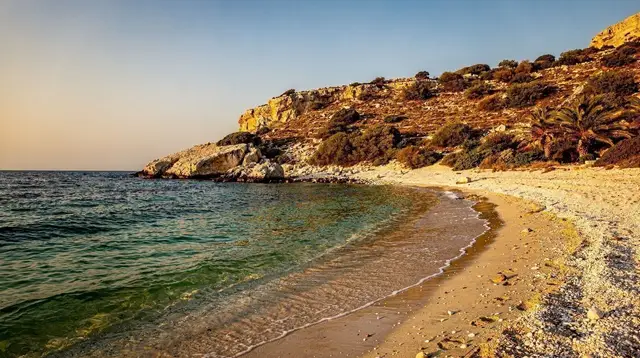
Most visitors to Chania never drive past the airport road, and that is a shame, because the headland east of the old town holds one of the most striking coves on this side of the island. Seitan Limania is not in Chania proper and it is not a beach you stumble on by accident — it sits out on the Akrotiri peninsula, the block of high ground that closes off Souda Bay to the east of the city. Getting there means crossing the same ground that carries the region’s airport, its naval installations, its monasteries and one of the most sobering sites connected to the 1941 Battle of Crete, before the road narrows down toward the water and a rocky inlet appears between pale cliffs.
This page is about that route and what surrounds it, not about turning up and finding everything laid out for you. Treat it as orientation for a place that rewards patience with the drive and respect for the ground, rather than a promise of an easy afternoon.
Where Chania, Souda Bay and Akrotiri fit together
Start from the old Venetian harbour of Chania, because that is where most people staying in the area are based, and because it sets the scale of the trip. Heading east out of town, the road runs along the edge of Souda Bay, a long, sheltered inlet that has served as a natural harbour since Venetian times and today hosts a working port and a NATO naval base.
The bay is deep enough that Allied ships used it during the Battle of Crete in 1941, and that history is not abstract here: the Commonwealth war cemetery sits directly on the bay’s edge, rows of white headstones facing the water, holding the dead of the airborne invasion that began on 20 May 1941. If you want the fuller picture before or after your visit, the guide to Cretan resistance and the war cemeteries and the overview of the Battle of Crete in 1941 both cover ground that starts right here.
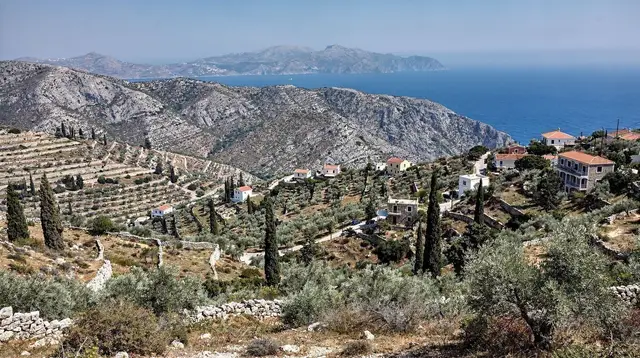
Past the bay, the road climbs onto the Akrotiri peninsula itself — a broad, mostly flat headland of scrubland, small farms and a scatter of monasteries, several of which are worth their own stop; see the Akrotiri monasteries walk for that side of the peninsula. Akrotiri is also where Chania’s airport sits, and where several viewpoints look back over the bay toward the city and the White Mountains behind it. Seitan Limania is at the far northern tip of this headland, past the settled part of Akrotiri, where the road effectively runs out above the coast.
Reaching Seitan Limania by road
The route by car follows the Akrotiri road out from Chania, past Souda Bay and the war cemetery, through the peninsula’s villages and monastery turnoffs, to a parking area set back from the coast. From there, the cove is reached on foot, down a path cut into the rock toward the water below.
What this guide will not do is put a number on that walk — no stated distance, no timing, no difficulty rating, no claim that it is a short stroll or a serious scramble. None of that is confirmed to the standard this site holds itself to, and Seitan Limania has a reputation for surprising people who expected a gentle path down to a car-park beach. The honest position is: expect a rocky, exposed descent with no shade, wear proper shoes, and judge the conditions on the day rather than trusting any secondhand promise that it is easy. If you are driving yourself around this coast more generally, the practical groundwork is in renting a car in Crete and driving in Crete.
The parking area above the cove is small, and by mid-morning in July and August it routinely fills, which pushes later arrivals into stopping along the verge of the access road well short of the path down. Anyone set on driving rather than taking a boat is better off arriving early, before the peninsula’s day-trip traffic builds, both for the parking and for tackling an exposed, shadeless path before the sun is at its highest. None of this guide’s caution about the path itself changes with the time of day — loose rock stays loose rock — but the practical case for an early start is really about the car park and the heat, not about the difficulty of the walk.
Reaching Seitan Limania by boat
The alternative is water, not rock. Boat trips based around Souda Bay and the nearby hamlet of Marathi run out along this stretch of coast to Seitan Limania and other coves, which removes the walk down entirely — you arrive by sea instead of on foot. This is also the way several operators combine Seitan Limania with sea caves, other swim stops, or a full day out along the coast rather than a single cove.
a private boat trip out to Seitan Limania from Marathi covers exactly this route for a group that wants to set its own pace, while a guided Seitan Limania and Marathi beach tour with hotel pickup from Chania folds the transport in from town. For a longer day on the water, one that treats Seitan Limania as one stop among several along the Souda Bay coastline, a Souda Bay cruise built around multiple swim stops is the wider-angle version of the same idea.
Road or boat: which to choose
Not every visitor needs to decide in advance, but the two ways in do suit different plans. Driving yourself makes sense if you are already touring Akrotiri by car — pairing Seitan Limania with the peninsula’s monasteries or its viewpoints over Souda Bay costs nothing extra in logistics beyond the walk down and back up. It also lets you leave whenever the cove is not to your taste, without waiting on a boat’s return schedule.
Taking a boat from Marathi or Souda Bay suits the opposite case: no rental car, no interest in the rocky descent, or a preference for seeing sea caves and other coves on the same outing rather than a single stop. It also removes the parking question entirely, since the boat approaches from the water. Neither option is more authentic than the other; they simply answer different constraints on the day.
What Greek beach law actually guarantees here
Whatever arrangement you find at Seitan Limania on the day — organised or not, busy or quiet — Greek law is consistent about one thing: every beach in the country, including any that has sunbeds or an operator working part of it, must leave a free, unpaid stretch of sand and a clear corridor down to the water. No business is allowed to fence off the whole shoreline or block the public’s access to the sea.
That rule applies exactly as much at a remote cove like Seitan Limania as it does on the resort beaches of the north coast, where Blue Flag certification is common precisely because those beaches meet a set of environmental and access standards. This page does not carry prices for sunbeds, umbrellas or any other beach service at Seitan Limania — those details are not fixed, they vary by operator and season, and quoting a figure here would go stale the moment it was published. What stays true regardless is the free-access rule itself.
Snakes, wildlife and the walk down
If the idea of a rocky path to an isolated cove raises the question of what might be underfoot, the reassuring fact is straightforward: Crete has four snake species, and none of them are dangerous vipers. There is no equivalent here of the venomous snakes found on parts of the Greek mainland or elsewhere in the Mediterranean. That does not make the descent to Seitan Limania a manicured trail — loose rock, uneven footing and full sun are the real considerations, not wildlife — but anyone worried specifically about snakebite risk on this or any other Cretan path can set that particular fear aside. For more on what does and does not live on this coast, see kri-kri and Cretan wildlife.
Accessibility on the walk down
The path down to Seitan Limania is not paved, has no handrail, and is not built to any accessibility standard. This guide has no verified data on step counts or gradient, but the surface itself is loose rock and uneven ground, which rules it out for a wheelchair, a stroller, or anyone unsteady on their feet. Visitors with mobility restrictions who still want to see this stretch of coast are better served by the boat trips that approach from the water, or by staying on the drivable, paved parts of Akrotiri such as the monastery grounds and the viewpoints over Souda Bay, none of which require the descent.
Souda Bay as a base for the wider coast
Because Souda Bay sits between Chania and the Akrotiri coves, it works as a hinge point for more than just Seitan Limania. Boats based there or at Marathi run day trips that combine sea caves, swim stops and multiple beaches along this stretch of coastline in a single outing — a Souda Bay cruise taking in sea caves and Marathi beach is built exactly around that idea, and the same waters carry sunset sailings for anyone who would rather end the day on the water than on the road back to Chania, such as a sunset catamaran cruise from Souda to Marathi Bay.
Souda Bay’s role as a working port and naval base also means it is not simply scenery — it has been a strategic anchorage since Venetian rule, and its modern military presence is one reason the surrounding roads and viewpoints feel more functional than touristic compared with, say, the old harbour front in Chania town. That mix of history, geography and everyday use is part of what makes the drive out to Akrotiri and Seitan Limania feel like a shift in register from the rest of a Chania stay.
Planning the day around Akrotiri and Seitan Limania
Because the walk down to Seitan Limania is exposed with no shade, and because this guide will not guess at how long it takes, the safer planning approach is to build in slack rather than a tight schedule. Bring water, wear shoes suited to loose rock, and treat the descent as something to assess on arrival rather than a known quantity.
For general groundwork on timing a visit to this part of Crete, see best time to visit Crete and, if you are travelling in the hottest stretch of summer, Crete in July and the meltemi, since the same wind that can cancel boat trips to Balos and Chrissi also affects sailings along this coast. Broader safety and packing notes are in safety and health in Crete and what to pack for Crete.
If a full day trip around Souda Bay and Knossos appeals more than a single cove, a guided option covers both in one outing: a Souda Bay cruise with several swim stops along the coast stays on the water, while other Souda Bay–based tours extend inland toward the island’s Minoan sites for travellers who want to pair the coast with the interior on the same day.
Seitan Limania and Akrotiri coves: your questions answered
Where exactly is Seitan Limania?
It is a narrow inlet on the northern tip of the Akrotiri peninsula, the headland east of Chania town that also holds Souda Bay and its naval base. The cove faces north into open water and is boxed in by pale limestone cliffs.
Is Seitan Limania part of the Akrotiri peninsula?
Yes. Akrotiri is the whole headland, and Seitan Limania is one specific cove near its northern end, beyond the monasteries and viewpoints that make up most of the peninsula’s other sights.
Can I drive to Seitan Limania?
You can drive to a parking area above the cove, then continue on foot down a rocky path to the water. This guide does not have verified details on how long or how steep that path is, so treat any claim that the walk down is quick or easy with caution until you see the ground yourself.
Are there sunbeds and facilities at Seitan Limania?
This guide does not list prices, sunbed rental terms, or opening hours for any operator there, since none of that is confirmed. What is fixed by Greek law is that every beach, organised or not, must keep a free stretch and a clear corridor down to the water.
Is the path to Seitan Limania dangerous because of snakes?
Crete has four snake species and none of them are dangerous vipers, so the walk down carries no venomous-snake risk. That does not describe the terrain itself, which is rocky and exposed and deserves normal caution regardless.
What is the Souda Bay war cemetery, and is it on the way?
It is the Commonwealth war cemetery for the Battle of Crete, which began on 20 May 1941, and it sits on the shore of Souda Bay on the route most drivers take from Chania out toward Akrotiri and Seitan Limania.
Can I reach Seitan Limania by boat instead of walking?
Yes. Boat trips run from the Souda Bay area to Seitan Limania and other coves along this coast, landing directly at or near the water without the walk down from the parking area.
Do I have to pay to access the beach at Seitan Limania?
Greek law guarantees a free, unpaid stretch of every beach with an open path to the sea, Seitan Limania included, whatever else may or may not be set up on the wider cove.
Does Seitan Limania get crowded, and when?
The parking area above the cove is small and tends to fill by mid-morning in July and August, the island’s busiest months, pushing later arrivals to park along the access road. Arriving early avoids both the parking squeeze and the worst of the midday sun on a walk down that has no shade.
Is the walk down to Seitan Limania accessible for visitors with limited mobility?
No. The path is unpaved, uneven and has no handrail, which makes it unsuitable for a wheelchair, a stroller or anyone unsteady on loose rock. The boat trips that approach the cove from the water are the practical alternative for visitors who cannot manage the descent.
Beach Tours in Crete on GetYourGuide
Verified deep-linked GetYourGuide tours. Book through these links and we earn a small commission at no cost to you.
GetYourGuide does not provide a product photo for this activity — the image shows the meeting point, photographed by us.