How Cretans Drive
The Gesture I Misread on My First Drive Out of Chania
The first time a car ahead of me drifted onto the gravel shoulder of a mountain road above Vamos, I thought something was wrong with it. I slowed down, half expecting hazard lights. Instead the driver held a steady line along the edge of the tarmac, and the car behind me swept past on the left without so much as a tap of the horn. Nobody had signalled. Nobody had flashed. It had simply happened, the way people here seem to know something I did not.
It took me a few more drives, and a patient friend from Rethymno who laughed at my confusion, to understand what I had watched. Pulling onto the shoulder on a narrow Cretan road is a courtesy, a way of saying “go ahead, I know you’re faster than me and I’d rather you weren’t stuck behind me on these bends.” It is not, and this matters more than anything else in this piece, an invitation for the car behind to swing out and overtake blind. The driver who made room did so because a straight, visible stretch was coming, or because they had already checked their mirror and judged it safe. It was never permission for you to decide the same thing on your own, especially around a curve where you cannot see what’s coming from the other direction.
Why Everyone Ends Up Driving Here
Crete has no railway and never has. There is no train line connecting Chania to Heraklion, no branch line up into the mountains, nothing running on rails anywhere on the island. That single fact shapes almost every travel decision you make once you land. The KTEL bus network is genuinely good along the north coast, where the VOAK, also signed as the E75, runs more or less flat and fast between Chania, Rethymno, Heraklion and on to Agios Nikolaos. Buses on that corridor are frequent, cheap and comfortable enough that I’ve used them for a full day without a car and not regretted it.
South of the mountains, the picture changes fast. Timetables thin out to a couple of runs a day, sometimes tied to school terms or market days, and villages tucked into gorges or clinging to the Libyan coast can go a whole afternoon without a bus at all. That’s the gap a rental car fills, and it’s why so much of the island still moves by private car despite good intentions about buses. If you’re weighing the two, our piece on renting a car versus organised tours goes into the trade-offs beyond just cost.
The Roads That Make the Courtesy Necessary
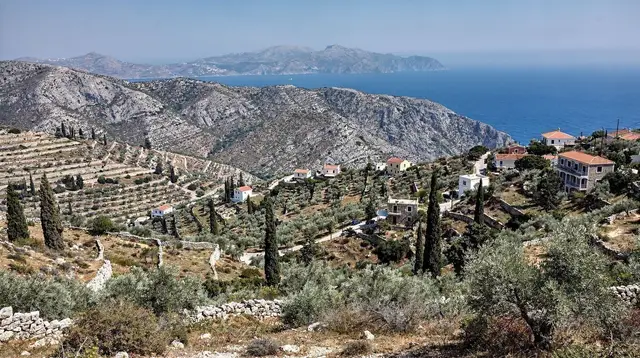
Once you’re off the VOAK, Cretan roads climb fast. The road up through the Therisso gorge out of Chania is one I drive often, and it’s a fair example of what “mountain road” means here: single-lane width in places, hairpins with no run-off, and a rock face on one side and a drop on the other. There’s no room for a confident overtake unless you can see well ahead, and on a road like this you rarely can.
If I want to see that gorge without gripping the wheel the whole way, I’ve taken a guided scooter route through the Therisso gorge villages instead, which lets someone who drives these bends daily do the judging for me. Our driving guide to Therisso gorge covers the route in more detail if you’re taking it yourself.
The road up to Omalos, for anyone heading to the Samaria gorge, is similar in character: narrow, winding, and busy with tour coaches in the early morning. Drivers there pull over constantly, not because the road is dangerous to travel but because it’s dangerous to travel carelessly, and everyone knows it. If the idea of driving that road before dawn doesn’t appeal, a professionally guided day at Samaria takes the driving decision off your plate entirely, and our guide to Samaria from Chania lays out both options side by side.
What the Pull-Over Actually Signals
The habit is really a small piece of shared road logic, built for roads that were never widened for two-way overtaking traffic. A slower vehicle eases right, onto gravel or a widened verge where one exists, watches for a straight and visible section, and holds that line until the car behind has passed. It is deliberate and it is timed. What it is not is a blanket signal that the road ahead is clear. A driver pulling over cannot see around the next bend any better than you can, and they are not making that call on your behalf. Treating the gesture as a green light is how head-on encounters happen on roads with no shoulder to escape to.
My own rule, after several years of driving here, is simple: I only pass when I can see a genuinely clear, straight stretch of road myself, regardless of what the car ahead is doing. The pull-over tells me the other driver is being considerate. It doesn’t tell me anything about the blind curve 200 metres ahead.
A Few Practical Habits That Help
Driving defensively on these roads isn’t complicated, but a few habits make a real difference. Keep your speed down on anything unmarked or single-lane, because Cretan villages often start with no warning sign at all. Use your horn lightly before blind bends in the mountains, the way locals do, rather than relying on sight lines that don’t exist yet. And if a car pulls over for you, take the gesture for what it is, a courtesy, and pass only once you can genuinely see the road ahead is empty. Our mistakes to avoid in Crete and safety and health in Crete guides both cover more of this ground if you’re planning a self-drive itinerary.
If mountain driving isn’t something you want to take on at all, there are good alternatives that still get you to the sites. A private driver for a day trip to Knossos or a two-day tour tracing the Battle of Crete both put the driving in someone else’s hands while you look at the scenery instead of the road edge. For getting to the island in the first place, our flights and ferries guide is a good starting point.
Driving Etiquette in Crete: Your Questions Answered
Does a car pulling onto the shoulder mean I should overtake?
No. It means the driver ahead is giving you room to pass when it becomes safe, not that it is safe right now. Wait until you can see a clear stretch yourself before you pass.
Why are Crete’s mountain roads so narrow?
Most were built for local traffic on terrain shaped by gorges and steep slopes long before car tourism existed. Widening them across the island has never been practical, so the pull-over habit developed instead as a way to share the road safely.
Is there a train in Crete I could take instead of driving?
No. Crete has never had a railway. A rental car is the practical default for most of the island, though the KTEL bus network works well along the north coast.
Are KTEL buses useful if I don’t want to drive?
Yes, along the VOAK/E75 corridor linking Chania, Rethymno, Heraklion and Agios Nikolaos. South of the mountains and off that main road, services thin out significantly.
Is it safe to overtake on Cretan mountain roads at all?
Only when you have clear, direct sight of an empty stretch of road ahead, regardless of any gesture from the car in front. Blind curves and narrow shoulders make guesswork dangerous.
Should I rent a car for my whole trip to Crete?
Many visitors do, since it opens up villages and beaches the bus network doesn’t reach. If mountain driving worries you, guided tours and private drivers cover the same ground without you behind the wheel.
Do Cretan drivers use horns a lot?
A light tap before a blind bend in the mountains is common and useful, more a warning of presence than the aggressive horn use some visitors expect from cities elsewhere.
What’s the biggest driving mistake visitors make in Crete?
Treating a pulled-over car as a clear signal to pass immediately, without checking the road themselves. That single misunderstanding is behind a lot of close calls on the island’s narrower roads.
tours.Culture
Verified deep-linked GetYourGuide tours. Book through these links and we earn a small commission at no cost to you.
GetYourGuide does not provide a product photo for this activity — the image shows the meeting point, photographed by us.