The Therisso Gorge Drive
Is the Therisso gorge drive worth doing, and how hard is it?
It's a short, scenic mountain drive from the Chania plain into the Apokoronas foothills of the Lefka Ori, not a gorge walk. The road is paved but narrow and twisting with blind bends, so it rewards a driver who takes it slowly rather than one chasing a schedule. There's no KTEL bus and no train to Therisso; a rental car, a guided 4x4, or a scooter tour are the only practical ways in.
What the Therisso road actually is
Most visitors who drive into the Therisso gorge come from Chania town or from the Souda and Akrotiri side of the plain, and most of them are picturing something other than what’s actually there. This is not a walking gorge like Samaria or Imbros, where the point is to leave the car behind.
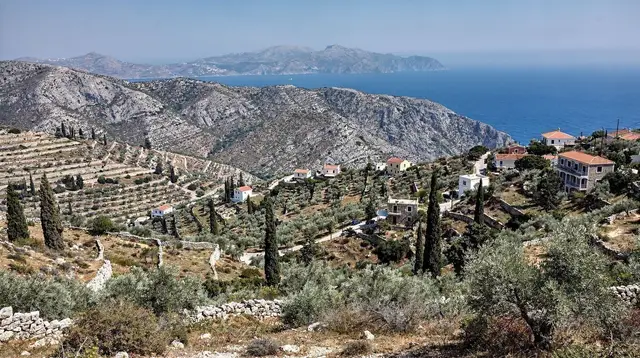
It’s a paved mountain road that climbs alongside a narrow ravine into the foothills of the Lefka Ori, the White Mountains, in the Apokoronas hinterland south of Chania. You drive it, mostly, rather than hike it, and the reward is the road itself: the gorge walls closing in, the terrain turning from olive groves to bare rock, and a village at the end that has a real claim on Cretan history rather than a manufactured one for tourists.
That distinction matters because it sets expectations correctly. If you came looking for a Samaria-style trek, you’ll be disappointed. If you came for a genuine mountain drive that shows you a different Crete than the coastal strip between Platanias and Agia Marina, the Therisso road delivers exactly that, in an afternoon rather than a full day.
Why this counts as mountain driving, not a coastal detour
It’s worth being blunt about where this road actually goes, because a lot of loose talk online treats every inland excursion in Crete as equivalent. It isn’t. The road out of Therisso climbs toward the same range that holds Pachnes at 2,453 metres, the second-highest summit on the island after Psiloritis at 2,456 metres.
Snow sits on those peaks into May or June most years, well after the beaches around Chania have turned warm and the tour boats have started running to Balos. You won’t see snow from the village itself in most seasons, and the road doesn’t take you anywhere near the summits — but the geography behind the gorge is genuine high-mountain terrain, not a hill dressed up for a brochure. Driving toward it, even a short way, is driving toward real relief, and it’s worth keeping that scale in mind rather than picturing an easy loop through olive terraces.
The gorge itself sits in the Apokoronas district, the rolling hinterland behind Kalyves and Almyrida and the villages around Lake Kournas. Apokoronas is one of the greener, more populated parts of western Crete, and the road into Therisso is the point where that gentler landscape gives way abruptly to gorge walls and mountain rock. That abruptness is part of what makes the drive memorable — you’re not easing into the mountains over many kilometres, you’re turned toward them within a short stretch of road.
Driving the road: what it actually demands of you
This is the part that matters most, and the part that guidebooks tend to gloss over. The Therisso road is paved and driven daily by residents, delivery vans and local buses of a small, informal kind — it is not a track that requires a 4x4. But it is genuinely narrow in stretches, it winds tightly along the contour of the gorge, and in places there is little to no shoulder between the road edge and a drop. None of that makes it dangerous if you drive it the way locals do. It makes it dangerous if you drive it the way you’d drive a straight coastal road.
Two habits will get you through safely. First, slow down on blind bends and use your horn lightly before them, the way local drivers do — it’s a warning, not aggression, and it’s standard practice on roads like this across the island, including on the approach to villages near Anogia and the mountain roads of Therisso itself. Second, understand the shoulder etiquette.
On a narrow mountain road, a slower local car will often pull partway onto the verge to let a faster car pass when there’s a safe stretch to do it. That’s courtesy, offered when the driver ahead judges it safe — it is not a green light to overtake blind, and reading it as one is exactly how head-on incidents happen on exactly this kind of road. If a car pulls aside on a bend rather than a straight, wait.
There is no train on Crete, full stop, and no bus service that reaches Therisso in any regular way — the KTEL coach network is genuinely useful along the north coast highway between Chania, Rethymno and Heraklion, but it thins out fast once you leave that corridor, and a village at the head of a mountain gorge is well outside its normal reach.
Practically, that leaves three ways in: renting a car and driving it yourself, joining an organised 4x4 or minibus excursion, or taking a guided scooter tour for those who want an open-air version of the same drive. If you’d rather read the fundamentals of driving in Crete before you commit to a mountain road, that’s a reasonable first stop, particularly if this would be your first time behind the wheel on the island.
For visitors who’d rather not manage the driving themselves, a guided option removes the shoulder-etiquette question entirely and lets you look at the gorge instead of the road. The Therisso Gorge Cultural Experience out of Chania is built around exactly this drive, with a local guide handling the road and adding context on the village’s role in Cretan history along the way.
For a different pace and a more open feel to the ride, the guided scooter tour from Nea Chora through the Therisso gorge villages covers similar ground on two wheels rather than four, which suits travellers who want the wind-in-the-hair version of the same road.
Therisso village: what’s actually there
Therisso earns its place in Cretan history for reasons that have nothing to do with tourism. It was here, in 1905, that Eleftherios Venizelos and a group of rebels declared the short-lived “Therisso Revolution,” a rising against Ottoman-backed rule that pushed Crete’s eventual union with Greece forward. That history is still visible in the village in a modest, unpolished way — a small museum and a handful of markers rather than a curated visitor centre — and it’s part of what separates Therisso from a manufactured mountain-village stop. This is a place with a real event attached to it, not a backdrop built for one.
Beyond the history, Therisso is a small settlement of stone houses squeezed into the point where the gorge opens up slightly, with a scatter of tavernas that serve straightforward Cretan food — grilled meats, mountain greens, the kind of menu built around what’s actually available locally rather than what a coach party expects.
It’s worth being honest here rather than inventing precision: there’s no single reliable published schedule for when any given taverna in a village this size opens or closes, and small family-run places in the Cretan mountains often keep hours that shift with the season and the owner’s mood as much as with any posted sign. Arrive without a fixed idea of eating at a particular place at a particular hour, and you won’t be disappointed if the first door you try is shut.
The gorge continues past the village into rougher terrain, and this is where the practical driving advice changes. The through road to Therisso is paved and fine for a standard rental car. Tracks beyond it, further into the Lefka Ori foothills, are a different matter — unpaved, more demanding, and generally outside what a standard rental contract covers. That’s the point at which a guided vehicle stops being a convenience and starts being the sensible choice. The private 4x4 White Mountains safari that goes above the clouds is built for exactly that stretch of terrain, taking you past where an ordinary rental car should reasonably go.
Other ways to experience the gorge and its mountains
Driving isn’t the only reason to come this way. The gorge walls and the crags above Therisso have become a genuine, if low-key, destination for climbers, and routes here are graded for a range of abilities with local guides available for those who’ve never roped up on Cretan limestone before. The guided rock climbing day in the Chania Therisso gorge is worth considering if you’d rather spend an afternoon on the rock than in the car, and it puts you closer to the gorge walls than any drive-through visit can.
If your interest in Apokoronas extends beyond Therisso itself, the wider district rewards a slower loop through its villages, several of which sit well off the routes most visitors ever drive. The Apokoronas villages and Prophet Ilias tour covers a broader stretch of this hinterland in a single guided day, which suits travellers who want the flavour of inland western Crete without piecing together their own route village by village.
For a full comparison of the various ways to see this side of the island, it helps to weigh a guided day against doing it yourself — see our notes on renting a car versus organised tours in Crete if you’re still deciding which approach fits your trip.
Fitting the drive into a wider western Crete trip
Therisso works well as a half-day addition to a base in Chania rather than a destination in its own right, and it pairs naturally with other inland stops in the same general direction. Travellers spending a couple of days around Chania town often combine a morning in the Venetian harbour with an afternoon drive up to Therisso, since both are close enough to the same base to fit into one loose day without a long transfer.
Others link it with a stop at Lake Kournas and the Argyroupoli springs, which sit in the same general Apokoronas-Rethymno borderland and offer a very different, water-based counterpoint to the dry gorge road.
If you’re building a longer western itinerary around the mountains rather than the coast, our three-day White Mountains and Sfakia itinerary sets Therisso alongside other Lefka Ori approaches, and a two-day Chania plan is a reasonable frame if this is one excursion among several rather than the centrepiece of your stay.
For travellers who want the fuller picture of the range Therisso only brushes against, the Psiloritis summit hike guide and our notes on Pachnes and the White Mountains go into what it actually takes to get up into that terrain on foot, well beyond where any road, including this one, will take you.
When to drive it, and what to skip
The Therisso road is drivable across the same broad season as most of western Crete’s inland routes, roughly spring through autumn, with the road itself unaffected by the closures that shut the Samaria gorge in winter — this is a road, not a managed hiking trail, so there’s no gate and no seasonal opening date to plan around.
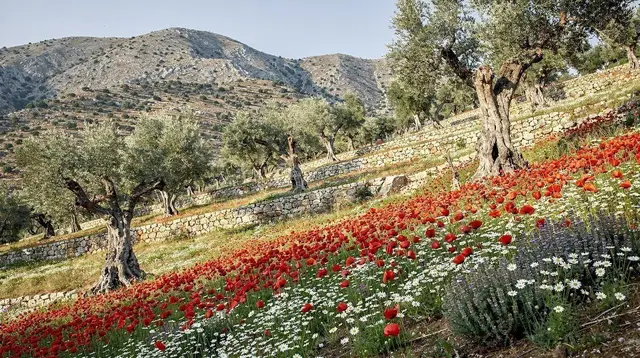
What does change with the season is comfort and light: spring brings wildflowers and a green backdrop to the lower gorge that dries out by midsummer, while the peaks visible from higher points on the drive still carry snow well into what feels, at the coast, like beach season. Avoid treating this as a rushed add-on squeezed between a beach morning and a dinner reservation — the road rewards unhurried driving, and rushing it is precisely how the blind-bend etiquette gets misread.
If your visit falls in winter, the road generally stays open and drivable, unlike gorge trails further into the mountains, but check conditions locally before committing, since heavy rain can affect any mountain road on the island. For a broader sense of how the season shapes an inland Crete trip, our driving in Crete guide and the Crete in winter overview cover the practicalities beyond this one road.
Frequently asked questions about the Therisso gorge drive
Can I get to the Therisso gorge by KTEL bus?
No. The KTEL coach network in this region runs along the north coast highway between Chania, Rethymno and Heraklion; it does not serve the Therisso road. A rental car, an organised tour, or a scooter or 4x4 excursion are the realistic options.
Is the Therisso gorge road difficult to drive?
It’s paved and used daily by local traffic, but it is narrow, winds along the gorge walls, and has sections with no real shoulder. The difficulty is less the surface than the discipline it demands: slow speeds, use of horns on blind bends, and patience behind slower vehicles.
Why do local cars pull onto the shoulder ahead of me?
It’s a courtesy specific to Cretan mountain roads: a slower local vehicle eases onto the verge to let a faster car by when there’s room to do so safely. It is not a general invitation to overtake on a blind bend, and treating it that way is exactly how head-on incidents happen on roads like this one.
How high do the White Mountains behind Therisso go, and is there snow?
The range is the Lefka Ori, whose highest point, Pachnes, reaches 2,453 metres. Snow typically lingers on the summits into May or June, long after the coast around Chania has turned warm, which is part of why the gorge road feels like a genuine climb toward real mountain terrain rather than a coastal detour.
Is there a set opening time for Therisso village or its tavernas?
There’s no single published schedule worth quoting here, and small mountain-village tavernas in Crete often keep informal, seasonal hours that shift with the owner and the month. Treat any specific opening time you read elsewhere as unverified and have a backup plan if a taverna is shut when you arrive.
Can I combine the Therisso drive with a hike or a 4x4 safari?
Yes. Some visitors drive up independently and walk a short stretch on foot near the village, while others join a guided 4x4 safari or scooter tour that continues further into the White Mountains foothills than most rental cars are insured to go. Both approaches work; the choice is really about how much of the driving you want to do yourself.
Do I need a 4x4 to drive to Therisso?
No, the through road to Therisso village is paved and manageable in a standard rental car driven carefully. A 4x4 becomes useful only if you plan to continue onto unpaved tracks further into the Lefka Ori foothills, which is where guided safari vehicles take over.
Village Tours in Crete on GetYourGuide
Verified deep-linked GetYourGuide tours. Book through these links and we earn a small commission at no cost to you.
GetYourGuide does not provide a product photo for this activity — the image shows the meeting point, photographed by us.