Common Mistakes to Avoid in Crete
What are the most common mistakes visitors make in Crete?
Assuming the Knossos frescoes are original, treating Samaria gorge as a round trip, driving the uninsured Balos dirt track, taking sand from Elafonissi, and underestimating Crete's size and geology. Each mistake comes from a plausible-sounding assumption, not a lack of research.
Five Assumptions That Cost Visitors Their Day
Most bad days in Crete do not come from bad luck. They come from a reasonable-sounding assumption that turns out to be wrong: that a famous ruin looks the way it does in the brochure, that a gorge walk works like most gorge walks, that a rental car can go wherever the map shows a road, that a beach photograph is literal, or that an island this size fits into one base and one loop. None of these assumptions are stupid. They are just untested against how Crete actually works, and the gap between the assumption and the fact is exactly where a day gets expensive, exhausting or cut short.
This guide corrects the five mistakes that come up most often, plus a handful of smaller ones, using verified facts rather than impressions. None of it depends on a specific price, schedule or operator, because those change season to season — what does not change is the geography, the regulation and the history behind each mistake.
Mistake 1: Expecting to See the Original Knossos Frescoes
The mistake: arriving at the Minoan palace of Knossos expecting to see the frescoes made famous in every guidebook — the Prince of the Lilies, the bull-leapers, the dolphins — as ancient originals.
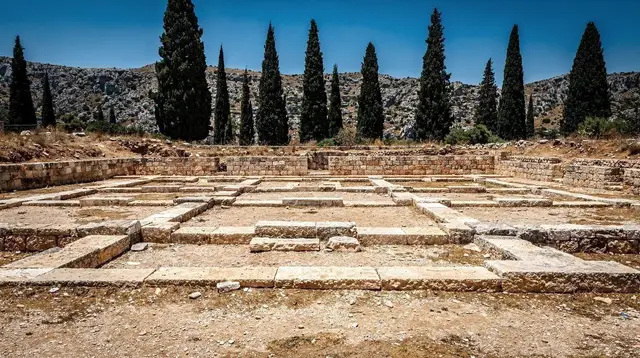
The fact: the frescoes visible on-site at Knossos are reconstructions. The originals were removed for conservation decades ago and are held in the Heraklion Archaeological Museum, about 5 km away. A combined ticket covering both the palace and the museum exists, and seeing both in the same visit is the only way to actually see the real paintings rather than a painted copy of them.
What follows from it: Knossos rewards a plan that includes the museum, not just the site. The palace itself has almost no shade, so a summer visit belongs at opening time before the heat and the coach groups both arrive. Read the Knossos and the Heraklion Museum guide before you go, and see the Knossos Palace visitors guide for the layout itself. Our blog post on the Knossos frescoes covers exactly what happened to the originals and why.
Mistake 2: Treating Samaria Gorge as a There-and-Back Walk
The mistake: booking a day in the Samaria gorge the way you would book any other hike — walk in, turn around, walk back to the car.
The fact: Samaria is one-way. The route runs 16 km downhill from the Xyloskalo at Omalos, around 1,227 m, to Agia Roumeli on the south coast — a village with no road in or out. The only way out is by boat, typically to Chora Sfakion, Sougia or Palaiochora, followed by a coach back to the north side of the island. The park is open roughly May to October, closes for flood or fire risk without much notice, and the gates shut in the early afternoon, which sets a real limit on what time you can start. The narrowest section, the Iron Gates, is about 3-4 m wide beneath walls over 300 m high.
What follows from it: this is a full-day, one-direction commitment, not a there-and-back outing, and it needs to be planned around the boat and coach schedule rather than around your own pace alone. If a resort itinerary offers an “easy Samaria” walk, understand that it is a different route entirely — a short 3-4 km walk up from Agia Roumeli and back, not the full gorge. For the real thing, see the Samaria Gorge complete guide and the Samaria Gorge from Chania guide; for the shorter alternative, see Easy Samaria from Agia Roumeli.
A guided Samaria Gorge hike with the boat and coach return arranged removes the logistics puzzle, and a small-group hiking tour through the gorge is a similar option worth comparing. Our blog explainer on why Samaria ends with a boat lays out the reasoning in more detail.
Mistake 3: Driving the Balos Road Without Reading Your Rental Contract
The mistake: assuming that because a road appears on the map to Balos lagoon, a standard rental car can simply drive it.
The fact: the final stretch to Balos is a rough, roughly 8 km dirt track, followed by a 20-30 minute walk down to the lagoon and back up. Most standard rental contracts explicitly exclude unpaved roads from their insurance coverage. That means a breakdown, a stone chip to the windscreen, or an accident on that track can leave you personally liable, not the rental company. The boat from Kissamos, which also calls at Imeri Gramvousa and its 1579 Venetian fortress, reaches the same lagoon without touching the excluded road at all.
What follows from it: check your rental agreement’s exclusions before you decide how to get to Balos, not after something goes wrong on the track. The Balos lagoon boat or road guide compares both options directly, and the Imeri Gramvousa fortress guide covers the island the boat also visits. If you would rather not decide, a full-day Land Rover tour that includes the Balos track uses a vehicle actually built and insured for it. Our blog post on the Balos road and your rental insurance walks through what most policies actually say.
Mistake 4: Souvenir-Hunting on Elafonissi’s Pink Sand
The mistake: expecting Elafonissi to match the saturated pink of a filtered photo, and treating the sand or shells as souvenirs to take home.
The fact: the pink comes from crushed foraminifera shells mixed into the sand, and it is patchy and subtle in person, not a uniform rose-coloured beach. Elafonissi is a protected Natura 2000 site, and removing sand or shells from it is illegal and can be fined. It is also not a quick stop: it sits about 76 km and roughly two hours of mountain road from Chania.
What follows from it: go for the shallow lagoon, the walkable sandbar to the small islet, and the setting itself rather than for a colour that will not match the postcard, and leave the beach exactly as you found it. The Elafonissi beach guide covers what the sand actually looks like and how to time the drive; for a direct comparison with Balos, see Balos vs Elafonissi. A day excursion to Elafonissi’s pink beach also solves the long drive if you would rather not do it yourself. Our blog piece on the truth about Elafonissi’s pink sand has more on the geology behind the colour.
Mistake 5: Planning Crete Like a Small, Single-Base Island
The mistake: booking one hotel near Heraklion or Chania and assuming the rest of the island is a comfortable day trip away — or, separately, expecting the volcanic scenery of a Cycladic island.
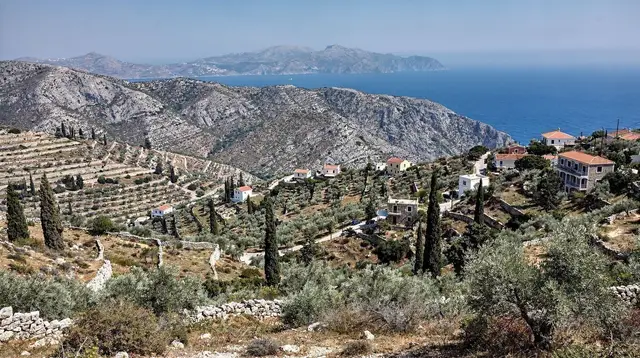
The fact: Crete is about 260 km long and 8,336 km², roughly 620,000 residents across four regional units — Chania, Rethymno, Heraklion and Lasithi. Driving from Chania to Sitia, the far east, is about 270 km and takes over four hours. Geologically, Crete is limestone and folded rock cut by gorges, with no caldera, no fumarole and no lava — it is a different kind of island from Santorini, not a smaller version of it. The package-resort strip between Hersonissos and Malia, often mistaken for “what Crete looks like,” is roughly 20 km of a 260 km coastline.
What follows from it: most itineraries need at least two bases to avoid multi-hour drives eating into every day, and the region you choose shapes the trip more than the hotel does. Compare the main bases in Chania vs Rethymno vs Heraklion, see how the coasts differ in North Coast vs South Coast Crete, and if you are still deciding between islands, read Crete vs Santorini.
For a full-island plan, the seven-day west-to-east itinerary is built around exactly this problem, and How Many Days in Crete sets realistic expectations before you book flights. Our blog post on why Crete is not a small island makes the same case with the numbers laid out.
A Few Smaller Errors Worth Avoiding
- Assuming raki is like ouzo. Raki, also called tsikoudia, is a grape marc spirit with no anise, usually offered free at the end of a meal. It is a different drink from ouzo and unrelated to Turkish rakı.
- Booking based on Central European time. Crete runs on Eastern European Time, one hour ahead of Paris, Berlin and Rome, in both winter (UTC+2) and summer (UTC+3). Opening hours quoted in CET will be an hour off.
- Expecting a train, or a functioning ski lift. There is no railway anywhere on the island. The mountains — Psiloritis at 2,456 m and Pachnes in the Lefka Ori at 2,453 m — hold snow into May or June, but there is no ski lift despite it.
- Overtaking on the hard shoulder. Drivers on narrow mountain roads habitually pull onto the hard shoulder to let a faster car pass. That is a courtesy signal, not an invitation to overtake blindly across it.
- Visiting a monastery in beach clothes. Working monasteries such as Arkadi, Preveli and Toplou apply a dress code — covered shoulders and knees — regardless of how hot the day is.
- Assuming a south-coast day trip means dolphin or whale watching. Boat trips from the south and east coasts go to islands — Chrissi, Spinalonga, Gramvousa, Dia — or to beaches with no road, not to marine-mammal tours.
- Planning July or August without checking the meltemi. This strong north wind blows mainly in those two months and regularly cancels boats to Balos, Gramvousa and Chrissi, while leaving the south, Libyan-facing coast calm.
A private private tour of the south Crete beaches sidesteps several of these at once by putting a local driver between you and the road conditions, the ferry timetables and the parking.
Quick Reference: Mistakes and Corrections
| Assumption | What is actually true |
|---|---|
| Knossos frescoes are original | Reconstructions; originals are in the Heraklion Archaeological Museum |
| Samaria gorge is a round trip | One-way, 16 km, exit only by boat from Agia Roumeli |
| Any rental car can reach Balos | Dirt track, usually excluded from rental insurance |
| Elafonissi’s pink sand can be taken as a souvenir | Protected Natura 2000 site; removal is illegal |
| Crete is a small, single-base island | About 260 km long; Chania to Sitia is over four hours |
| Crete is volcanic like Santorini | Limestone and folded rock, no caldera or lava |
| Raki is a type of ouzo | A grape marc spirit with no anise, distinct from ouzo |
| Sea and weather conditions are uniform island-wide | The meltemi affects the north far more than the south coast |
Frequently Corrected Questions About Visiting Crete
Are the frescoes at Knossos the real ones?
No. The frescoes visible at the Knossos palace are reconstructions. The originals were removed for preservation and are displayed in the Heraklion Archaeological Museum, about 5 km away. A combined ticket covering both sites exists.
Can you walk both directions through the Samaria gorge?
No. Samaria is a one-way route, 16 km downhill from the Xyloskalo at Omalos to Agia Roumeli, a village with no road. Visitors leave by boat, usually to Chora Sfakion, Sougia or Palaiochora, then a coach. The gorge is open roughly May to October.
Is the road to Balos safe to drive?
It is a rough, roughly 8 km dirt track, and most standard rental contracts explicitly exclude unpaved roads from their insurance. A breakdown or an accident on that track is typically uninsured. The boat from Kissamos, which also stops at Imeri Gramvousa, avoids the issue entirely.
Can you take sand or shells home from Elafonissi?
No. Elafonissi is a protected Natura 2000 site, and removing sand or shells is illegal and can be fined. The pink tint comes from crushed foraminifera shells mixed into the sand and is patchier in person than in edited photographs.
Is Crete a small island you can see from one base?
No. Crete is around 260 km long, and driving from Chania to Sitia is about 270 km and over four hours. The island splits into four distinct regions, and most itineraries need at least two bases to avoid excessive daily driving.
Is Crete a volcanic island like Santorini?
No. Crete has no caldera, fumarole or lava; its landscape is limestone and folded rock cut by gorges. Visitors expecting Santorini-style volcanic scenery are thinking of a different island entirely.
Does the whole island get warm sea water and good weather at the same time?
No. The meltemi, a strong north wind, blows mainly in July and August and can cancel boats to Balos, Gramvousa and Chrissi while the south coast, on the Libyan Sea, stays calm. Conditions vary sharply between the north and south coasts and between seasons.
What is the single most useful habit to avoid mistakes in Crete?
Treat any claim about price, distance, or what a place looks like as worth checking against the season and the specific region, since Crete’s four regions — Chania, Rethymno, Heraklion and Lasithi — behave differently enough that a fact true in one is often wrong in another.
Best Crete Tours on GetYourGuide
Verified deep-linked GetYourGuide tours. Book through these links and we earn a small commission at no cost to you.
GetYourGuide does not provide a product photo for this activity — the image shows the meeting point, photographed by us.