A back road into the White Mountain foothills
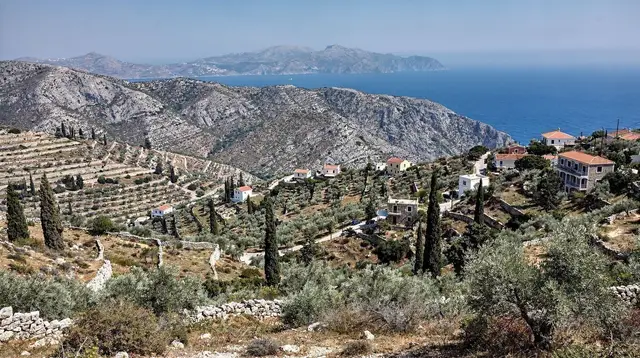
South of Chania, past the last roundabouts of the modern town, the road narrows, climbs, and stops behaving like a highway. This is the Therisso road, and it is one of the few detours near Chania that rewards the drive itself rather than a single destination at the end of it. It follows a gorge cut into the lower folds of the Lefka Ori, the White Mountains, and it is a genuine alternative to spending an afternoon on the busier coast road between Chania and Kissamos — quieter, slower, and shaded for long stretches by plane trees and rock walls rather than roadside development.
There is no ticket booth here and no single sight to tick off. What there is: a winding mountain road, a run of small stone villages, a gorge with real depth in places, and a name that matters more in Cretan history than its modest size would suggest. Treat it as a half-day loop from Chania, not as a headline stop on a Crete itinerary, and it delivers exactly what it promises.
What the gorge actually is — and isn’t
Before going further, it is worth being direct about scale and expectations, because the name “gorge” invites comparison to bigger things on this island. The Therisso gorge is not the Samaria gorge, and it is not a hiking objective in the way Samaria, Imbros or Agia Irini are. It is a road that runs through a gorge, with the walls closing in at points and opening out at others, rather than a walking trail through one.
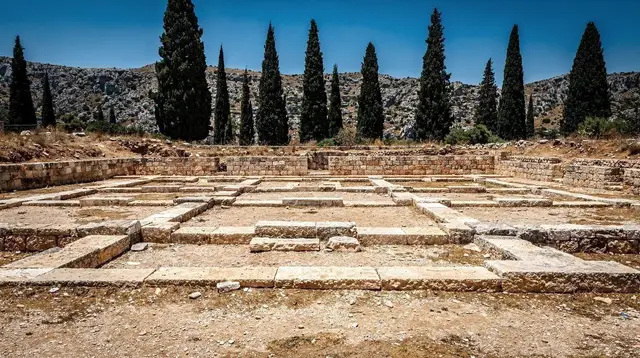
There is no major monument at Therisso, and what does exist has had little formal restoration. The house associated with the 1905 revolution is small and modest rather than a purpose-built museum experience. There is no ancient site here — nothing Minoan, Roman or Venetian of note — and no beach anywhere near the village; Therisso sits well inland, in the mountain foothills, with the nearest coastline a substantial drive away. Visitors arriving with expectations shaped by Knossos, Spinalonga or Balos will be disappointed. Visitors arriving for a quiet mountain drive, a change of scenery from the coast, and a plate of food in a village taverna will not be.
a half-day cultural excursion up the Therisso gorge from Chania covers the road and its history for travellers who would rather not navigate the bends themselves, with a guide filling in the 1905 story as you go.
The 1905 revolution that put a small village on the map
Therisso’s name carries more historical weight than its size suggests. In 1905, at a point when Crete was an autonomous state still under nominal Ottoman suzerainty and administered by a High Commissioner, a group of Cretan politicians led by Eleftherios Venizelos — who would go on to become one of modern Greece’s most consequential prime ministers — gathered in Therisso and declared a revolutionary assembly calling for union with Greece. The village’s position, tucked into the mountains and defensible by nature, made it a practical base for a movement that the authorities in Chania could not easily reach or dislodge.
The revolt did not achieve immediate union, and it was eventually negotiated down rather than won outright on the ground. But it marked Venizelos’s rise to national prominence, and it fed directly into the political momentum that led to Crete’s union with Greece in 1913. A small house in the village is linked to the 1905 assembly and functions today as a modest local museum, more a marker of the event than a large-scale historical attraction. Travellers interested in how this era connects to Crete’s later twentieth-century history — including the very different events of 1941 — will find the thread continues elsewhere on the island, but Therisso is where this particular chapter opens.
Driving the gorge: what to actually expect
There is no way around this point, so it is worth stating plainly: there is no reliable public bus service on the Therisso road. The KTEL coach network that genuinely works along Crete’s north coast, linking Chania, Rethymno, Heraklion and Agios Nikolaos, does not extend up this gorge in any dependable way. A rental car is not a convenience here — it is the only practical way to see Therisso on your own schedule, and anyone relying on public transport should plan on a guided tour instead.
The road itself is fully paved and in reasonable condition, but it is narrow, with a steady sequence of bends as it follows the contours of the gorge upward. This is standard for Crete’s inland mountain roads, and the etiquette that goes with it is worth knowing before you set off: when two cars meet on a blind curve, or when a slower car is holding up a faster one behind, local drivers habitually pull onto the hard shoulder or into a widened pull-out to let the other pass.
This is courtesy, not an invitation to overtake blind on a bend. Treat every pull-out the same way — as a place to let traffic clear, not as a green light to accelerate past — and the drive is entirely manageable for anyone used to driving in Crete’s mountain roads generally.
None of this is unique to Therisso. The same pattern of narrow lanes, blind bends and courteous pull-outs shows up across Crete’s inland roads, from the foothill villages near Rethymno to the approach into the higher mountain villages further east, and visitors planning to explore beyond the coast highway benefit from understanding it once rather than relearning it on every mountain drive. How Cretans actually drive sets out the wider habits — flashing lights, hand signals, the shoulder etiquette — before you find yourself guessing at them on a hairpin.
Fuel up before leaving Chania; there is little reason to expect a petrol station once you leave the outskirts of town, and mountain roads burn more fuel per kilometre than the flat coast highway does.
The villages along the way
The road out of Chania passes through a run of small settlements before reaching Therisso itself — quiet farming and mountain villages with none of the resort infrastructure of the coast. Stone houses, small churches, the occasional kafenion with a handful of tables outside: this is the texture of the drive as much as the gorge walls are. Few of these hamlets have any specific sight to stop for; the point is the cumulative feel of moving from the modern edge of Chania into genuinely rural, mountainous Crete within half an hour.
Therisso village itself, at the top of the gorge road, is small: a cluster of tavernas built around the 1905 connection, a scattering of houses, and the modest museum house mentioned above. Several tavernas here serve grilled meat and mountain greens to day-trippers from Chania, and a meal here is a reasonable centrepiece for the visit rather than an afterthought. Beyond Therisso, the road continues toward Zourva and Meskla, and from there a much longer mountain route eventually reaches the Omalos plateau, the starting point for the Samaria gorge walk — a serious full-day undertaking in its own right, and not something to bolt onto a Therisso afternoon.
The food at Therisso follows the same unpretentious pattern as the road itself. Expect grilled lamb or goat, wild greens gathered from the surrounding hillsides, and simple mezze rather than a curated tasting menu — closer to what locals eat than what a coastal resort serves tourists. Most tavernas close a meal with a small complimentary glass of raki, the grape-marc spirit also called tsikoudia. Travellers unfamiliar with it, and keen to know how it differs from anise-flavoured ouzo, can read raki and tsikoudia explained before their first taverna stop anywhere on the island.
For travellers who want the gorge road covered without driving it themselves, a guided scooter tour through Nea Chora and up to the Therisso villages is a lighter, more open-air way to do the same route, weather and comfort with two wheels permitting.
Snow on the White Mountains, seen from below
The Lefka Ori, the White Mountains that give the Therisso road its backdrop, hold snow on their upper slopes well into May, and sometimes into June in a heavier winter. From certain points along the gorge road, particularly on the higher stretches near Therisso and beyond toward Zourva, that snow line is visible above the tree cover even as the valley floor is warm enough for a taverna lunch outdoors — a contrast that is one of the more memorable, and least photographed, details of a spring visit. By July the peaks have generally shed their snow, and the mountains settle into their bare summer grey and brown.
The range’s individual summits are not visible from the gorge road as distinct peaks — foreground ridges block the sightline — but the general snow-streaked backdrop belongs to the same massif that holds Pachnes, at 2,453 m the second-highest point in Crete after Psiloritis. Therisso offers no route up into that higher ground; it stays a valley-floor drive. Travellers who want to go beyond the view and actually walk into the range should look at Pachnes and the White Mountains rather than expect this road to deliver a mountain hike.
This inland route does not suffer from the meltemi, the strong north wind that disrupts boat trips to Balos and Gramvousa or Elafonissi in July and August — Therisso’s gorge is sheltered by the terrain itself, which makes it a sound backup plan on a windy coastal day, even outside its ideal season.
When to go
May to October is the sound window for this drive, matching the season across most of Crete. Late spring brings wildflowers to the lower slopes and the snow-capped backdrop described above; the height of summer is hot but tolerable in a car with the tavernas at Therisso offering shade; and September into early October keeps warm, settled weather with fewer visitors on the road generally. Outside this window, from November through April, some of the small tavernas in Therisso and the villages along the way scale back or close for the winter, in keeping with the wider pattern across rural Crete, so calling ahead or treating a winter visit as a scenic drive without a guaranteed lunch stop is the safer assumption.
Combining Therisso with the rest of a Chania day
Therisso works well as a half-day addition to a longer stay based in Chania, rather than a destination that needs its own overnight. A common pattern: a morning in Chania’s old town and Venetian harbour, then an afternoon drive up to Therisso for a late lunch and the return down before evening. Travellers based on the Souda and Akrotiri side of the bay have a similarly short run in, and those who enjoy a walk before or after the drive can pair the day with the Akrotiri monasteries walk, which sits in the opposite direction from Chania and offers a coastal counterpoint to Therisso’s mountain setting.
Travellers who want the mountain scenery pushed further, beyond what a single gorge road covers, might instead look at a private 4x4 safari into the higher White Mountains, which goes deeper into the Lefka Ori than a standard car trip up the Therisso road can manage.
For a broader look at whether self-driving or booking a guided option makes more sense across Crete generally, not just for this one road, rental car versus organised tours in Crete weighs the trade-offs — cost, flexibility, and the comfort of not driving mountain bends yourself — in more detail than a single-destination page can.
Practical details at a glance
| What | Detail |
|---|---|
| Distance from Chania | About 15 km to Therisso village |
| Drive time | 25-35 minutes each way, more with stops |
| Public transport | No reliable KTEL service on this route |
| Road surface | Fully paved, narrow, winding |
| Fuel | Fill up in Chania before setting off |
| Typical stop | 2-3 hours including a taverna lunch |
| Best months | May to October |
| Nearby continuation | Zourva, Meskla, and eventually the Omalos plateau |
Rough day budget
| Item | Cost (per person) |
|---|---|
| Fuel share (self-drive, round trip) | €5-10 |
| Taverna lunch in Therisso | €12-20 |
| Coffee or raki stop | €2-5 |
| Guided minibus, scooter or 4x4 option | €35-75 instead of self-drive costs |
These figures assume a self-driven half-day trip from Chania with lunch included; a guided tour replaces the fuel line with a per-person tour price, generally in the €35-75 range depending on the vehicle and format.
Frequently asked questions about visiting Therisso
How far is Therisso from Chania, and how long does the drive take?
Therisso village is about 15 km south of Chania, and the drive up the gorge road takes 25 to 35 minutes each way, longer if you stop for photos. The road is fully paved but narrow and bends constantly as it climbs, so allow more time than the distance suggests.
Can I visit Therisso without a rental car?
It is difficult. There is no reliable public bus service on this route, unlike the north coast highway linking Chania, Rethymno and Heraklion. A rental car is the practical way in, and a handful of guided minibus, scooter or 4x4 tours from Chania cover the same road if you would rather not drive it yourself.
Is the Therisso road dangerous or difficult to drive?
It is a narrow, winding mountain road rather than a dangerous one. Cars meeting on a blind bend routinely pull onto the hard shoulder to let the other pass — that is local courtesy, not an invitation to overtake. Drive it at a measured pace, use the pull-outs the same way, and it is manageable for anyone comfortable with mountain roads.
What is Therisso village actually famous for?
Therisso was the base of the 1905 uprising led by Eleftherios Venizelos against the administration of the autonomous Cretan State, a revolt that helped push the island toward union with Greece in 1913. A small house in the village, now a modest museum, is linked to that episode; beyond it, Therisso is a working mountain village, not a preserved historical site.
Is there an archaeological site or a beach at Therisso?
No. Therisso has no ancient ruin and no beach — it sits inland in the mountain foothills, well away from the coast. Visitors expecting a Minoan site or a swimming stop should look elsewhere; the draw here is the drive itself, the gorge scenery and the mountain villages, not a single monument.
When is the best time to drive the Therisso gorge?
May to October covers the season when the road is easiest and the villages’ tavernas are reliably open. The White Mountains behind Therisso hold snow on their upper slopes into May or sometimes June, which makes for a striking contrast on a warm spring day from a car window at lower elevation.
Can the Therisso road be combined with other sights near Chania?
Yes. Many visitors pair it with a morning or afternoon in Chania’s old town, or continue past Therisso toward Zourva and Meskla, from where a longer mountain road eventually reaches the Omalos plateau and the start of the Samaria gorge — a very different, much longer undertaking best planned as its own day.
Do I need to book a guided tour, or is self-driving better?
Either works. Self-driving gives you control over stops and pace and costs only fuel; a guided minibus, scooter or 4x4 tour removes the need to navigate the bends yourself and usually adds commentary on the 1905 history and the villages, which is useful if that context matters to you. Compare the options above, or check general mistakes to avoid in Crete before setting off on any self-drive mountain route for the first time.