Two Names on the Same Strip
Stalida and Malia are next-door neighbours on the same stretch of package coast, and the honest answer to whether they differ is: a little, not a lot. Both sit on the north-coast resort strip that runs roughly 20 km from Hersonissos through Stalida to Malia, on an island that measures about 260 km from Kissamos in the west to Sitia in the east. That ratio matters before anything else on this page: this strip is a fragment, not a preview. Crete beyond the VOAK highway is gorges, mountain villages and quiet south-coast bays that have almost nothing in common with a sunbed row outside a cocktail bar. If your only stop on the island is this stretch, you have seen a slice of Crete’s package coast, not Crete.
What separates the two towns is scale and volume, not geography or season. They share the same beaches of fine sand shelving gently into the Aegean, the same May-to-October holiday calendar, and the same corridor of hotels, tavernas, car-hire desks and mini-markets. Malia carries more of everything — more bars, more clubs, more late-night noise, more of the coast’s reputation as a young-crowd destination. Stalida is the quieter half of the same strip: smaller, more family-oriented, with an earlier bedtime for the town as a whole. Neither is a village in the sense Crete uses that word further from the coast. Both are resorts built for a holiday week, and both are busiest and most expensive exactly when most visitors want to come.
Where They Sit on the North Coast
Stalida and Malia sit on the VOAK coastal highway, the E75 that runs the length of Crete’s north shore from Chania through Rethymno and Heraklion to Agios Nikolaos. This is the one part of the island where the KTEL coach network is genuinely convenient: buses run frequently between Heraklion city, Hersonissos, Stalida, Malia and on to Agios Nikolaos, making both towns easy to reach without a rental car. Heraklion airport is roughly 29 km from Stalida and 34 km from Malia — about 25 to 40 minutes by car or bus depending on traffic through Hersonissos, which is the busiest single stretch of that road in August.
That coastal position is the whole logic of the resort strip: flat, sandy, close to the airport, and served by a highway rather than the narrow mountain roads that define most of the rest of the island. It also means Stalida and Malia read as extensions of Hersonissos rather than as separate holiday decisions. A visitor staying in one can walk, cycle or bus to the next within twenty minutes, and many spend an evening in Malia’s bars regardless of which town they are staying in.
Which One Should You Book?
For visitors choosing between the two rather than treating them as one stop, the decision is mostly about tolerance for noise after dark. Anyone weighing Malia’s nightlife against Stalida’s quieter evenings, or against the third resort on this same strip, will find the trade-offs laid out directly in the site’s comparison of Hersonissos, Malia and Stalida.
Families and couples who already know they want the calmer option can generally settle on Stalida without further research; travellers still undecided about which part of the island, or even which type of base, suits them are better served by the broader guide to where to stay in Crete, which sets this strip against the old towns and the quieter south coast.
Stalida: The Quieter Half
Stalida is the smaller of the two, built mainly around family-run hotels and self-catering apartments set back from a sand beach that shelves gently enough for small children. It has restaurants, bars and a modest strip of its own, but nothing close to Malia’s density of clubs. Evenings here tend to end at a taverna table rather than a dance floor, and the town markets itself accordingly, as the calmer option for couples and families who still want to be within a short bus ride of Malia’s nightlife when they want it.
Stalida’s beach is its main asset: a long run of fine sand with the sunbed-and-umbrella arrangement typical of the whole north coast, usually €10-20 for a set for the day. Greek law requires every beach, organised or not, to keep a free public stretch and a clear path to the water, so a spot on the sand without paying is always possible even on a busy August afternoon. Watersports operators run jet-skis, banana boats and paddleboard rentals along this stretch in season, more of them concentrated toward the Hersonissos end.
Malia: Where the Strip Turns Up the Volume
Malia is the better-known name, and the reputation is earned. Its central strip, parallel to the beach, is Crete’s densest concentration of bars, clubs and late-opening food stalls, drawing a young, largely northern-European crowd through July and August in particular. This is genuinely loud after dark, and it is worth saying plainly: nobody should come to Malia in peak season expecting a quiet evening or village authenticity. That is not what this part of the coast sells, and pretending otherwise sets up a disappointing trip.
Away from the strip, Malia’s old town — a smaller grid of streets set slightly inland — keeps a more ordinary Cretan village feel, with a church, a few older houses and everyday shops that have nothing to do with the resort economy along the beach. The contrast between the two, sometimes a five-minute walk apart, is the clearest illustration on this entire coast of how a package resort can sit directly against an unremarkable working town. A short tuk-tuk tour is a low-effort way to see both sides without renting a car for the day, and boat parties departing from the harbour, complete with a DJ and loud speakers, are part of the same after-dark economy that makes Malia’s name.
a Stalida-Malia tuk-tuk tour that links the beach strip to the older streets inland gives a fast, low-cost overview of both towns for visitors without a car, and it is one of the few ways to see Malia’s quieter side without walking the full length of the strip in midday heat.
The Malia Palace: A Short Cultural Detour
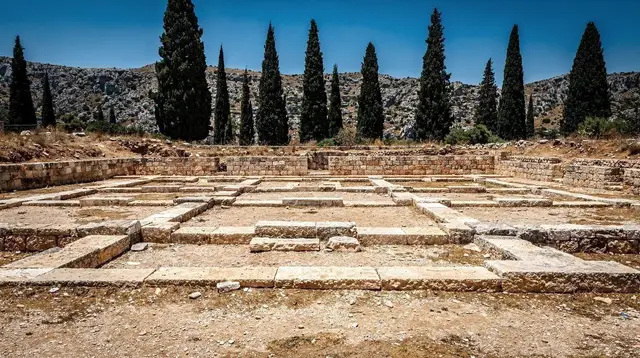
The most substantial reason to add a non-beach hour to a Malia stay sits about 3 km east of town: the Malia Palace, one of the four great Minoan palatial sites on Crete alongside Knossos, Phaistos and Zakros. It is smaller and far less visited than Knossos, with none of the crowds and none of the reconstructed concrete that makes Knossos controversial among archaeologists — what stands at Malia is closer to the excavated original, without the red-column restorations. There is very little shade on site, so an early or late visit is more comfortable than a midday one, and the palace works well as a half-day break from the beach rather than a full-day excursion.
a Potamos beach and Sissi excursion that pairs Malia’s quieter eastern coastline with the neighbouring fishing village is a reasonable way to combine a change of scenery with a morning away from the main strip, particularly for visitors staying several nights who want one day that looks different from the rest.
For visitors who want more Minoan context in one trip, Knossos and the Heraklion Archaeological Museum, which holds the original frescoes taken from every excavated site on the island, are both reachable as a day trip from either town.
Beaches Side by Side
Both towns share the same beach type: long runs of fine sand, water that stays shallow for a good distance out, and organised sections with sunbeds alongside free public stretches, as Greek law requires everywhere on the coast. Stalida’s beach is generally calmer and less crowded than the central section of Malia’s, which draws the heaviest daytime footfall from the strip’s hotels and day-trippers from Hersonissos. Neither beach has the dramatic scenery of the island’s western lagoons or southern coves; what they offer instead is convenience — steps from a hotel, backed by restaurants, with sunbeds and watersports on hand.
Visitors unsure of their rights to a free strip of sand, or unclear on how the roughly €10-20 sunbed fee actually works in practice, will find the details, and the law behind them, set out in the site’s guide to sunbeds and your rights on Cretan beaches.
| Stalida | Malia | |
|---|---|---|
| Nightlife | Low-key bars and tavernas | Dense bar and club strip |
| Beach | Calm, shallow, family-friendly | Busier central stretch, quieter east end |
| Best fit | Couples, families | Young groups, nightlife-focused travellers |
| Cultural detour | None on-site | Malia Palace, 3 km east |
| Evening noise | Generally quiet | Loud in peak season, especially Jul-Aug |
Getting Around Without a Car
The KTEL coach service is the practical way to move along this coast without renting a car. Buses run frequently between Heraklion, Hersonissos, Stalida and Malia, continuing on to Agios Nikolaos, and this is genuinely one of the few stretches of Crete where public transport can replace a rental for the length of a stay. Taxis and short tuk-tuk hops cover the gap between the beach strip and the old parts of town. Renting a car still pays off for day trips further afield — to Knossos, the Lasithi plateau, or the Heraklion Archaeological Museum — where bus connections thin out or require a change.
Anyone weighing whether to rent at all, rather than relying on buses and taxis for the whole stay, will find the costs, insurance quirks and unpaved-road exclusions explained in the site’s guide to renting a car in Crete, which applies just as much on this flat coastal stretch as on the island’s mountain roads.
a Malia boat party with a live DJ is squarely aimed at the strip’s nightlife crowd and is worth mentioning precisely because it sums up what this coast is for after dark — loud, sociable, and unmistakably a package-holiday activity rather than a cultural excursion.
When to Go
The season here follows the rest of Crete’s coast: roughly May to October, with July and August the hottest weeks, regularly 30-35°C, and also the busiest and most expensive on this particular strip because it is where the island’s package-holiday demand concentrates hardest. Late May, June and September offer a real trade-off worth taking seriously — warmer sea than early spring, thinner crowds than midsummer, and lower prices on rooms and sunbeds.
Outside that window, from November to March, much of the resort infrastructure along this stretch simply closes for the winter, and Stalida and Malia are not destinations in that season at all; visitors wanting Crete in winter should look to the old towns of Chania, Rethymno and Heraklion instead, which stay open year-round.
Not a Summary of the Island
It bears repeating because it is easy to miss when a resort strip is this self-contained: Stalida and Malia, together with Hersonissos and Gouves, form roughly 20 km of an island that runs 260 km end to end. Spend a week here and you will have seen beaches, bars, restaurants and one Minoan palace — a real and enjoyable slice of Crete, but not the gorges of the south-west, not the mountain villages under Psiloritis, not the Venetian harbour towns, and not the emptier beaches of the east.
Visitors who want both the convenience of this strip and a fuller sense of the island generally use it as a short stop within a longer route rather than the whole trip; a seven-day west-to-east itinerary is one straightforward way to do that without giving up the ease of the north coast entirely.
That is the honest way to plan around Stalida and Malia: enjoy the strip for what it does well, and do not mistake it, or expect it, to represent the rest of the island.
What Catches First-Time Visitors Out
The most common disappointment on this strip has nothing to do with the beach or the bars: it is expecting a Greek island village and finding a purpose-built resort economy instead. Menus along the seafront are priced for a captive tourist market, often noticeably higher than an equivalent taverna a few streets inland or in Heraklion’s old town, and August room rates can run well above what the same hotel charges in June.
None of that is unique to Stalida and Malia — the same pattern repeats on every package strip in Greece — but it catches visitors who arrive expecting village prices on a resort coast. The site’s rundown of mistakes to avoid in Crete covers this and other first-trip pitfalls in more detail, and the blog’s blunter verdict on whether Hersonissos is worth it applies just as directly to its neighbours along the same strip.
Frequently Asked Questions About Stalida and Malia
Is Stalida quieter than Malia?
Generally yes. Stalida is built mostly around family-run hotels and apartments along a calm, shallow beach, while Malia carries the strip’s loudest bar and club district. Neither is quiet in July or August, but Stalida’s evenings stay closer to restaurant terraces than to sound systems.
How far is Malia from Heraklion airport?
Malia is roughly 34 km from Heraklion airport, about 35-40 minutes by car on the VOAK coastal highway, or a similar time on the KTEL bus that runs along the north coast between Heraklion and Agios Nikolaos.
Can I visit the Malia Palace without a car?
Yes. The Malia Palace, one of the four major Minoan palace sites alongside Knossos, Phaistos and Zakros, sits about 3 km east of Malia town and is reachable by taxi, local bus or a short organised excursion; walking is possible but there is little shade along the road.
Is Malia only for young party crowds?
Malia’s central strip is genuinely loud and youth-oriented in peak season, but the town also has family apartments, a working old quarter set back from the beach, and the Malia Palace nearby, so it is not exclusively a nightlife destination if you choose where you stay.
What is the best time to visit Stalida and Malia to avoid the biggest crowds?
Late May, June and September give warm sea and thinner crowds. July and August bring the highest temperatures, the fullest beaches and the loudest nights on the strip, and prices for rooms and sunbeds rise accordingly.
Do I need a car to get around Stalida and Malia?
Not strictly. The KTEL coastal bus connects both towns to Heraklion, Hersonissos and Agios Nikolaos along the VOAK highway, and both centres are walkable. A rental car earns its keep for day trips to Lasithi, Knossos or the Heraklion Archaeological Museum.
Are Stalida and Malia good bases for exploring the rest of Crete?
They work for the north coast and short trips to Heraklion, Knossos or Lasithi, but Crete is 260 km east to west and largely mountainous and rural away from this strip. Treat Stalida and Malia as one stop within a longer trip, not a base for the whole island.
Is the beach in Stalida sandy?
Yes, Stalida’s main beach is sand with shallow, gently shelving water, which is part of why it draws more families than Malia’s livelier central beach.
Are Stalida and Malia a good choice for a first trip to Crete?
They can work as part of a first trip, especially for travellers who want an easy, walkable base with beach, food and transport links from day one, but pair the stretch with time elsewhere — Chania, Rethymno or the south coast — rather than staying only here; the site’s guide for first-time visitors to Crete lays out how to structure that kind of trip.
Does the KTEL bus run late enough for a night out in Malia?
No, not reliably. KTEL services along this stretch thin out by early evening and stop well before Malia’s bars and clubs close, so anyone staying in Stalida or Hersonissos and heading to Malia at night should plan on a taxi back rather than counting on the coach; walking the highway after dark is neither pleasant nor particularly safe.