Crete for First-Timers: Getting Your Bearings
What should a first-time visitor understand about Crete before planning?
Crete is not one destination but four: Chania, Rethymno, Heraklion and Lasithi, running roughly 260 km west to east. No single base covers the island — Chania to Sitia is about 270 km and over four hours by road — so the right base depends on which region you choose, not on a one-size itinerary.
The island is bigger than it looks on a map
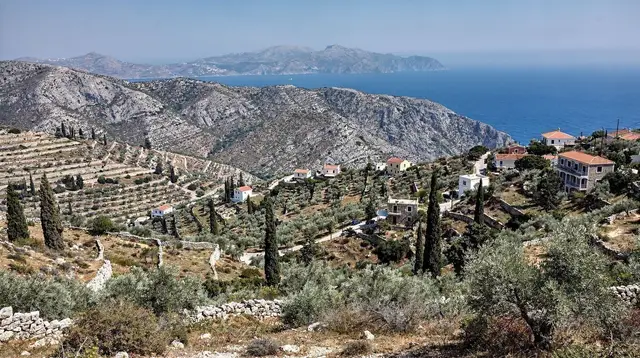
Most people planning their first trip to Crete make the same mistake before they ever board a flight: they picture an island small enough to circle in a few days, tack on a rental car, and assume they will simply drive to everything. Crete does not work that way. It covers 8,336 square kilometres, stretches roughly 260 km from west to east, and varies from 12 to 60 km north to south. Around 620,000 people live here, spread across four regional units that run west to east in a neat line: Chania, Rethymno, Heraklion and Lasithi. It is the largest island in Greece and the fifth largest in the Mediterranean, and treating it like a compact island destination is the single most common planning error.
The practical consequence is distance. Driving from Chania in the west to Sitia in the east is about 270 km and takes over four hours on the VOAK, the island’s main highway, without stops. That is before you factor in the mountain roads that peel off it toward gorges, monasteries and south-coast villages, which are slower and narrower than the coastal route. A first-timer who books one hotel and expects to day-trip across the whole island will spend most of the holiday in the car.
The better approach, and the one this guide argues for, is to understand the island’s shape first and then decide which slice of it actually matches what you want from the trip. The blog post on why Crete is not a small island makes the same case with a different set of numbers, useful for resetting expectations before you ever open a map.
The island’s spine explains a good part of that driving time. Psiloritis, also called Mount Ida, rises to 2,456 m in the centre and can hold snow into May or June in a heavy year, while Pachnes reaches 2,453 m in the Lefka Ori, the White Mountains, above the south-west. Neither summit is a casual outing, but readers curious about walking part of the range can compare the two routes in the guide to the Psiloritis summit hike and the guide to Pachnes and the White Mountains: both make clear why these mountains, not just the distance on a map, are what actually slows a west-to-east itinerary.
Four regions, four different holidays
Crete divides naturally into four regional units, and each one delivers a genuinely different kind of holiday.
Chania and the far west center on the Venetian harbour town of Chania, with the beach strip running along Platanias and Agia Marina, and the dramatic western corner around the Balos lagoon and Elafonissi, both worth a full day on their own rather than a rushed stop. This is the region most guidebook covers show, and it earns the reputation.
The south-west, tucked below the White Mountains, is where the Samaria gorge cuts down to the sea and villages like Loutro have no road at all — you arrive by boat or on foot. It rewards travellers willing to hike and take ferries, not those who want everything reachable by car. The full logistics of the hike — timing, permits and the boat connection out of Agia Roumeli — are covered separately in the complete guide to the Samaria gorge.
Rethymno and its mountains sit in the middle, anchored by the old town of Rethymno and the Arkadi monastery, with Mount Psiloritis rising to 2,456 m above the inland village of Anogia and a quieter stretch of Libyan-coast beaches at Plakias and Agia Galini. The old town itself, with its Venetian fortress and Ottoman minaret, is worth a slow half-day on its own — see the dedicated guide to Rethymno town.
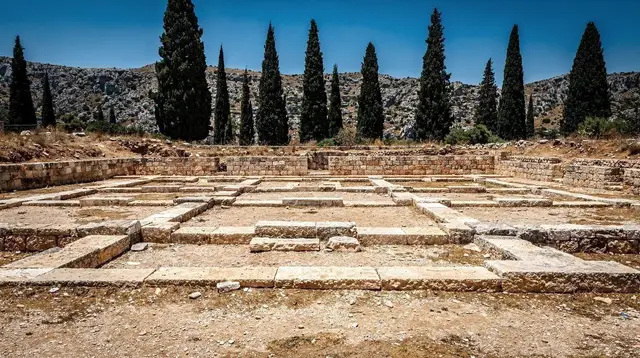
Heraklion and the centre hold the island’s biggest concentration of ancient history: the Minoan palace of Knossos, the Heraklion Archaeological Museum, and the wine villages of Archanes, Dafnes and Peza, alongside the busy resort strip around Hersonissos and Malia. That resort strip splits across three neighbouring towns, and families choosing between them will find the practical differences laid out in Hersonissos versus Malia versus Stalida.
Lasithi and the east are the least visited and, for many people, the most rewarding: the Lasithi plateau and Dikteon cave, the town of Agios Nikolaos on the gulf of Mirabello, the former leper colony island of Spinalonga, and the palm beach at Vai near Sitia.
Spinalonga’s history as Europe’s last active leper colony, in use until 1957, deserves more than a boat-trip caption — the dedicated guide to Spinalonga island covers it properly, and Agios Nikolaos’s own small saltwater harbour lake is the subject of the town guide to Agios Nikolaos and Lake Voulismeni.
No itinerary needs to touch all four. A week in the west is a complete holiday. So is a week split between Heraklion and Lasithi. What matters for a first trip is picking a shape that fits the region you actually want, rather than trying to sample all of them in too few days — see our full breakdown of how many days you actually need in Crete for how the regions combine at different trip lengths.
The same divide shows up along a north-south axis as much as west-east: the guide to north coast versus south coast Crete lays out why the Libyan coast in the south often feels calmer and warmer than the VOAK-linked north, even in the same week, and travellers torn specifically between the west’s two famous beaches will find the trade-offs spelled out in Balos versus Elafonissi.
For a broader west-versus-east framing that goes beyond this guide’s regional breakdown, see east Crete versus west Crete. Travellers still deciding between Crete and a smaller island entirely may also want to read Crete versus Santorini first, since the comparison explains why an island this size behaves nothing like the compact, single-town trip Santorini offers.
Heraklion or Chania: the two obvious anchors
Almost every first-time visitor lands at one of two airports, and the choice between them shapes the whole trip.
Heraklion is the island’s capital and by far its largest city, with roughly 180,000 residents within the city itself and over 200,000 across the wider municipality. It has the busier of Crete’s two main airports, sits five kilometres from Knossos, and holds the Heraklion Archaeological Museum, which is where the real Minoan frescoes live — the ones displayed at the palace site itself are replicas. Basing here puts you close to the island’s deepest history and its central wine country.
Chania is the second city, smaller and calmer, and it is the town most people picture when they imagine Crete: a Venetian harbour lined with pastel buildings, a lighthouse at the end of the breakwater, and an old town built for walking rather than driving — a legacy of the centuries of Venetian rule that shaped the harbour itself. It is also the natural gateway to the west — Balos, Elafonissi, Samaria — and to the White Mountains.
Neither city is objectively better; they simply point you toward different halves of the island. If ancient sites and central wine country pull you more, Heraklion makes sense as a base or a starting point. If the western beaches, gorges and Venetian architecture matter more, Chania does. Our comparison of Chania, Rethymno and Heraklion as bases goes deeper into how each town suits a different kind of trip, including Rethymno as a genuine middle option between the two.
Why no single base covers the island
It bears repeating, because it is the mistake that undoes more first Crete trips than any other: there is no town positioned to make the whole island a comfortable day trip. A base in Chania puts Lasithi four hours away each direction. A base in Agios Nikolaos puts Elafonissi similarly out of reach. Even Rethymno, roughly in the middle, is still over ninety minutes from either coastal extreme once you add the mountain roads.
The realistic options for a first trip are:
| Approach | Best for | Typical trip length |
|---|---|---|
| One region, one base | First-timers who want to relax as much as sightsee | 5-7 days |
| Two bases, west then centre or east | Travellers who want variety without excessive driving | 7-10 days |
| Three bases, west to east | A full-island trip that still allows slow days | 10-14 days |
| Single base near Heraklion, day trips only | Travellers without a car who rely on organised tours | 5-8 days |
A car makes every one of these workable; the guide to renting a car in Crete covers what to expect from local rental terms, and driving in Crete covers the mountain-road habits — like pulling onto the hard shoulder to let a faster car pass — that catch first-time drivers off guard.
Travellers without a car are not stuck: the KTEL coach network genuinely works along the north coast route linking Chania, Rethymno, Heraklion and Agios Nikolaos on the VOAK highway, and a single Heraklion-area base combined with organised excursions is a reasonable way to see the centre and east without ever driving yourself. Travellers determined to cover the full west-to-east arc in one trip, rather than splitting it across separate visits, should start from the ready-made ten-day full-island itinerary, which spaces the driving out instead of stacking it into a few long days.
South of the mountains, though, coach service thins to a handful of seasonal runs, and destinations like the Samaria gorge or the boat-only village of Loutro are far easier with a tour or a car. A guided day like the Rethymno, Chania and Lake Kournas tour is a practical way to sample the west’s old towns without renting a car at all, and a day on the Samaria Gorge hike solves the logistics of a one-way trail that ends at a village with no road out.
Travellers who have decided against driving altogether should look at the dedicated seven-day itinerary for Crete without a car, which is built entirely around the KTEL network and organised excursions rather than assuming a rental. A private driver is another option worth knowing about before landing: the guide to private tours and drivers in Crete covers when hiring a car with a driver actually beats a self-drive rental, and airport transfers in Crete explains how to get from Heraklion or Chania airport to a first hotel without renting anything at all.
Money, time and other basics before you land
A handful of practical facts will save confusion once you arrive.
Crete uses the euro, and prices on menus and price tags already include VAT — Greece’s standard rate is 24 percent, and unlike some Aegean islands, Crete has never had a reduced island rate. There is no tax to add at the till. Tipping follows a round-up convention: 5 to 10 percent, or simply rounding a bill up to the next euro, is normal. The 15 to 20 percent expected in North America is not the local norm and can read as overcompensating rather than generous.
Crete runs on Eastern European Time, UTC+2 in winter and UTC+3 in summer, one hour ahead of Paris, Berlin and Rome. It is an easy detail to overlook when checking opening hours or booking a timed entry, and museums, archaeological sites and monasteries do keep to it strictly. For a fuller rundown of prices, tipping norms and other money questions, see tipping, money and prices in Crete.
Two more basics are worth settling before departure rather than after landing. The what to pack for Crete guide covers the gap between coastal heat and mountain evenings that catches a lot of first-timers out, and safety and health in Crete covers the practical questions — tap water, sun exposure, pharmacy access — that a first visit to a large, spread-out island tends to raise.
Getting to the island itself usually means flying into Heraklion (HER) or Chania (CHQ) at Souda, both served by direct flights from much of Europe in season, or taking an overnight ferry from Piraeus, which runs roughly nine hours to either port. A small third airport at Sitia serves the east on a limited schedule.
The long-discussed Kastelli airport near Heraklion is still under construction and not open to travellers — do not plan around it. The guide to flights and ferries and the airport-specific guides for Heraklion and Chania cover arrival logistics in more detail. Anyone weighing the overnight boat instead of flying should also read ferries from Piraeus to Crete first: the crossing changes the shape of a short trip more than it first appears.
Timing the trip matters as much as choosing a base. May, June, September and early October give the best balance of open attractions, warm sea and thinner crowds; July and August are hottest and busiest, with the meltemi wind regularly cancelling boat trips to Balos, Gramvousa and Chrissi; and November to March is a genuine low season when the Samaria gorge closes and many south-coast businesses shut for the winter.
The month-by-month guide to Crete’s seasons breaks this down further. Anyone whose dates fall in July or August specifically should also read Crete in July and the meltemi, which explains why a west-coast boat trip booked for a Tuesday can simply fail to run, and the month-by-month weather guide adds the temperature and sea-condition numbers behind each month’s reputation.
Choosing where to stay for a first visit
Given the distances involved, the most useful planning question is not “what should I see” but “which region matches what I want, and where inside it should I sleep.” A traveller drawn to Venetian architecture, walkable old towns and easy access to western beaches and gorges should look at Chania or Rethymno. A traveller more interested in ancient sites, wine country and a bigger city with more restaurant choice should look at Heraklion.
Travellers whose trip is built mainly around ancient sites can lean on the ready-made five-day archaeology itinerary, which sequences Knossos, Phaistos and Gortyna without unnecessary backtracking, while those planning a trip around beach time rather than sites or gorges have their own dedicated week-long beaches itinerary to start from.
A traveller who wants a quieter, less-visited trip, with a genuinely different pace, should consider Agios Nikolaos or the Lasithi region in the east — see the full guide to where to stay in Crete for a region-by-region breakdown, and the seven-day west-to-east itinerary or the tighter three-day western route for two ready-made shapes to adapt.
Who is travelling matters as much as which region. The dedicated guide to Crete with kids covers which bases and activities work best for families, while Crete for couples looks at the same choice from the other direction, with an emphasis on the quieter villages and slower pacing that suit a trip built for two.
Whichever base you choose, build in room for the things that cannot be rushed: a full day for the Knossos site and museum together rather than a quick stop, a full day if the Samaria gorge is on the list since it is one-way and ends at a village reachable only by boat, and at least one loose day with no plan at all, because Crete rewards slow mornings in a village square as much as it rewards ticking off sights.
A first trip to things to do across the island works best as a shortlist, not a checklist — four or five things done properly beat a dozen done at a sprint. Rounding out a west-based trip with something like the Crete wine and olive oil tasting gives a slower, seated counterpoint to the driving days, and it is exactly the kind of half-day that fits into almost any base without disrupting the rest of the itinerary. Anyone wanting to know what is actually on the plate before booking that table should start with the primer on what to eat in Crete, which covers dishes like dakos and antikristo before the wine-and-oil half-day adds the drink side.
Before locking anything in, it is worth reading through the common mistakes first-time visitors make in Crete — most of them trace back to underestimating the island’s size, and correcting for that early is the single most useful thing a first-time visitor can do.
Questions first-time visitors ask about Crete
Is Crete a small island I can see in a couple of days?
No. Crete covers 8,336 km2, is about 260 km long and holds roughly 620,000 residents across four regional units. Driving end to end, from Chania to Sitia, takes more than four hours on a good road. Treat it as a country-sized trip, not a weekend island.
Should I stay in Heraklion or Chania for my first trip?
Heraklion is the capital and largest city, with the international airport, Knossos and the Archaeological Museum on its doorstep. Chania is the second city and the one most visitors picture, with its Venetian harbour and old town. Neither is wrong; the choice depends on whether Minoan sites or the west coast pull you more.
Can I base myself in one town and see all of Crete?
Not comfortably. The island is too long for that. Most first-time visitors either pick one region and go deep, or split the trip into two or three bases along the north coast, since the VOAK highway makes Chania, Rethymno, Heraklion and Agios Nikolaos reachable from each other.
What currency does Crete use and are prices shown with tax included?
Crete uses the euro, and displayed prices already include Greek VAT at the standard 24 percent rate — Crete has never had the reduced rate given to some Aegean islands. There is no separate tax to add at checkout.
Do I need to tip in restaurants and cafes in Crete?
A round-up of roughly 5 to 10 percent is normal and appreciated, not the 15 to 20 percent expected in North America. Many Cretans simply round the bill up to the next euro or leave small change.
What time zone is Crete in?
Crete runs on Eastern European Time, UTC+2 in winter and UTC+3 in summer, which is one hour ahead of Paris, Berlin and Rome. Always check opening hours in local time rather than assuming they match mainland Western Europe.
Do I need a rental car as a first-time visitor?
For most itineraries, yes. A rental car is the practical default because it lets you reach gorges, beaches and villages off the coach network. The KTEL coaches cover the north coast well but thin out south of the mountains, where a car or an organised tour becomes the only realistic option.
Is Crete a volcanic island?
No. Unlike Santorini, Crete is limestone and folded rock, cut by gorges rather than shaped by a caldera — there is no fumarole and no thermal bathing pool anywhere on the island. Boat trips from Crete go to islands such as Balos, Gramvousa, Chrissi and Spinalonga, or to beaches with no road, not to a volcanic crater.
Are the frescoes on display at Knossos the originals?
No. The frescoes at the Knossos palace site itself are replicas; the originals are in the Heraklion Archaeological Museum, five kilometres away. A combined ticket covers both sites, and pairing the two makes for a fuller day than visiting the palace alone.
Best Crete Tours on GetYourGuide
Verified deep-linked GetYourGuide tours. Book through these links and we earn a small commission at no cost to you.
GetYourGuide does not provide a product photo for this activity — the image shows the meeting point, photographed by us.