Balos Lagoon: Boat or Dirt Road?
Should I drive to Balos or take the boat?
Take the boat from Kissamos for most visits. The road in is an 8 km dirt track that most rental contracts exclude, and it's followed by a 20 to 30 minute walk down to the lagoon and back up. The boat also calls at Imeri Gramvousa and its 1579 Venetian fortress on the way.
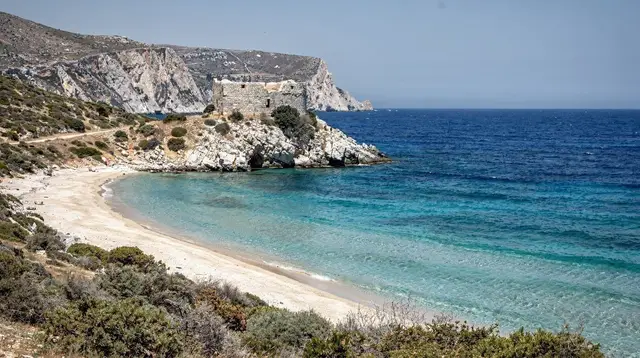
Every photo of Balos looks the same: a comma of pale turquoise water curling around a sandbar, with a fortress-topped island standing guard at the mouth of the bay. What the photo never shows is how you got there, and that question, boat or road, has a real answer with real consequences for your rental contract, your afternoon and your feet.
Two Ways Into One Lagoon
Balos sits at the far northwest tip of Crete, on the Gramvousa peninsula beyond Kissamos, in the same corner of the island as Falassarna and, further south, Elafonissi. It is not on the way to anywhere else. There is no coast road running past it and no village at the lagoon itself, just a car park on the headland above the water and a jetty for boats coming round from Kissamos.
That geography is what forces the choice. You either drive the peninsula road to the car park above the bay and walk down to the water, or you take a boat from Kissamos that sails around the headland and drops you close to the sand. Plenty of people do a version of both, walking down from the car park on a day trip that arrived by road, or riding the boat and skipping the drive entirely. What almost nobody should do is treat the two options as interchangeable in cost and risk, because they are not.
The Dirt Road to Balos, and What It Actually Costs
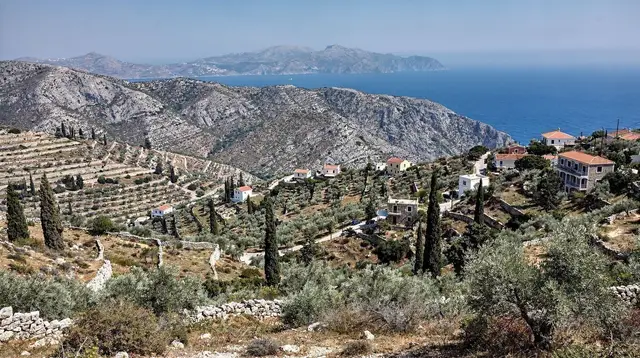
The drive itself starts normally. From Kissamos, a paved road runs out toward the Gramvousa peninsula, past Kaliviani, before the tarmac ends. From that point it is roughly 8 km of unpaved track to the car park above Balos, graded but genuinely rough: ruts, loose stones, washboard sections baked hard by summer, and enough dust in July and August that following vehicles disappear behind a brown cloud. It is shared traffic, small tour buses included, so it is also slow, often crawling at walking pace behind a coach on the narrower stretches.
An ordinary rental car can physically make the trip if driven carefully. The problem is not whether the car can survive the track. The problem is what your rental agreement says about it, and on Crete, as across Greece, the standard answer is that unpaved and unclassified roads are excluded from collision damage waiver and from roadside assistance. Read the small print of almost any hire agreement here and you will find a clause to that effect. It means that a stone through the sump, a torn tyre wall, a cracked windscreen or a genuine accident on that 8 km track is not a claim, it is the driver’s bill in full, and towing a car off a dirt track at the edge of the island is not a cheap call to make.
Even once you reach the car park, the road has not delivered you to the lagoon. Balos sits below the headland, and getting to the water means a walk down a stepped, largely unshaded path, roughly 20 to 30 minutes each way. The descent is easy enough; the return, in the flat heat of a Cretan afternoon with no shade at any point, is the part that catches people out, particularly with children or in July and August. Driving to Balos, in other words, buys you a rough track your insurer will not cover, followed by the same walk that boat passengers do anyway, only from a less convenient starting point.
None of this makes the road trip impossible or even rare. Thousands of visitors drive it every summer without incident, and for anyone touring the west coast independently, combining Balos with Falassarna or the beaches near Kissamos in the same day, the road is a legitimate plan. It simply needs to be a chosen risk, not an assumption, and it belongs to travellers who are comfortable that a breakdown or a scrape on that track is their own liability, not the rental company’s.
The Boat from Kissamos: The Sane Default
For most visitors who have not specifically decided to accept that risk, the boat from Kissamos is the more sensible way into Balos, and it is also the more scenic one. Boats leave the harbour at Kissamos and sail out around the peninsula, most of them calling first at Imeri Gramvousa, the small fortified island that sits at the mouth of the Balos bay.
Its hilltop fortress dates to 1579, built by Venice as one of the last strongholds it held on Crete, and it stayed effectively out of Ottoman hands for decades after the rest of the island fell. Passengers can usually walk up from the landing to the ruined walls and look back down over the lagoon from above, which is, for most people, the single best view of Balos there is.
From Gramvousa the boat continues into the bay itself and lands passengers close to the sand, without the descent that road visitors face. This is the practical case for the boat in one sentence: it removes both the uninsured dirt track and most of the walk, and it adds a Venetian island most road visitors never see at all.
What this guide will not do is hand you a departure time, a crossing duration to the minute, or the name of an operator, because those details change by season and by company and a wrong one printed here would be worse than none. What can be said reliably is that boats run from Kissamos harbour through the main season, that a full excursion including the Gramvousa stop typically fills most of a day, and that booking a seat rather than turning up at the harbour is the safer plan in July and August, when demand is highest.
For travellers who would rather have the boat and a wider itinerary bundled together, a guided option such as the private tour combining Balos lagoon with Falassarna beach pairs the crossing with a stop at Crete’s other famous west-coast sand in a single day, without touching the dirt road at all. Travellers who would rather set their own pace on the water can look at a private half-day morning cruise by boat, sailing with a smaller group rather than a full excursion boat.
When the Boats Don’t Run: The Meltemi
Neither the road nor the boat is immune to weather, but only one of them can simply stop running. The meltemi is a strong, dry wind out of the north that is a defining feature of a Cretan summer, most persistent in July and August. It builds across the open water north and west of the island, which is exactly where Balos, Gramvousa and Chrissi sit, and on a strong meltemi day the boat crossings to all three are routinely cancelled or cut short for safety.
This is not a rare inconvenience limited to a handful of unlucky travellers. In a windy July or August, cancellations to Balos can run for several consecutive days at a stretch. The same wind that empties the crossing to Balos usually leaves the south coast, on the sheltered Libyan Sea, calm, which is why operators and locals alike will often point disappointed travellers south rather than promise a Balos sailing will resume by a given hour. If a Balos boat is the centrepiece of a specific day’s plan in high summer, it is worth having a fallback, either an extra day in the itinerary or a south-coast alternative, rather than treating the crossing as guaranteed.
The dirt road, by contrast, stays physically open through a windy spell, since a gust that cancels a boat does not close a track. That is the one point in the road’s favour worth stating plainly: in a bad-wind week in July or August, driving may be the only way to see Balos at all, accepting everything said above about the insurance risk.
Boat or Road: A Straight Comparison
| Boat from Kissamos | Dirt road to the car park | |
|---|---|---|
| Surface covered | None; you stay on the water until landing near the sand | 8 km of unpaved track, typically excluded from rental cover |
| Walk to the water | Short, from the landing point | 20-30 minutes down, and back up in the heat |
| Extra stop | Usually Imeri Gramvousa and its 1579 fortress | None |
| Vulnerable to | The meltemi, mainly July-August | Dust, traffic, and driver liability, not weather |
| Best suited to | Most visitors, especially without a rental car excluding dirt tracks | Travellers who accept the insurance exclusion and want to self-drive |
Travellers weighing the same trade-off further south on this coast will find the same logic, sand type and crowd levels laid out in the comparison of Balos against Elafonissi.
A Guided Alternative to Driving It Yourself
Not every traveller who wants to see the dirt road and the overland approach has to put their own rental at risk to do it. Guided off-road excursions run the same 8 km track in vehicles that are covered for it and with a driver who carries that liability instead of a self-drive tourist. An option such as the off-road excursion to Balos from the Chania and Kissamos area covers that ground without the exclusion clause hanging over the day.
For a different pace on the same terrain, a guided ATV adventure to Balos lagoon takes the overland route on smaller vehicles built for exactly this kind of track, with a guide and refreshments included rather than a hire car pushed somewhere it was never meant to go.
Respecting a Protected Lagoon
Balos looks untouched partly because, on paper, it is protected, and that protection carries real rules rather than polite suggestions. Removing sand, shells or stones from the lagoon is prohibited, the same restriction that applies at Elafonissi and at Chrissi island further along the coast. It is a small ask set against a large consequence: these are sites where casual souvenir-taking, multiplied across the volume of summer visitors, genuinely erodes the beach it is trying to preserve. Staying on marked paths on the descent, taking rubbish back up with you and leaving the sand exactly as it was found are the parts of the visit that cost nothing and matter more than they look like they should.
Planning the Day
Whichever way you arrive, Balos is a full excursion, not a stop on a longer drive. Sun exposure is the main practical concern: the descent, the beach itself and the fortress climb on Gramvousa offer close to no shade, so water, a hat and sun cream matter more here than at a beach with a taverna and umbrellas at hand. There are basic facilities near the car park and, in season, refreshments on the boats, but nothing resembling the resort infrastructure of the north coast strip.
For a broader west-coast plan that fits Balos alongside Chania, Kissamos and Falassarna without over-scheduling a single day, the three-day west Crete itinerary sketches a workable order. Travellers weighing whether to bring a rental car to this side of the island at all, given how much of west Crete’s best scenery sits off the paved network, may also want the broader view in the guide to renting a car in Crete and the practical notes on driving in Crete before deciding.
For those who want the full independence of a private boat rather than a shared excursion, a private speedboat trip to Balos and its secluded bays covers the crossing on its own schedule, with the coves around Gramvousa added in rather than left out.
Balos Lagoon Boat and Road Questions
Should I drive to Balos or take the boat?
For most visitors, the boat from Kissamos is the better call. The road is an unpaved 8 km track that most rental contracts exclude from cover, and driving it still leaves you with the same 20 to 30 minute walk down to the water that boat passengers skip. The boat also adds a stop at Imeri Gramvousa.
Is the road to Balos really that bad?
It is a genuine dirt track, roughly 8 km, rutted, dusty in summer and slick after rain, shared with tour buses, hire cars and the occasional coach. It is passable in an ordinary car driven slowly, but it is not a paved road, and that distinction is exactly what voids most rental insurance.
Does travel insurance cover a breakdown on the Balos dirt road?
Check your specific contract, but the general rule across Cretan car hire is that unpaved or unclassified roads are excluded from the collision damage waiver and from breakdown cover. A puncture, a stone chip to the windscreen or an accident on that track is typically the driver’s full liability.
What is Imeri Gramvousa and does the boat stop there?
Imeri Gramvousa is the small island guarding the entrance to Balos bay, topped by a Venetian fortress built in 1579. Most boats from Kissamos call there, usually before or after the Balos stop, and passengers can walk up to the fortress ruins for the view back over the lagoon.
Can the boat to Balos get cancelled?
Yes. The meltemi, a strong north wind that is most common in July and August, regularly cancels sailings to Balos, Gramvousa and Chrissi because those routes face open water on an exposed north or west coast. The south coast, on the Libyan Sea, usually stays calm on the same days.
Is it true you can’t take sand or shells from Balos?
Yes, and it is enforced with fines, not just a sign. Balos and the wider Gramvousa peninsula are protected, and removing sand, shells or stones is prohibited, the same rule that applies at Elafonissi and at Chrissi.
How long is the walk down to the lagoon?
From the car park above the bay, allow 20 to 30 minutes down a stepped, unshaded path, and roughly the same back up, which is the harder direction in midday heat. Boat passengers land closer to the water and skip most of this.
Is there a difference between the Balos boat and an off-road excursion?
Yes. A boat trip is a passenger crossing with no driving decisions to make. An off-road excursion is a guided drive on the dirt track in a vehicle covered for that terrain, with the operator carrying the liability instead of your own rental contract.
Balos & Gramvousa Tours on GetYourGuide
Verified deep-linked GetYourGuide tours. Book through these links and we earn a small commission at no cost to you.
GetYourGuide does not provide a product photo for this activity — the image shows the meeting point, photographed by us.