Elafonissi Beach: The Truth About the Pink Sand
Is the pink sand at Elafonissi really pink?
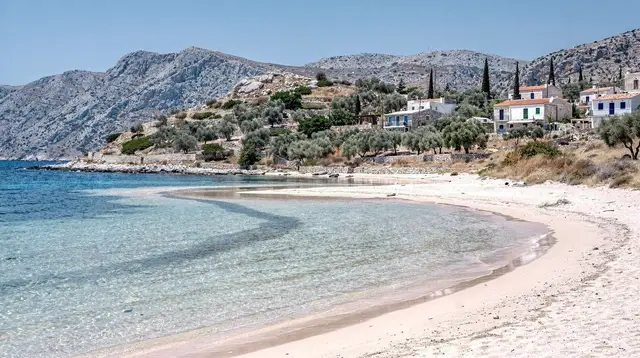
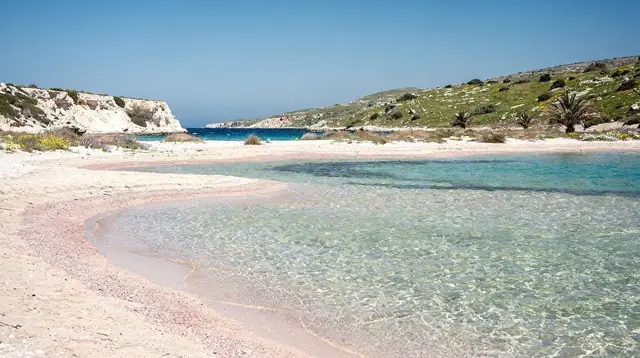
Only in patches, and nowhere near the saturated rose of retouched photos. The colour comes from crushed foraminifera shells mixed into ordinary pale sand, strongest at the water's edge on the lagoon side. On a bright day expect a soft blush in a few spots, not a uniformly pink beach.
Elafonissi is one of the most photographed beaches in Greece, and one of the most quietly misrepresented. The pink sand is real. It is also patchy, seasonal in its intensity, and nothing like the saturated colour that circulates online. This page sets out what you will actually see, what the two-hour drive from Chania really involves, and the rules that keep the place from being loved to death. The blog post the truth about Elafonissi’s pink sand goes even further into why the colour-graded version keeps circulating.
So Is the Sand Actually Pink?
Yes, but not the way the photos suggest. The colour comes from foraminifera, microscopic marine organisms whose shells are crushed by the surf into fragments of red and pink. Those fragments mix into the pale local sand rather than replacing it, so the pink is concentrated in bands and pockets rather than spread evenly across the beach. It shows up most clearly where shallow water washes repeatedly over the same strip of sand, on the lagoon side facing the small islet that gives Elafonissi its name.
Light matters more than most visitors expect. The pink is easiest to see in the low, warm light of early morning or late afternoon, and it practically disappears under the flat glare of a midday sun. Wet sand also shows more colour than dry sand a few metres back from the water. None of this adds up to the uniform rose-pink beach that fills travel Instagram accounts — those images are colour-graded, sometimes aggressively.
Come expecting a genuinely pretty beach with real pink accents, and you will not be disappointed. Come expecting a magenta postcard, and you will spend your first ten minutes on site looking for a beach that does not exist. For a second opinion on how another supposedly pink Cretan beach compares, see Balos versus Elafonissi. Anyone chasing the best possible shot without relying on colour grading afterwards might also read photography spots in Crete, which covers timing and angles beyond this one beach.
Getting There: The Road from Chania
Elafonissi sits at the far south-west corner of Crete, and there is no way to make the trip short. From Chania, it is about 76 km and roughly two hours of driving, most of it on a mountain road that climbs and winds through the villages around Topolia and Elos before dropping back down to the coast. The road is paved and in reasonable condition, but narrow in places, with switchbacks that slow an average speed well below what the distance on a map implies. Travellers flying in specifically for this trip can check the Chania airport guide for arrival logistics before tackling the drive itself.
Most people drive themselves, and most standard rental insurance covers this specific route because it stays on tarmac the whole way — a real contrast with the unpaved track out to Balos, which many contracts explicitly exclude. If you would rather not handle two hours of mountain bends in each direction, a guided option removes that entirely; the day trip out to Elafonissi handles the driving and drops you straight at the beach. Travellers still weighing the choice more broadly can read rental car versus organised tours in Crete before committing either way.
There is a second route worth knowing about if you are coming from further afield. Travellers based around Kissamos or the west coast can reach Elafonissi via a shorter stretch of the same kind of road, while visitors staying near Rethymno face a longer haul across the island; for that case, a coach that starts the day already moving is often more comfortable than self-driving the whole distance, which is exactly what the guided day trip with hotel pickup from Rethymno is built for.
Kissamos itself is worth a stop either way, and Kissamos town and port covers what there is to see before or after the beach.
How the routes compare
| Starting point | Distance | Typical drive time | Road type |
|---|---|---|---|
| Chania town | ~76 km | ~2 hours | Paved, mountain road, narrow in stretches |
| Kissamos | ~40 km | ~1 hour | Paved, mountain road |
| Rethymno | ~140 km | ~2.5-3 hours | Paved, crosses two regional units |
| Palaiochora | ~40 km | ~1 hour | Paved, coastal and mountain mix |
None of these numbers change with the season, but your actual arrival time can. In July and August, the car park at Elafonissi fills by mid-to-late morning, and overflow parking means a longer walk in with beach gear. Arriving by 9:30am in high summer is not paranoia, it is the difference between parking at the beach and parking well short of it. There is no KTEL bus service that reaches Elafonissi directly, so KTEL buses in Crete is useful mainly for ruling that option out here, not for planning this specific trip.
Elafonissi Is a Natura 2000 Site, Not a Free-for-All
Elafonissi is protected under the EU’s Natura 2000 network, and that status is not a formality. The pink sand, the shallow lagoon, the dunes and the small islet just offshore support plant and bird life found in few other places on Crete, and the entire area is managed with that in mind. The same conservation logic protects Chrissi islet off the south coast near Ierapetra, and the Chrissi island day trip guide is worth reading if the idea of a protected, boat-only landscape appeals beyond this one beach.
The practical rule every visitor needs to know: taking sand, shells or pebbles away from Elafonissi is illegal, and it is enforced with fines, including spot checks at Chania airport on travellers whose luggage turns out to contain a jar of “souvenir sand.” It sounds like a minor infraction, but the pink colour at Elafonissi is literally made of the shell fragments people are tempted to pocket — a handful taken home is a handful of the beach that will not be there for the next visitor. Stick to photos.
The protected status also means development around the beach is deliberately limited. Do not expect a boardwalk of bars and shops right on the sand; the small cluster of tavernas and rental stalls sits back from the water, and most of the shoreline itself stays undeveloped. If your idea of a beach day depends on beachfront restaurants, this is not that beach — Falassarna, on the west coast north of here, has a bit more infrastructure and a very different, quieter atmosphere.
Sunbeds, Space and the Law on Greek Beaches
Like every organised beach in Greece, Elafonissi operates under a national rule that sets it apart from beach clubs in some other Mediterranean countries: a free, unobstructed stretch of sand with a clear corridor to the water must be kept available on every beach, sunbeds or not. Elafonissi’s long, gently sloping shoreline makes this easy to honour in practice — there is plenty of open sand beyond the roped-off sunbed sections, particularly if you walk a short distance from the main access points. The wider pattern behind this rule, and why it differs from beach clubs elsewhere in the Mediterranean, is covered in sunbeds and the law on Greek beaches.
Sunbeds and umbrellas are rented in marked sections and are entirely optional. Prices shift from year to year and are best checked on the day rather than trusted from an old blog post, so this guide will not quote a figure that will be wrong by next season. What will not change is your right to set up on the free public sand with your own mat and umbrella at no cost — see sunbeds and your rights on Cretan beaches for the full rule as it applies island-wide.
Shade is genuinely scarce at Elafonissi. There is no natural tree cover on the open sand, so a rented umbrella or your own sun shelter is close to essential for a full day here, especially with children.
When to Go, and When to Adjust Your Plan
Elafonissi rewards a bit of timing. May, June and September bring warm, clear water, a lower crowd than midsummer, and light that shows the pink sand at its best without the packed car park of August. July and August are the busiest months by a wide margin, and they are also when the meltemi, a strong north wind, is most likely to affect this coast. For the texture of an actual June week versus an actual September one, Crete in June and Crete in September go beyond the general averages given here.
The meltemi matters here more than most visitors expect. It blows hardest across the north and west of Crete in July and August, and Elafonissi, exposed on the island’s south-western tip, is not immune. On a strong meltemi day, expect visible chop, stronger currents and a noticeably rougher swim than the calm turquoise water in the photos; the lagoon side, more sheltered than the open sea side, is the better bet when the wind is up, but “sheltered” does not mean flat calm. If your trip window is flexible, checking the forecast the evening before is worth five minutes, and Crete in July and the meltemi explains what the wind does to plans across the whole west coast, not just here.
Outside the May-to-October season, the beach itself never closes, but the drive turns into a genuinely different proposition: fewer facilities open, an empty car park, and a mountain road that is far less forgiving in rain. If you are visiting in the shoulder months, pair the trip with good, unhurried planning rather than a rushed afternoon add-on.
For a month-by-month view of temperatures and crowds across the whole island, not just this coast, Crete weather month by month lines up Elafonissi’s calendar against the rest of the island, which is a better planning tool than guessing from a single “best time” headline. The blog post why Crete empties in November explains the pattern in more detail, and most of it applies just as much to this corner of the island.
What a Day at Elafonissi Actually Looks Like
The islet that gives the beach its name sits just offshore, separated from the mainland by a shallow channel you can wade across in normal conditions — ankle-to-knee deep water for most of the crossing, which is exactly why the lagoon side is so popular with families. The water here warms quickly and stays gentle when the wind cooperates, making it one of the more forgiving swimming spots for young children anywhere on this coast.
Walk further around the islet and the crowds thin fast; a short walk buys real space even on a busy day, along with quieter stretches of sand where the pink tinge tends to be more visible, away from thousands of footprints churning the surface. There are no dangerous currents on the sheltered side in calm weather, but this is still open coastline, not a swimming pool — keep an eye on children in the channel, where the water moves with the tide. Travellers based closer to Chania who want a quieter, shorter outing without the full drive can compare the coves near Akrotiri, smaller and far closer to town, though without Elafonissi’s shallow lagoon.
Facilities are basic and seasonal: a handful of tavernas and drink stands set back from the beach, toilets, and the sunbed concessions already covered above. There is no real shade beyond what you bring or rent, and the walk from the car park to the best stretches of sand can be ten to fifteen minutes in high season once overflow parking is in effect.
Elafonissi at a glance
| Details | |
|---|---|
| Distance from Chania | ~76 km, ~2 hours by mountain road |
| Protection status | Natura 2000 — no removal of sand or shells |
| Best swimming | Shallow lagoon channel toward the islet |
| Shade | Very little natural shade; bring or rent cover |
| Busiest months | July and August |
| Wind risk | Meltemi (mainly July-August) roughens the water |
| Beach access rule | Free public stretch guaranteed by Greek law |
Making a Full Day of It
Because the drive is long, most visitors turn Elafonissi into a full day rather than a quick beach stop, and the routes there pass through terrain worth pausing for. Some day trips combine the beach with a stop at a winery or monastery on the way back toward Chania — the day trip pairing Elafonissi with a winery and monastery visit is built around exactly that pacing, so the two-hour drive back does not feel like dead time.
Families weighing up logistics sometimes prefer a private arrangement over a shared coach, especially with young children who need flexibility around nap times and swim breaks; the full-day private family tour to Elafonissi sets its own schedule rather than a fixed group itinerary. For visitors who want to add an activity on the water once they arrive, the private beach day trip that includes stand-up paddleboarding is worth a look, though it depends on calm conditions rather than a windy meltemi day.
Elafonissi is often compared with Balos, the island’s other famous pink-tinged lagoon, and with Falassarna a little further north. The three suit different priorities: Balos requires a dirt-road drive or a boat and delivers a more dramatic lagoon view from above; Falassarna has calmer infrastructure and easier access; Elafonissi has the longest paved drive but the gentlest, most family-friendly water of the three.
If you are trying to choose, Balos: lagoon by boat or by road lays out that comparison from the Balos side, and general things to do around Elafonissi covers activities beyond the beach itself for anyone extending the day. Anyone considering basing themselves nearer the south-west coast rather than commuting from Chania each day can look at Palaiochora, about an hour away, with the trade-offs of smaller bases covered in where to stay in Crete.
Whichever way you arrive, the honest version of this beach is still worth the trip: a wide, shallow, genuinely beautiful stretch of coast with real pink in the sand, inside a protected landscape that asks visitors to leave it exactly as they found it. It is simply not the single, saturated postcard image that gets shared without context — and knowing that before you go, rather than after a two-hour drive, is most of what makes the day work.
Fitting Elafonissi Into a Wider Trip
Elafonissi rarely works as a stand-alone day from anywhere but Chania, and it slots naturally into a longer look at the island’s western half rather than a solo dash from further away. Travellers building a first visit around this side of Crete often start from a structured itinerary rather than picking stops one at a time; three days in west Crete is built around exactly this kind of long beach day balanced against gorge walks and old-town time.
Anyone weighing whether to base a whole trip on beaches and landscape rather than ruins and museums will find the same debate laid out more broadly in east Crete versus west Crete, which explains why the west leans harder on driving and scenery than the more archaeology-heavy east. Anyone still deciding how a first visit to the island should be shaped at all can start with Crete for first-timers, which frames decisions like this one in a wider context.
For visitors stringing together several beach days rather than a single set-piece, a week built around Crete’s beaches treats Elafonissi as one stop among several rather than the whole trip, which spreads the driving out and avoids turning every day into a long transfer. Families doing the same kind of planning with children in tow have their own version of that problem, covered in a week in Crete with kids — Elafonissi’s shallow lagoon is one of the easier days on that itinerary precisely because the swimming asks so little of small children, even if the drive itself asks a lot of the adults doing it.
Before You Go: Practical Notes
The basics that apply to any long beach day in Crete apply here with extra weight, because there is so little on site once you arrive. Water, sun protection and a proper hat matter more at Elafonissi than at a beach with a row of cafés a few steps from the sand; what to pack for Crete covers the general list, and it is worth taking seriously before a day with this little shade. If anyone in your group has a health condition that heat or a long drive could aggravate, safety and health in Crete is a better source of guidance than guesswork on the day. If sunbed or taverna prices catch you off guard on the day, tipping, money and prices in Crete sets expectations before you go.
Driving the mountain road itself is straightforward but unforgiving of the mistakes that catch out first-time visitors to Crete generally — cutting a blind bend too fast, or not pulling onto the shoulder when a local driver wants to pass; driving in Crete and the wider list of mistakes to avoid in Crete both cover habits worth picking up before this particular drive rather than on it. The blog post how Cretans drive is a shorter, more specific read on the local habits mentioned above, worth five minutes before this particular road. If you have not yet arranged a car, renting a car in Crete is the place to start, since a route this dependent on a private vehicle is a poor fit for a last-minute decision at the rental counter.
Elafonissi is not an easy beach for anyone with limited mobility: the walk from the car park is long in season, the sand is soft rather than packed, and there is no paved path down to the water. Accessible Crete is worth reading before committing to this beach over an easier alternative, and it is a fairer question to ask honestly in advance than to discover on arrival.
Elafonissi FAQ: Pink Sand, Access and Rules
Is the pink sand at Elafonissi really pink?
In patches, not everywhere. The pink comes from crushed foraminifera shells mixed into pale sand, and it shows up best where the shallow lagoon water washes over it, in strong low-angle light. Most of the beach reads as ordinary cream-coloured sand. The deep, uniform rose in postcards and Instagram photos is colour-corrected.
How far is Elafonissi from Chania and how long does it take to drive there?
About 76 km, and budget roughly two hours each way. The road climbs through the mountains past Topolia and Elos, narrow and winding for a good stretch, so it is slower than the distance suggests. In July and August, add time for traffic and a full car park at the far end.
Can I take sand or shells home from Elafonissi?
No. Elafonissi is a Natura 2000 protected area, and removing sand, shells or pebbles is illegal and can be fined on the spot or at the airport. The pink colour is the shell fragments themselves, so a handful taken as a souvenir is literally scooping up the thing that makes the beach worth protecting.
Is it safe to swim at Elafonissi when the meltemi is blowing?
Not reliably. The meltemi is a strong north wind that hits Crete mainly in July and August and disrupts the west coast, including Elafonissi, with chop, cross-currents and cancelled boat trips elsewhere on that coast. The lagoon side is more sheltered than the open sea side, but a windy day here is a shorter, choppier swim, not a calm one.
Do I have to pay for a sunbed at Elafonissi?
No. Greek law requires every organised beach, Elafonissi included, to keep a free public stretch with unobstructed access to the water. Sunbeds and umbrellas are optional and rented section by section; bring your own mat and umbrella and you can set up on the free sand at no cost.
Is Elafonissi good for young children?
The lagoon side is one of the better family spots on this coast: shallow, warm and mostly calm when the wind is down. That said, it gets very crowded in midsummer, there is little shade, and the two-hour mountain drive from Chania is a long stretch for small children, so plan the day around a nap or an early start.
Should I drive myself or book a tour to Elafonissi?
Either works, but they suit different priorities. Self-driving gives you control over timing and a stop wherever you like on the way back; most rental insurance covers this route since it is paved. A guided tour removes the mountain driving and the parking hunt in peak season, which matters more than it sounds once the car park fills by mid-morning.
Is there an entrance fee at Elafonissi, and where should I stay for more than one visit?
There is no entrance fee to reach the beach itself; the only cost is an optional sunbed. Because the drive from Chania takes up a real chunk of the day, anyone planning more than one visit is better based closer, in Kissamos or in Palaiochora on the south coast, than repeating the full two-hour drive from Chania each time.
Elafonissi Tours in Crete on GetYourGuide
Verified deep-linked GetYourGuide tours. Book through these links and we earn a small commission at no cost to you.
GetYourGuide does not provide a product photo for this activity — the image shows the meeting point, photographed by us.