Private Tours and Drivers in Crete
Is a private driver or tour worth it in Crete, or should I just rent a car?
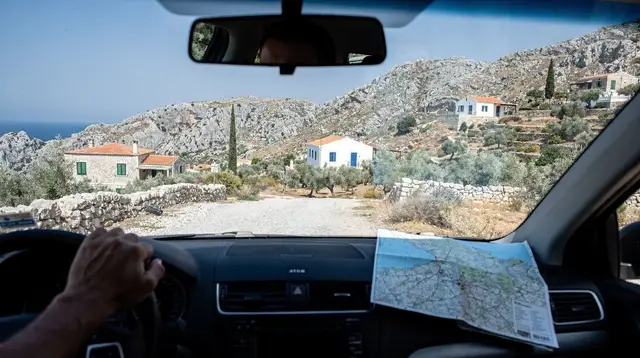
For most of the island a rental car remains the practical default, since Crete has no train and its KTEL coach network thins out south of the mountains. A private driver or organised tour earns its cost on specific legs — the unpaved Balos track that most rental contracts exclude, one-way routes like the Samaria gorge, or a single day covering several regions without anyone doing the driving.
Why the question even comes up
Ask anyone who has driven the length of Crete and they will tell you the same thing: it is not one destination, it is four. Go west to east and you pass through Chania, Rethymno, Heraklion and Lasithi, each with its own coast, its own mountains and its own pace.
Chania in the west and Sitia in the east are roughly 270 km apart by road, a drive of more than four hours without a single stop for a photograph, a coffee or a wrong turn corrected. No single base — not Chania, not Heraklion, not anywhere in between — puts every part of the island within easy reach. That scale is the entire reason the question of a private driver comes up at all. A short island with one obvious loop would not need this conversation.
For most visitors, a rental car remains the sensible default, and this page will not argue otherwise. But “default” is not the same as “always right”, and there are specific legs of a Crete trip where paying someone else to drive, or joining a small organised tour, solves a real problem rather than adding a cost for its own sake. This guide sets out where that trade genuinely makes sense, and where it does not, without inventing a driver, an agency or a day rate to recommend — none of that is data this site can verify, so none of it appears here.
The case for the rental car, honestly stated
Renting a car in Crete buys you something a driver cannot: the freedom to change your mind. Decide at breakfast that today is a Rethymno day instead of a Heraklion day, stop at a roadside stand for cherries in June, turn back because a beach was crowded — none of that works cleanly on someone else’s schedule. If your trip is built around several regions over a week or two, see renting a car in Crete and driving in Crete for how that actually plays out on the ground, from fuel stations to parking in the old towns.
The coach alternative, the KTEL network, is genuinely usable in one specific corridor: the north coast road, the VOAK, linking Chania, Rethymno, Heraklion and Agios Nikolaos. If your entire trip stays on that line, buses are a fair substitute for a car — see KTEL buses in Crete for routes and frequency. The moment you head south of the mountains, though, service drops to a handful of seasonal runs, sometimes one a day, sometimes none outside summer. There is also no train anywhere on Crete, a detail that surprises visitors used to islands with rail links elsewhere in Europe. Once you leave the VOAK, a car — your own or someone else’s — is doing the work.
Where a private driver or organised tour actually earns its keep
The honest case for paying someone to drive is narrower than travel marketing usually suggests, but where it applies, it applies clearly.
The Balos track. The road to the viewpoint above the Balos lagoon and Imeri Gramvousa is paved for most of its length, then turns into a rough dirt track for roughly the last 8 km before the car park, followed by a 20 to 30 minute walk down to the lagoon and back up. Most standard rental contracts specifically exclude unpaved roads from their insurance cover, which means a breakdown, a stone chip to the windscreen or a scrape on that final stretch can leave a self-driven visitor personally liable.
This is one of the few places on the island where the practical argument for an organised, driven option is concrete rather than a matter of comfort — see Balos lagoon: boat or road for how the alternatives compare, including the boat from Kissamos that avoids the track altogether.
One-way routes with no return leg by car. The Samaria gorge is the clearest example on the island: walkers descend 16 km from Omalos to Agia Roumeli, a village with no road in or out, then leave by boat to Chora Sfakion, Sougia or Palaiochora before a coach brings them back around the mountains. A self-driven visitor either needs to arrange a second car at the far end or build the transfer logistics themselves; a driven or guided option folds that into a single day.
Days that cover ground rather than a single site. A day that links Knossos, a hillside wine village and a working oil mill, or a route through several inland villages with tastings along the way, spends a meaningful share of a self-driven day on navigation and parking rather than at the places themselves. A private tour built around that itinerary hands the driving to someone else and lets the day be about the stops, not the road between them.
Multi-day themed routes. A trip built around the Battle of Crete — the German cemetery at Maleme, the Commonwealth cemetery at Souda Bay, and the sites in between — covers considerable distance across more than one region, which suits a driven, planned itinerary better than a single self-drive loop squeezed into one day.
None of this is an argument that a driver beats a rental car everywhere on the island. It is an argument that a handful of specific days or specific roads change the calculation, and it is worth knowing which ones before you commit a whole trip to one mode of transport or the other.
Mountain roads: a courtesy, not an invitation
Whether you end up behind the wheel yourself or in someone else’s car, it helps to understand how driving actually works on Crete’s mountain roads, because the local habits are not always obvious to a first-time visitor. Roads through the interior — into the Lasithi plateau, through the White Mountains toward Sfakia, up into the hills above Rethymno — are narrow, often without a painted centre line, and cut into the hillside with drops on one side.
Local drivers habitually pull partway onto the hard shoulder to let a faster car behind them pass. It is a long-standing courtesy on these roads, not a signal that overtaking on a blind bend is safe or expected. Visitors who mistake the gesture for an open invitation, rather than a considerate driver making room, are the ones who end up in trouble on these roads. If your own driving plans lean rural or mountainous, driving in Crete covers this in more detail.
How the regions and their transport actually compare
| Chania (west) | Rethymno | Heraklion (centre) | Lasithi (east) | |
|---|---|---|---|---|
| North coast bus coverage | Good, on the VOAK | Good, on the VOAK | Good, on the VOAK | Thins past Agios Nikolaos |
| South coast bus coverage | Sparse, seasonal | Very sparse | Sparse, seasonal | Very sparse |
| Notable unpaved or restricted stretches | Balos track (~8 km) | — | — | — |
| One-way logistics to plan for | Samaria gorge exit by boat | Imbros gorge exit | — | — |
The pattern holds across the island: strong along the single north coast corridor, thin to non-existent once you turn toward the south coast or into the mountains. That is the gap a private driver or a small organised tour is built to fill, not a general substitute for a rental car on an island this size.
Rental car, KTEL bus, or a driven option — a practical comparison
| Rental car | KTEL bus | Private driver / organised tour | |
|---|---|---|---|
| Best suited to | A multi-region trip on your own schedule | A fixed route along the north coast | A single demanding day or an excluded road |
| Covers the Balos track | Not under most standard insurance | Does not serve it | Yes, without the insurance gap |
| Handles one-way routes (Samaria, Imbros) | Requires arranging a return separately | Coach connections exist but need planning | Built into the itinerary |
| Flexibility to change plans mid-trip | High | Low, fixed timetables | Low, fixed itinerary |
| South of the mountains | Practical, if planned for narrow roads | Very limited service | Practical for the specific day booked |
This is a guide to fit and terrain, not to price — no day rate for a private driver appears on this page, because none has been independently verified for this site. Where a booking link appears below, it is for a specific, named tour product, not a generic “hire a driver” service.
Booking a specific day rather than a whole trip
For the situations above — a road excluded from rental insurance, a one-way hike, a themed day that covers real distance — booking a single organised day is usually the more sensible move than arranging a driver for an entire trip.
A few examples that match the cases described on this page: a guided trek through the Samaria gorge with the transfer built in removes the one-way logistics entirely, while a private day covering Knossos, the Zeus cave and a working oil mill is the kind of multi-site day where a driver saves real hours over self-navigating between three very different places.
Further west, a private tour through the Apokoronas villages with a local lunch covers inland roads that reward local knowledge, and travellers building a trip around the events of 1941 can look at a four-day private tour tracing the Battle of Crete across both the western cemeteries and the wider island. None of these replace a rental car for a full two-week trip; each solves one specific day or one specific route better than driving yourself would.
Building this into a wider trip
If you are still deciding how to structure the trip as a whole, rental car versus organised tours in Crete lays out the broader trade-off beyond the specific cases on this page, and how many days in Crete is worth reading before you commit to a route, since the island’s size is exactly what makes transport choices matter here more than on a smaller island. Where to stay in Crete affects this too — a base in Chania with day trips east will lean harder on a car or a driven day than a trip that actually moves base camp partway through, as in Crete in 7 days, west to east.
Anyone weighing the west against the east more generally can start with east Crete versus west Crete, and a trip concentrated on the mountains and the south, where bus coverage is thinnest, is covered in the White Mountains and Sfakia in three days. For arrival logistics before any of this becomes relevant, see getting to Crete: flights and ferries, and the private tours category page for the wider range of driven and guided days available across the island.
The short version: rent a car for the trip, and reach for a private driver or an organised day only where the terrain, the insurance gap or the one-way logistics genuinely call for it. On an island 260 km long with no train and a bus network that only really works along one coastal road, that combination — not one or the other exclusively — is what actually gets most visitors around Crete without wasting a day of a short trip on a road they should not have been driving themselves.
Questions about private tours and drivers in Crete
Is a rental car really necessary in Crete?
For covering the island at your own pace, yes. The KTEL coach network works well along the north coast between Chania, Rethymno, Heraklion and Agios Nikolaos, but south of the mountains and away from that main road it thins to a handful of seasonal runs, and there is no train anywhere on the island.
Why would I book a private tour instead of just driving myself?
A private tour or driver makes sense on routes a rental car cannot legally or safely cover, such as the unpaved Balos track, or on days where you would otherwise spend hours behind the wheel instead of at the site — a one-way hike through the Samaria gorge, or a single day linking Knossos, a wine village and an oil mill.
Can I drive to Balos myself?
You can, but the last stretch is a rough dirt track of roughly 8 km, and most standard rental contracts exclude unpaved roads from their insurance cover. A breakdown or accident on that track is typically uninsured, which is why many visitors take the boat from Kissamos or a driven option instead.
Does this page recommend a specific driver or company?
No. There is no independently verified data on individual drivers, agencies or day rates for this guide to stand behind, so none are named here. What follows describes where an organised, driven option genuinely suits the terrain — not who to book.
Is it true you have to let faster cars pass on mountain roads?
Yes, and it is worth knowing before you drive here. On narrow mountain roads, local drivers habitually pull onto the hard shoulder to let a faster car overtake. It is a courtesy, not a signal to overtake blindly on a bend, and visiting drivers are expected to return the favour rather than treat it as an invitation to speed.
How far is it from one end of Crete to the other?
Chania in the west and Sitia in the east are roughly 270 km apart by road, a drive of more than four hours even without stops. Crete runs through four regions west to east — Chania, Rethymno, Heraklion and Lasithi — and no single base covers the whole island.
Are there trains or a metro in Crete?
No. Crete has no railway of any kind. The VOAK, the island’s main highway along the north coast, carries both private cars and the KTEL coaches; away from that corridor, especially south of the mountain ranges, options for anyone without a car thin quickly.
Is the Samaria gorge a reason to consider organised transport?
It is one of the clearest cases for it. The gorge is walked one-way, 16 km down from Omalos to Agia Roumeli, a village with no road, so hikers leave by boat to Chora Sfakion, Sougia or Palaiochora and then by coach. Transfers built around that logistics are a common reason travellers choose a guided or driven option for this particular day.
Private Tours in Crete on GetYourGuide
Verified deep-linked GetYourGuide tours. Book through these links and we earn a small commission at no cost to you.
GetYourGuide does not provide a product photo for this activity — the image shows the meeting point, photographed by us.