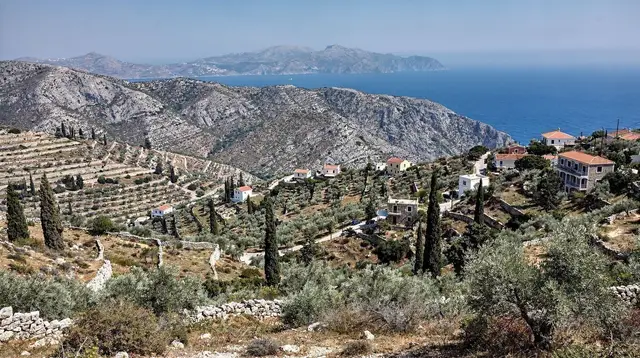
White Mountains and Sfakia in 3 Days
Why This Loop Needs Three Separate Days
The White Mountains, the Lefka Ori, and the Sfakia coast beneath them hold three experiences that people routinely try to compress into two days from Chania, and it rarely works. Therisso gorge is a short, scenic outing. The Samaria gorge is a 16 km one-way descent that ends with a boat, not a road. And the villages beyond it — Loutro, Frangokastello, Imbros — sit on a coast that Samaria day-trippers pass through but almost never explore. This plan keeps the three apart: Therisso on day one, Samaria on day two alone, and the Sfakia coast on day three, reached by sea rather than by a drive back over the mountains.
Travellers who only have two days and must cut one piece should drop Therisso, not the other two. It is the most substitutable of the three: pretty but not unique on an island with dozens of gorges, and easily swapped for a quiet Chania afternoon or folded into a different trip entirely. Samaria’s one-way structure and Loutro’s total absence of road access are what make the Sfakia coast worth reaching at all, and cutting either breaks the logic that holds days two and three together.
Day 1: Therisso Gorge and the White Mountain Villages
Base in Chania town and drive up into the foothills of the White Mountains, about 45 minutes south, to Therisso. This is the gentlest day of the three by design — the point is to see the mountains without spending the legs you need for tomorrow.
Therisso is a narrow limestone gorge with a single village of the same name at its head, historically significant as the base from which Eleftherios Venizelos declared the 1905 revolution against Ottoman rule. The road runs through the gorge itself, with tavernas built over the stream and short walking paths branching off where the walls close in. A morning is enough to walk the accessible stretches and eat lunch under the plane trees; the Therisso gorge route covers the drive and the walkable sections in more detail.
Travellers who prefer a guided introduction to the gorge and its history can book a guided cultural walk through Therisso, which pairs the landscape with the village’s role in Cretan history rather than leaving you to piece it together from plaques.
In the afternoon, with energy still in reserve, add a loop through the Akrotiri peninsula and its monasteries — see the Akrotiri monasteries walk — or simply return to Chania for an early dinner and an early night. Day two starts before dawn.
A rental car is the only realistic way to do this day; see renting a car in Crete if you have not arranged one yet, and note that the mountain roads above Therisso are narrow with blind bends, so driving in Crete is worth a read before you set off.
Day 2: Samaria Gorge, One Way to Agia Roumeli
This day stands alone, and the itinerary is built around that fact. The Samaria gorge descends 16 km, one-way, from the Xyloskalo at Omalos, 1,227 m up on the edge of the Omalos plateau, down to Agia Roumeli on the Libyan Sea. There is no shortcut, no midpoint exit, and no road at the bottom — the only way out of Agia Roumeli is by boat.
Leave Chania before sunrise; the drive up to Omalos takes about an hour, and the park gate opens early precisely because the walk and the logistics after it fill an entire day.
That timing also creates a practical problem worth solving before day one, not after: this itinerary never returns to Omalos, so a rental car driven up to the Xyloskalo on day two has no way back to its driver. Most travellers solve this by leaving the car in Chania overnight and taking the early KTEL bus service to Omalos instead, which runs to match the park’s opening hours in season. The car then sits idle for two nights while the gorge, the boat and the coast road are covered without it, and it is only needed again once day three’s coastal driving begins — either through a short-term rental picked up locally in Chora Sfakion or Vrysses, or a taxi transfer arranged in advance.
The descent itself typically takes five to seven hours depending on pace, dropping through pine and cypress forest before narrowing dramatically at the Iron Gates, where the walls rise over 300 m above a passage only 3-4 m wide. The complete Samaria gorge guide and the route from Chania cover timing, water stops and what to carry.
At Agia Roumeli, a village with no road in or out, buy a ferry ticket for the boat to Chora Sfakion — this is the step that makes day three possible without ever returning to Chania. Boats also run to Sougia and Palaiochora, but Chora Sfakion is the one that sets up the rest of this itinerary. A coach then connects Chora Sfakion back toward Chania for anyone who needs it, but this plan does not: you stay on the Sfakia coast.
Travellers who would rather not manage the park bus, timing and ferry connections alone can book a guided day hike through Europe’s longest gorge, which handles the transfers on both ends. Note that this is the full descent, not the shorter “easy Samaria” walk some resorts sell from the bottom — that version, covered in easy Samaria from Agia Roumeli, only makes sense as an alternative for travellers who cannot manage the full 16 km, and it changes the logic of this whole day. The one-way structure and the reasons behind it are laid out in why Samaria ends with a boat.
Sleep in Chora Sfakion rather than pushing on further tonight. It is a small port with rooms overlooking the water, and it puts you a short boat ride from Loutro in the morning.
Chora Sfakion itself is not the postcard village many expect from photos of this coast — it is a small, functional port town built around the ferry timetable, with a scattering of tavernas rather than the whitewashed charm of Loutro a few coves along. Travellers who miss the last boat, or who simply prefer to walk in, can reach Loutro on foot via the coastal path down from Anopoli, part of the E4 European long-distance trail, though it is an exposed, sun-baked descent with no shade and is not a sensible substitute for the boat in the middle of the day.
Day 3: Loutro, Frangokastello and Imbros Gorge
No drive back to Chania today. From Chora Sfakion, a short morning boat reaches Loutro, a village that still has no road connecting it to the rest of Crete — every arrival and departure is by sea or on foot. Whitewashed houses wrap a small sheltered bay; there is little to do beyond walking the waterfront, swimming off the rocks and eating slowly, which is the point. The guide to Loutro covers boat times and where to stay if you want to linger longer than a morning.
Travellers who want to combine Loutro with a swim stop can book a guided walk down Aradena gorge into Loutro, which drops from the Aradena bridge through a dry gorge and finishes at the same waterfront — a shorter, sharper walk than Samaria, and a reasonable way to keep the legs moving without another full-day descent. The Glyka Nera and Sfakia beaches guide covers the coves reachable only by boat or on foot along this stretch.
By early afternoon, head back to Chora Sfakion and pick up the car for the final stretch along the coast road: Frangokastello, a squat 14th-century Venetian fortress facing the sea, with a wide, mostly undeveloped beach beneath it. Sfakia legend ties it to the Drosoulites, a shimmering mirage said to appear near the anniversary of an 1828 battle — worth asking about locally, not worth planning around.
Finish the day at Imbros gorge, a narrower, steeper alternative to Samaria that takes two to three hours rather than a full day, descending from the village of Imbros toward the coast near Komitades, close to Chora Sfakion. It is a genuinely different walk — tighter, shadier, and short enough to combine with a swim afterward at Frangokastello. The Imbros gorge guide has the route details. Travellers who would rather have the walk and the transfers arranged together can book a guided walk down Imbros gorge with a swim at Frangokastello, which closes the loop without requiring a second car shuffle.
When This Itinerary Works, and When It Does Not
| Factor | Works | Does not work |
|---|---|---|
| Season | Roughly May to October | November to April — Samaria is closed |
| Weather | Stable, dry conditions | Heavy rain (flood risk) or high fire risk |
| Fitness | Able to walk 16 km downhill in one day | Limited mobility — see the easy Samaria alternative instead |
| Transport | Rental car plus willingness to use boats | No car and no flexibility on ferry timing |
The Samaria gorge park operates only from roughly May to October, and even within that window it closes on short notice for flood risk after heavy rain or for fire risk in hot, windy conditions — the same conditions the meltemi brings in July and August, covered in Crete in July and the meltemi. Outside the open season, this entire itinerary falls apart at day two: no descent, no boat to Chora Sfakion, and no natural route onward to Loutro without backtracking.
If your dates fall outside that window, look at best time to visit Crete and consider a different combination, such as Crete’s south coast in six days or a broader Crete hiking week built around whichever gorges are open when you travel.
A few practical notes worth carrying into the plan. Cash matters more on this stretch of coast than elsewhere in Crete: Loutro has no bank and only a single ATM that is not always stocked in high season, and Chora Sfakion’s is not guaranteed to be working either, so withdraw what you expect to need in Chania before day two rather than counting on finding it along the way. Book Samaria park tickets and transport a day ahead in July and August, when both fill up.
Pack more water than feels necessary for the gorge, and proper shoes rather than sandals — the path is loose stone for long stretches. And read mistakes to avoid in Crete before you drive the mountain roads above Therisso and around Imbros; Cretan drivers pull onto the hard shoulder to let faster traffic pass, which is courtesy, not an invitation to overtake blind.
A Few More Questions Before You Book
What happens to my rental car during the Samaria descent?
It stays behind. Since the walk ends at Agia Roumeli and this plan never loops back to Omalos, driving your own car up to the Xyloskalo leaves it stranded there. Most travellers take the early KTEL bus from Chania to Omalos instead, leave the car in Chania, and pick up a car again once the coastal driving on day three begins, either through a Sfakia-based rental agency or a short taxi transfer.
How often do boats run between Chora Sfakion and Loutro?
In season, several times a day, timed loosely around the ferries that also call at Agia Roumeli, Sougia and Palaiochora, with the crossing itself taking about fifteen minutes. Outside May to October the schedule thins to a handful of weekly departures, another reason this itinerary is built around the same season as the Samaria gorge itself.
tours.3 days
Verified deep-linked GetYourGuide tours. Book through these links and we earn a small commission at no cost to you.
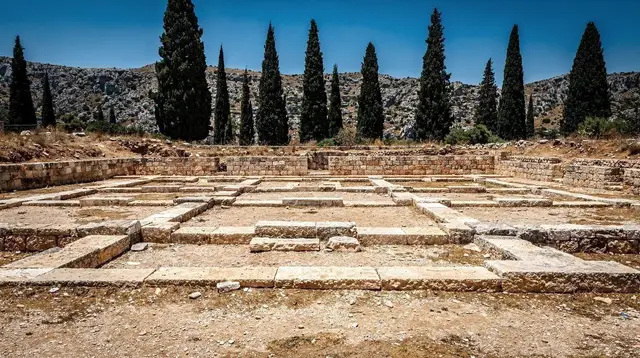
GetYourGuide does not provide a product photo for this activity — the image shows the meeting point, photographed by us.