East Crete vs West Crete: Which Side Should You Choose?
Should I visit east or west Crete if I don't have time for both?
West Crete has the island's best-known images — Balos, Gramvousa, Falassarna and Elafonissi — reached from Chania. East Crete is quieter, with Ierapetra, the islet of Chrissi, Sitia and the palm beach of Vai. Chania to Sitia is about 270 km and over four hours, so pick one side and go deep rather than trying to cover both from a single base.
Crete is not a place you cover from one hotel in a week. It is 260 km long, and the two ends pull travellers in opposite directions: the west has the lagoons and pink-tinged sand that show up in every photo of the island, while the east has quieter towns, an uninhabited islet, and the largest natural palm forest in Europe. Most first-time visitors arrive assuming they can do both. Almost none actually do.
Why the choice is forced, not optional
The number that makes the decision for you is the drive itself. Chania to Sitia is roughly 270 km along the VOAK, the highway that runs the length of the north coast, and it takes over four hours without stopping. Add a coffee break, a slow patch around Heraklion in summer traffic, or a stop at a viewpoint, and it becomes a five-hour transfer — a full day spent moving, not visiting.
That distance is why almost every itinerary that tries to string together Balos in the far west and Vai in the far east ends up thin everywhere: two long transfer days, and not enough time at either end to see what made the detour worth it. A base in Chania puts the west’s sights within 30 to 90 minutes; the same base puts Sitia five hours away. The reverse is true from Agios Nikolaos or Sitia. There is no single hotel on Crete from which both ends are a short drive, because the island itself is longer than that idea allows for.
This page is not going to tell you which half is “better.” It is going to tell you what each one actually offers, so the choice matches the time you have rather than a ranking someone else made.
Getting to each side by air
The airports reinforce the same divide. Heraklion (HER) is the busiest and most central of the three, roughly two hours from Kissamos and about two and a half from Sitia — as close to equidistant as anywhere on the island gets. Chania (CHQ), at Souda, puts you within an hour of Kissamos, Balos and Elafonissi, but adds most of a day if the plan later changes to reaching the east.
There is also a small regional airport at Sitia (JSH), with limited seasonal flights, mostly domestic routes from Athens rather than international ones — worth checking if the dates line up, but not something to plan a trip around. The airport that is not open, and that no itinerary should treat as an option, is the new Kastelli airport, still under construction. Flying into Chania effectively decides the west for you; flying into Heraklion is the choice that keeps both halves reachable, if not comfortably so on the same trip.
West Crete: the images everyone already knows
The west, centred on Chania and its Venetian harbour, is where most of Crete’s most-photographed places sit, all within a couple of hours of one another. Kissamos is the practical gateway: a working port town with the boat that runs out to Balos lagoon and the fortress islet of Imeri Gramvousa. Balos itself is reachable two ways — a rough, largely unpaved 8 km track that most rental contracts explicitly exclude from cover, or the boat from Kissamos, which is the option nearly everyone actually takes.
Further along the coast, Falassarna is a wide, west-facing beach known for its sunsets, more of a full afternoon than a quick stop. And at the island’s south-west corner, Elafonissi is the beach with the pink-tinged sand — patchy, not the saturated pink of the postcards, made of crushed foraminifera shells in a protected Natura 2000 area where taking sand or shells home is illegal. It is also, on paper, close to Chania and, in practice, about 76 km and two hours of mountain road away. People who budget it as a quick side trip are usually the ones disappointed by how much of the day it consumes.
For a broader loop through the region’s villages and vineyards without renting a car yourself, a guided road trip through western Crete with wine and food stops along the way covers several of these places in a single organised day. It is a reasonable way to see the west’s spread without three separate long drives.
The west is also the region closest to the mountains that dominate Crete’s interior — the Lefka Ori, or White Mountains, and the gorges that cut through them, including Samaria, the longest and best known. A guided Samaria gorge hike or a full Samaria gorge day, hiked with an organised group, fits naturally into a west-based trip in a way it simply cannot from the east, since Omalos and the gorge’s start are over three hours from Sitia.
East Crete: quieter, and further from everything else
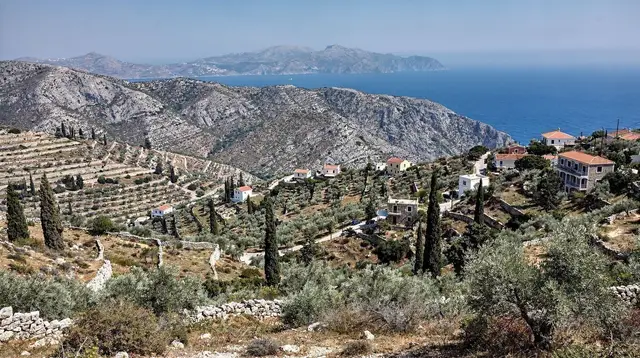
East of Heraklion, the character changes. There are no beaches here with Balos-level name recognition, and that is largely the point: the east absorbs a smaller share of the island’s visitors even in August, and its sights reward people who have already ticked off the famous west-coast list on a previous trip, or who simply prefer somewhere quieter.
Ierapetra, on the Libyan Sea side of the east, is the departure point for Chrissi — officially Gaidouronisi — an uninhabited, protected islet about 15 km offshore with a rare juniper forest and no accommodation of any kind. Boats run in season only and cancel in wind, and as with Elafonissi, taking sand or shells from the islet is prohibited. It is the closest thing Crete has to a boat trip to a genuinely untouched place, and it exists only on the east’s itinerary, not the west’s.
Further along the coast, Sitia is a working port town with its own wine and olive oil tradition, calmer and less built up than the resort strip further west along the north coast. From there, the road runs to Vai, a beach backed by the largest natural palm forest in Europe — a fenced, protected stand of the same endemic species, Phoenix theophrasti, that also grows at Preveli in the south. Camping is banned and the fence is there for a reason: this is a conservation site with a beach attached, not the other way round.
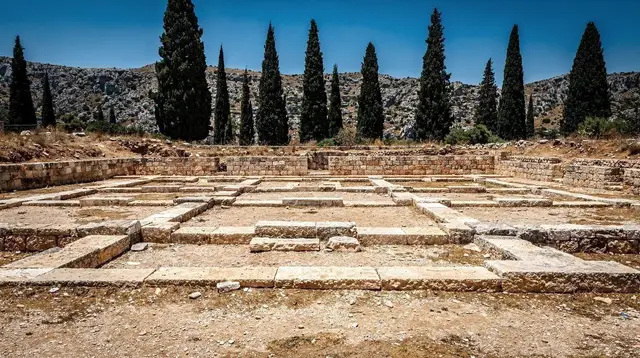
Beyond Sitia, the road continues to Zakros, one of the four great Minoan palace sites, far enough from Heraklion’s crowds that it rarely gets the volume of visitors Knossos does. For travellers who want to see the east’s coast and interior together without driving themselves, a horseback ride along the east coast is one of the few organised ways to cover ground here that does not involve a rental car.
One thing surprises first-time visitors to the east: distances within it add up almost as fast as the transfer from Chania did. Sitia to Zakros is over an hour each way on a winding road, and Ierapetra to Sitia is another 45 minutes beyond that — an east-based week needs its own internal pacing, not just a plan for getting there in the first place.
Wine country does not split east-west
It would be convenient if the wine regions sorted neatly into one side or the other. They do not. The most concentrated cluster of wine villages — Peza, Archanes and Dafnes — sits in the centre, close enough to Heraklion for a half-day trip regardless of whether you are based in the west or the east. Grapes here include Vidiano, Vilana, Dafni and Thrapsathiri among the whites, and Kotsifali, Mandilari and Liatiko among the reds — indigenous varieties, not imports.
Sitia, out in the far east, has its own separate wine and olive oil tradition, distinct from the Archanes cluster and worth building into an east-based trip rather than treating as an extension of it. A guided wine and olive oil tasting is an easy way to sample either region without needing to identify producers yourself. The practical takeaway: wine tasting is not a reason to choose one side over the other, since a reasonable version of it exists on both.
The wind that can cancel either side’s boat trip
There is one factor that does not respect the west-east split: the meltemi, the strong north wind that blows hardest in July and August. It can shut down the boat to Balos and Gramvousa out of Kissamos on the west coast, and the same wind, or the swell it leaves behind, can just as easily cancel the crossing to Chrissi out of Ierapetra in the east. Neither side is protected from this, and a cancelled sailing is usually confirmed only on the morning itself.
Anyone who builds a single boat trip into a tight one-day itinerary is taking the same weather risk regardless of which half of Crete they chose. Outside the two meltemi months both crossings run far more reliably, and the south-facing Libyan Sea coast — Plakias, Ierapetra, Chrissi — tends to stay calmer than the north coast even when the wind is up. It is a reason to build a spare day around a boat trip, not a reason to prefer one side over the other.
West vs east, side by side
| West Crete | East Crete | |
|---|---|---|
| Anchor town | Chania | Agios Nikolaos / Sitia |
| Headline sights | Balos, Gramvousa, Falassarna, Elafonissi | Chrissi islet, Vai, Zakros |
| Typical day-trip feel | Busy, well organised, the “classic” images | Quieter, fewer crowds, more driving between stops |
| Distance from Chania | Local, 30 min-2 hrs | 4-5 hrs (Sitia) |
| Wine region | Kissamos area, plus the shared centre | Sitia, plus the shared centre |
| Boat trips | Balos / Gramvousa from Kissamos | Chrissi from Ierapetra |
| Best paired with | Samaria gorge, White Mountains | Zakros, Lasithi plateau |
So which one, given your time
There is no single right answer here, and any page that hands you one is guessing on your behalf. What actually decides it is the shape of your trip:
- A first visit of a week or less, landing in Chania or flying into Heraklion and staying west naturally leans toward the west. It has the shorter drives between sights, the gorge hiking, and the beaches most people picture when they picture Crete.
- A second or third visit, or a trip that starts in Heraklion and pushes past it, is where the east earns its place — Chrissi, Vai and Zakros reward people who are not trying to also fit in Balos on the same trip.
- A genuine full-island trip needs ten days or more and, realistically, two bases — attempting it from one hotel is how people end up with two exhausting transfer days and short visits everywhere. A seven-day west-to-east itinerary or a dedicated four days in the east both work far better than a single loop that tries to touch every corner.
One case sidesteps the debate entirely: a single day ashore from a cruise ship docking at Heraklion. Neither extreme is reachable and back in the time available, so a one-day cruise itinerary from Crete is built around Knossos and the centre rather than around Balos or Vai, both of which are too far for a same-day return to the ship.
Crete rewards depth over coverage. Choosing a side is not settling for less of the island — it is the only way to actually see the half you pick properly, rather than photographing both from a moving car.
East versus west Crete: your questions answered
Can I see Balos and Vai on the same trip?
Only with a two-base trip or a long transfer day, since the two sit roughly 300 km apart on opposite ends of the island. Trying to do both from one hotel usually means more hours on the road than time on the sand.
Is Elafonissi worth the drive from Chania?
It is about 76 km and two hours of mountain road each way, so it is a full day, not a detour. Most visitors who make the trip pair it with Kissamos or Falassarna rather than driving back and forth in one day.
Which side has better beaches, east or west?
West Crete has the famous ones — Balos, Elafonissi, Falassarna — and gets busier because of it. East Crete’s beaches, including the protected islet of Chrissi and the palm sands at Vai, are less photographed but no less real, just further from the airports most people land at.
Is Chania or Heraklion the better base for reaching both sides?
Neither reaches both comfortably. Chania sits close to the west’s headline sights, while Heraklion and Agios Nikolaos are closer to the centre and east. A single base near the middle, such as Rethymno, shortens both drives but still leaves Sitia or Kissamos as a long day out.
Can I visit Chrissi island from the west coast?
No. Boats to Chrissi leave from Ierapetra on the south-east coast, roughly 300 km from Kissamos by road. It only makes sense as part of an east Crete itinerary.
Which side is better for wine tasting, east or west?
Both have working wine regions, so it is not really an east-west split. The centre, around Peza, Archanes and Dafnes, has the most concentrated wine-village day trips, while Sitia in the far east has its own tradition of wine and olive oil production.
How long does the drive from Chania to Sitia actually take?
About 270 km and over four hours on the VOAK, the north coast highway, without stops. In practice, with a coffee break and any slow-down around Heraklion, it runs closer to five hours, which is why almost no itinerary treats it as a day trip.
Can I fly directly into east Crete?
Only in a limited way: Sitia has a small regional airport (JSH) with a handful of seasonal flights, mostly domestic routes from Athens, so most travellers still land in Heraklion or Chania and drive. Treat a Sitia flight as a bonus if the dates happen to line up, not as the basis for planning an east-only trip.
Which side is easier to visit without a rental car?
West Crete, on the whole. The KTEL coach network is genuinely useful along the Chania-Rethymno-Heraklion stretch of the north coast, and Kissamos and Falassarna are reachable by bus. East of Agios Nikolaos the network thins out fast, and reaching Vai, Zakros or Chrissi’s departure point at Ierapetra without your own car takes real planning.
Top-Rated Crete Tours on GetYourGuide
Verified deep-linked GetYourGuide tours. Book through these links and we earn a small commission at no cost to you.
GetYourGuide does not provide a product photo for this activity — the image shows the meeting point, photographed by us.