The Battle of Crete in the Villages
A war that never quite left the villages
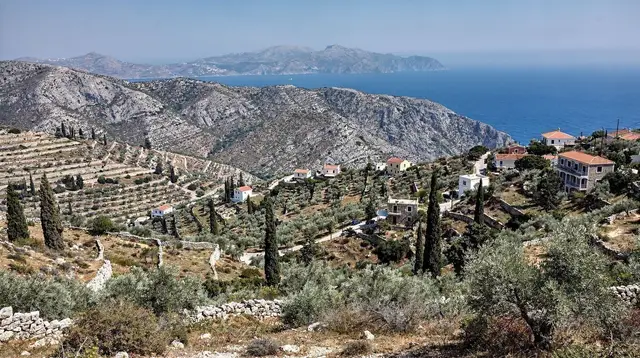
I did not expect a war that ended in 1941 to still feel current in 2026. But on my second visit to western Crete, sitting in a kafeneio in a village whose name I will not print because the family who told me the story asked me not to, I understood that the Battle of Crete is not filed away here the way it is where I come from. It is not a museum subject. It is a grandfather, a burned house, a date carved on a slab in the square.
The battle began on 20 May 1941, when German paratroopers dropped from the sky over the airfield at Maleme and over Chania, Rethymno and Heraklion at once. It was the first invasion in history carried out mainly by airborne troops, and it is still studied for that reason in military academies. What is studied less, outside Crete, is what happened after the paratroopers landed and the fighting moved into the villages.
Two cemeteries, two very different stories
Most visitors who come looking for this history end up at one of two cemeteries, and I want to be clear that they are not the same stop with two names. The German war cemetery sits on the hill above the old Maleme airfield, the ground German gliders and paratroopers actually fought to take on the first morning of the invasion. It holds around 4,465 dead in a single mass grave field, rows of low flat markers under olive and cypress trees, built by the German war graves commission decades after the war with the quiet cooperation of a country that had every reason to refuse it.
The Commonwealth war cemetery at Souda Bay, about 20 km away on the other side of Chania, holds roughly 1,500 individual graves of British, Australian, New Zealand and other Allied soldiers, each with its own headstone and, on many, a line chosen by a family thousands of kilometres away. I have walked both in the same afternoon, and the difference in what they ask of a visitor is not subtle. Maleme is a field of the men who took the ground. Souda Bay is a field of the men who tried to hold it. Treating them as one interchangeable “war cemetery” stop, which I have seen more than one itinerary do, misses the point of visiting either.
Villages that paid for helping strangers
What the battlefield tours and the cemetery visits do not always explain is why the fighting did not stop when the regular army retreated. Within days of the invasion, Cretan civilians, many of them armed with nothing but hunting rifles and farm tools, were fighting alongside the surviving Allied soldiers who had scattered into the hills, and hiding others who had no way out. The German response over the following years was reprisal on a scale that still shapes how villages talk about themselves.
Anogia, high on the slopes of Psiloritis, was burned and its men targeted in August 1944, in retaliation for the village’s role in sheltering resistance fighters and in the operation that captured a German general. It was rebuilt, stone by stone, and today it looks like any other proud mountain village with good lyra players and better cheese, until someone points out the memorial in the square and tells you what the date on it means. Villages around Frangokastello and through the Sfakia region carry similar memories, layered on top of an already fierce local tradition of resisting outside rule that goes back centuries.
The retreat to the south coast
The military story has a second half that most visitors never hear, and it runs straight through the mountains I had come to hike. When it became clear the battle was lost, thousands of Allied troops retreated south on foot, over the White Mountains, toward the fishing village of Chora Sfakion, which had no road worth the name and barely any harbour. Between 28 May and 1 June 1941 the Royal Navy pulled roughly 16,000 men off those beaches under fire, at real cost to the ships involved.
Thousands more could not be evacuated in time and were left behind, captured, or taken in by families along the route who risked their own lives to hide them, sometimes for years. Walking any part of that same ground today, on a hiking week through the White Mountains and Sfakia, or simply driving the switchback road down to Chora Sfakion, it is worth remembering that the empty, spectacular landscape was, for a few weeks in 1941, a lifeline and a trap at the same time.
How I would actually visit this
If this history interests you the way it interests me, I would not try to see it all in a rushed afternoon between the beach and dinner. A guided historical tour that walks you through the Battle of Crete site by site puts the airfield, the drop zones and the two cemeteries into one coherent day with someone who can translate the family stories, not just the dates. For a deeper look, a battlefield archaeology tour that reads the ground itself for what happened on it goes past the memorials to the bunkers, foxholes and gun positions still visible above Maleme.
And if you have two days to give it, a two-day itinerary that follows the whole campaign from Chania out to the mountains is the only format I have found that does justice to both the airborne assault and the retreat that followed it. None of these replace an afternoon in Rethymno or a swim, but they earn their place on a Crete trip that wants to be more than beaches.
What I would ask you to remember before you go
Ask before you photograph a memorial with a family name on it. Read the panels at both cemeteries rather than one. And if a village elder wants to tell you a story about 1941, over coffee or raki, let them finish it. For readers who want the wider arc of who ruled this island before the war, the Venetian centuries that shaped Crete’s forts and harbours are a useful backdrop, and the broader guide to the Battle of Crete and to the resistance and the island’s war cemeteries go further into the campaign than I can in one personal piece.
If you want to understand how deeply this history sits inside ordinary Cretan life, spend an evening at a village festival rather than a battlefield: the villages and festivals of Crete are where you will hear the same history sung, not just displayed. A visit built around Souda Bay and the Akrotiri peninsula, or filtered through the island’s wider WWII history activities, will bring you to most of what this piece describes without turning it into a checklist. It should not feel like one. It never did to the people who told me their stories.
Frequently asked questions about the Battle of Crete and its villages
When did the Battle of Crete begin, and why does it matter militarily?
It began on 20 May 1941, when German paratroopers dropped over Maleme, Chania, Rethymno and Heraklion. It was the first invasion in history carried out mainly by airborne troops, and the German losses were heavy enough that Hitler reportedly never authorised a large airborne operation again.
What is the difference between the German cemetery and the Commonwealth cemetery?
The German war cemetery at Maleme holds around 4,465 German dead in a single mass grave field on the hill above the old airfield. The Commonwealth war cemetery at Souda Bay holds roughly 1,500 individual graves of British, Australian, New Zealand and other Allied soldiers, each with its own headstone. They sit about 20 km apart and were built by different nations for different reasons.
Can I visit both cemeteries in one day?
Yes. Maleme is a short drive west of Chania on the coast road, and Souda Bay is just east of Chania on the way toward Rethymno, so both fit into a single day with time to spare. Most visitors pair them with the old town of Chania rather than treating either as a quick stop.
Why was the village of Anogia destroyed?
Anogia, high on the slopes of Psiloritis, was burned and its male population targeted by German forces in August 1944 in reprisal for its role sheltering resistance fighters and Allied soldiers, including the andartes involved in the 1944 kidnapping of General Kreipe. It was rebuilt after the war and is still known across Crete as a village of resistance.
Where were Allied troops evacuated from after the battle was lost?
Most surviving Allied troops retreated south over the White Mountains on foot to Chora Sfakion, on the south coast, where the Royal Navy evacuated roughly 16,000 men over several nights between 28 May and 1 June 1941. Thousands more could not be taken off and were captured or hidden by Cretan families.
Is this history still discussed by people living in Crete today?
Yes, more than in most places I have visited. Village memorials list execution dates alongside family names, older residents can point to the house where a relative hid an Allied soldier, and 20 May is still marked with ceremonies at Maleme and elsewhere. This is not distant history here.
Do I need a guide to understand the sites, or can I visit independently?
Both cemeteries are open to independent visitors with no ticket and clear information panels, so a self-drive visit works well. A guided battlefield tour adds the village-level stories, the reprisal sites and the resistance routes that are harder to piece together from panels alone.
tours.History
Verified deep-linked GetYourGuide tours. Book through these links and we earn a small commission at no cost to you.
GetYourGuide does not provide a product photo for this activity — the image shows the meeting point, photographed by us.