Two calm bays, twenty minutes east of Chania
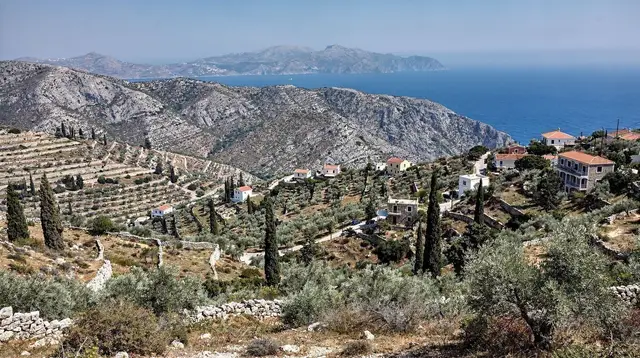
Kalyves and Almyrida are not a single resort but two neighbouring villages on the north coast of the Apokoronas region, the stretch of Crete between Chania and Rethymno where the coastline softens into low hills, olive groves and citrus orchards. For travellers who want to sleep near Chania without actually staying inside it, this is one of the more sensible bases on the island: close enough for a morning in the old town, far enough to come home to a quiet bay in the evening.
What draws families in particular is the shape of the coast itself. Both villages sit inside sheltered curves of the bay of Souda, which blunts the swell that hits more exposed beaches further west. The result is shallow, gently shelving water that suits small children and nervous swimmers, and a noticeably calmer atmosphere than the built-up strip around Platanias and Agia Marina, 20-25 minutes further along the coast toward Chania town. Kalyves and Almyrida are not undiscovered — both have grown steadily with holiday rentals over the last two decades — but they have grown as low-rise villages rather than as a resort strip, and that difference is visible the moment you walk onto the sand.
This page treats the two villages together because most visitors move between them freely: Kalyves for its longer beach and wider choice of tavernas, Almyrida for its smaller, more sheltered cove five to ten minutes further east.
Kalyves: the longer beach and the working village
Kalyves is built around a broad, sandy-to-shingle beach that runs for close to a kilometre along the bay, with a shallow slope that keeps the water calm through most of the summer. A seafront promenade of tavernas and cafes runs the length of it, busy at lunchtime and again after sunset, but without the density of bars and souvenir shops that mark a full-scale resort. Behind the beach, Kalyves is still a working village with a permanent population, a Sunday market, a pharmacy, supermarkets and a health centre — practical advantages for a family staying more than a few days.
The river mouth that splits the beach roughly in half is a natural landmark and a popular gathering point for families, since the water on the river side stays especially shallow. Sunbeds and umbrellas are available on the organised sections for the usual €10-20 a day, and by Greek law every beach keeps a free access corridor and unreserved stretch of sand, so paying is never compulsory.
For anyone who wants to get out on the water rather than just look at it, small motorboats can be hired directly from the harbour without a boat licence, letting a family potter along the coast at its own pace and pick a quiet cove for a swim.
renting a self-drive boat from the Kalyves harbour for a few hours on the water a shorter two-hour boat rental that needs no licence, useful with younger childrenAlmyrida: the smaller cove next door
Almyrida sits a five- to ten-minute drive east of Kalyves, tucked into a smaller, more enclosed bay that is arguably the calmer of the two. Its beach is shorter and mixed sand and gravel, but the headland at its eastern end cuts most of the swell, making it a favourite for young children and for anyone recovering from a long transfer who just wants flat water. A handful of tavernas and beach bars line the shore, along with a small Byzantine chapel of Agia Triada standing just offshore on its own rocky islet — a modest landmark rather than a major sight, but a pleasant one to swim out to on a calm morning.
Almyrida has less in the way of shops and services than Kalyves, which is part of its appeal: it feels like the quieter half of the pairing, better suited to a lazy day than to errands. Families based in Almyrida typically drive the short distance into Kalyves, or on into Chania, for anything beyond the beach.
A short boat trip from this stretch of coast reaches the coves toward Seitan Limania and the tip of the Akrotiri peninsula, a scenic add-on for a day already built around swimming; travellers who prefer to base themselves closer to that side of the bay, around Souda and Akrotiri itself, will find those coves an even shorter detour from home.
a half-day boat trip from the Kalyves-Almyrida coast that stops at three separate covesBeaches without the Platanias or Agia Marina crowds
The comparison locals and repeat visitors make most often is with Platanias and Agia Marina, the beach strip closer to Chania town that has grown into a denser resort corridor of hotels, beach bars and sunbed rows. Kalyves and Almyrida offer the same north-coast advantages — sandy, shallow, family-friendly water within a short drive of Chania — with a lower density of development and noticeably more room on the sand outside the peak weeks of July and August.
That trade-off runs both ways. Platanias and Agia Marina sit closer to Chania’s airport and old town and have a wider choice of hotels and organised entertainment; Kalyves and Almyrida ask for a short car journey in exchange for a quieter bay and a slower pace. Neither village should be mistaken for a hidden secret — both fill up in August — but they consistently feel less crowded than the strip nearer Chania, simply because there is less built along their shore to fill.
A third comparison worth making is with Georgioupoli, the palm-lined resort roughly 20 minutes further east toward Rethymno along the same stretch of coast. Georgioupoli shares the same sheltered, family-friendly character as Kalyves and Almyrida, with its own river mouth and long sandy beach, and travellers cross-shopping this part of Apokoronas often end up choosing between the three rather than settling on Kalyves or Almyrida outright. The practical difference is distance and direction: Georgioupoli leans toward the Rethymno side of the region, which matters if the rest of a trip runs east rather than west out of Chania.
When to come, and what July and August change
The practical season here runs May to October, the same window that applies across the island. Late May and June bring warming, still-comfortable seas and a landscape that is still green from spring; September into mid-October keeps warm water and softer light with the crowds thinning. July and August are the hottest months, typically 30-35 °C, and the busiest and most expensive on this stretch of coast, with sunbeds filling by mid-morning and restaurants needing a booking in the evening.
Those same two months bring the meltemi, the strong seasonal north wind that can put chop on north-facing water. Kalyves and Almyrida both face north, so a strong meltemi day can mean a choppier bay and boat rentals staying close to shore rather than venturing along the open coast. It rarely closes the beaches outright, since the headlands offer some shelter, but it is worth checking conditions before booking a boat trip in peak summer. Travellers who want guaranteed calm water on a windy day have the option of driving to Crete’s south coast, which stays sheltered from the meltemi; see the guide to what the meltemi does to a Crete holiday for the wider picture.
November to March is the honest low season here as everywhere on the island: many seafront tavernas close, the sea cools to 12-18 °C, and the villages return to a quiet, largely residential pace. Kalyves and Almyrida are not a winter destination; visitors wanting Crete outside the summer months do better basing themselves in Chania, Rethymno or Heraklion, where museums, old towns and restaurants stay open year-round.
Getting here and getting around: why a car earns its keep
The single most useful piece of planning advice for this area is to rent a car. The KTEL coach network that runs efficiently along the main Chania-Rethymno-Heraklion highway serves Kalyves and Almyrida only lightly by comparison, with a handful of daily departures rather than the frequent service on the coastal trunk route. That is enough to reach Chania town for a day trip, but it is not enough to comfortably combine a stay here with the region’s other draws.
With a car, Kalyves and Almyrida work well as a hub for Apokoronas and the near Chania region. Lake Kournas, Crete’s only significant freshwater lake, is about 20 minutes’ drive south, ringed by hills and popular for a swim, a pedal boat or a lakeside lunch that feels completely different from the coast; the guide to Lake Kournas and the springs of Argyroupoli covers the walking loop and the trout tavernas around the water in more detail than fits on this page.
The hill villages of Apokoronas, and the Therisso gorge where Eleftherios Venizelos’s revolutionaries once held out against Ottoman rule, sit within a similar radius and reward a half-day’s exploring; drivers who would rather see it at their own pace than on the organised trip below can follow the self-drive route through the Therisso gorge instead.
a guided half-day trip into the Therisso gorge and its historyChania town itself, with its Venetian harbour, lighthouse and covered market, is a straightforward 20-30 minute drive, making a day trip in and an evening back at the beach an easy rhythm. Anyone wanting an organised alternative to self-driving can also book a half-day tour that takes in the region’s traditional villages and the ancient site of Aptera on the way.
a private half-day tour through the traditional villages of the area and the ancient site of ApteraChania airport and Heraklion airport are both reachable within an hour or so of driving, which makes Kalyves and Almyrida a workable choice for a first or last night of a longer island trip, not only a full-stay base. For the practicalities of hiring and driving, see the guides on renting a car in Crete and the limits of the KTEL bus network.
What this base does not offer
It is worth being direct about what Kalyves and Almyrida are not. Neither village has a Venetian old town, a historic harbour or a significant monument to visit; that heritage belongs to Chania, Rethymno and Heraklion, all reachable as day trips but not present here. Neither has anything resembling Chania’s nightlife — evenings in Kalyves and Almyrida mean a long dinner by the water and an early night, not bars or clubs.
Travellers drawn by the idea of a historic town to wander, or a lively evening scene, should base themselves in Chania proper and treat this coast as a beach day rather than the other way around. For a broader comparison of every base on the island, including how Chania stacks up against Rethymno and Heraklion for a first stay, the overview of where to stay in Crete sets Kalyves and Almyrida alongside those alternatives.
What the two villages do offer is exactly what many families are actually looking for: a short, predictable drive from Chania, a calm and shallow beach, a slower pace than a resort strip, and enough of a working village around the sand to make a stay of several days comfortable rather than repetitive.
Practical notes for a family stay
A day here for a family of four typically runs €60-120, covering sunbeds, lunch at a beachfront taverna, ice cream and a modest dinner; self-catering apartments and supermarket shopping bring that figure down further. Sunbed-and-umbrella sets cost the same €10-20 found across the island’s organised beaches, and a free, unreserved stretch of sand is guaranteed by law on every beach in Greece, so a paid set is always optional rather than required.
Both villages have pharmacies and basic medical care; the nearest hospital is in Chania. Tap water is generally fine in the main village centres but many households and rentals rely on bottled water, as in most Cretan coastal villages, so ask your host if unsure. Plugs are the European type C/F at 230 V, and the national emergency number is 112.
A stay of 2-4 nights suits most families well: enough time to settle into a beach routine, take one day trip into Chania, and add a half-day at Lake Kournas or in the hill villages, without feeling like the village itself has been exhausted after the first afternoon.
Frequently asked questions about Kalyves and Almyrida
How far is Kalyves from Chania?
About 20 minutes by car along the coast road, roughly 18 km. Almyrida is a further 5-10 minutes east. There is no train and no fast bypass, so allow more time in the July and August traffic around Souda.
Is Almyrida beach good for young children?
Yes. Almyrida’s bay is shallow and sheltered by a small headland, with a gentle sandy-to-gritty bottom that suits paddling and early swimming lessons. It is smaller than Kalyves beach, so arrive early in August to find shade and space.
Do Kalyves and Almyrida have Venetian old towns like Chania?
No. Both are working coastal villages that grew around fishing harbours, not fortified Venetian ports. There is no old town to walk, no Venetian harbour and no significant historic monument in either village; that side of Crete belongs to Chania, Rethymno and Heraklion.
Is there nightlife in Kalyves or Almyrida?
Very little. Evenings mean a taverna by the water, a drink at a beach bar that closes at a reasonable hour, and an early night. Anyone wanting bars, clubs or a late-night strip should base themselves in Chania town or look further along the coast, not here.
Can I get to Kalyves and Almyrida by bus?
There is a KTEL service from Chania, but it runs far less often than the buses on the main Chania-Rethymno-Heraklion highway, and connections onward to Lake Kournas or the hill villages are sparse. Most visitors who want to explore beyond the beach rent a car.
Does the meltemi affect Kalyves and Almyrida?
Both villages face north, so the meltemi of July and August can put a chop on the water and keep boat rentals close to shore on windy days. The south coast, on the far side of the island, stays calm through the same days if you need an alternative.
What is there to do besides the beach?
Small-boat rentals that need no licence, short boat trips along the coves toward Seitan Limania, and day trips inland to Lake Kournas, the Therisso gorge and the traditional villages of Apokoronas. It is a base for short, easy outings rather than a destination with its own long list of sights.
Could Kalyves or Almyrida work as a base for a longer family trip around western Crete, not just a beach stay?
Yes, especially with a car. Many families use Kalyves or Almyrida as the coastal anchor of a week that also covers Chania old town, Lake Kournas and a day further west toward Kissamos, rather than staying on the beach every day. A structured week built around younger children, such as a 7-day Crete itinerary for families with kids, gives a realistic sense of how much ground to cover without exhausting them.