Fodele and Agia Pelagia, side by side on the same coast road
Ask what a beach resort ten minutes from a motorway junction has in common with the farming village where a Renaissance painter was born, and the honest answer is: a shared regional unit and not much else. Agia Pelagia and Fodele sit close together on the coast west of Heraklion, inside the same Heraklion regional unit that also holds Knossos and the wine villages of Archanes and Dafnes. That is the geography. What they offer a traveller is genuinely different, and this page keeps the two apart rather than pretending they form one destination.
Agia Pelagia is a resort in the plain sense of the word: hotels stacked around a sheltered bay, tavernas along the water, a working watersports scene, and a short hop to Dia island offshore. It grew up from the 1970s onward as a beach base close to the capital, and it still functions that way - a place people choose for convenience and a calm cove, not for architecture.
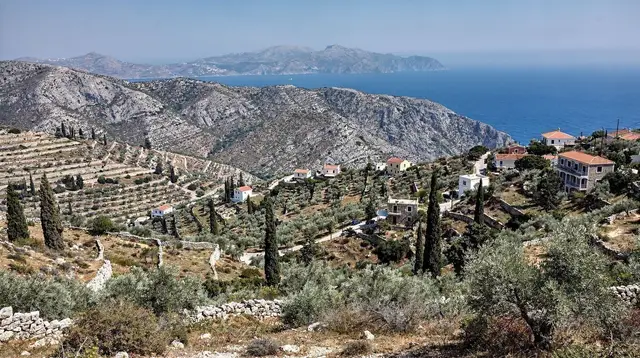
Fodele, a handful of kilometres inland, is a small agricultural village that would attract little outside attention if it were not, almost certainly, the birthplace of Doménikos Theotokópoulos, the painter the world knows as El Greco, born here in 1541. One is built for holidaymakers. The other has kept farming while a memorial house and two Byzantine churches mark its one claim to fame. Read the full account of El Greco and Fodele if that history is what brought you here.
Agia Pelagia: a modern resort, not a heritage stop
Set that expectation early, because it is the mistake this page exists to head off: Agia Pelagia has no Venetian harbour, no old quarter, and nothing resembling the historic centres of Chania or Rethymno. If you want a sense of what those two towns actually offer before you compare, the Chania versus Rethymno versus Heraklion guide lays it out directly.
Agia Pelagia is, instead, a genuinely pleasant amphitheatre-shaped bay wrapped in hotels and apartments, with a scattering of smaller coves nearby - Lygaria among them - where the watersports operators are concentrated. The beach itself is organised, with sunbeds and umbrellas typically running in the same €10-20 range you will find on organised beaches across the island, and by Greek law a free stretch and a clear path to the water are guaranteed on every beach, this one included.
What the resort does well is proximity. It sits close enough to Heraklion and to Heraklion airport (HER) that it works as a practical first or last night of a trip - somewhere to land, swim off the flight, and leave again without adding a long drive on either end. That is a real advantage over basing yourself further west toward Chania or further east toward Agios Nikolaos, where the airport transfer eats into a short stay. For a longer island tour, it is far more common to treat Agia Pelagia as a stop on the way rather than a base for a full week; the Heraklion in two days itinerary shows how it fits around a short city and Knossos visit.
Distance and travel time at a glance
| From | Distance | Typical drive time |
|---|---|---|
| Heraklion city centre | 20 km | 25-30 minutes |
| Heraklion airport (HER) | 25 km | 30-35 minutes |
| Fodele village | 8 km | 12-15 minutes |
| Knossos | 22 km | 30 minutes |
Those numbers assume ordinary daytime traffic on the coast road; add time in July and August when the highway carries more resort traffic between Heraklion and the western towns.
Getting there and getting around
A rental car remains the practical default for this stretch of coast, as it does across most of the island - see renting a car in Crete and driving in Crete for the general rules before you book. Agia Pelagia also sits close enough to the VOAK / E75 north-coast highway that the KTEL coach network connecting Heraklion with the towns further west is a workable option if you are not driving; check current timetables locally, since the north-coast service is one of the more reliable KTEL routes on the island, unlike the thinner runs south of the mountains.
The general rundown of the network is in the KTEL buses in Crete guide. Reaching Fodele without a car is harder - it sits off the main coastal route, and a taxi or a rental remains the sensible way to combine the two in one outing. If your trip starts or ends at the airport, the Heraklion airport guide covers transfers in more detail.
Fodele: El Greco’s village, and nothing more than that
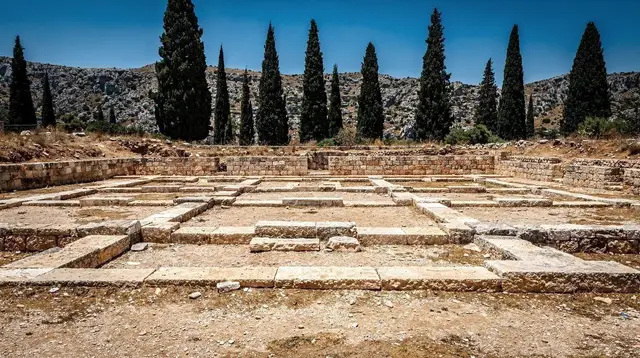
Fodele will disappoint anyone expecting a second Arkadi or a museum town. It is a working agricultural village in a small green valley, with citrus groves rather than tour buses, and its entire tourist infrastructure amounts to a modest memorial house near the site traditionally identified as El Greco’s birthplace, a small museum room, and two Byzantine churches worth a short look - the older, frescoed Panagia church among them. There is no walled old town, no harbour, and no equivalent of the museum quarter in Heraklion. Treat it as a 45-minute to hour-long stop on a loop that also includes Agia Pelagia, not as a half-day destination in its own right.
The payoff, for anyone who cares about the history, is real: El Greco left Crete for Venice and then Rome before settling in Toledo, where nearly all his surviving major work now hangs, but he was born here, on this island, in 1541, under Venetian rule. If that connection interests you, the dedicated El Greco and Fodele guide goes deeper into what actually survives to see versus what is inference and tradition. It is a useful corrective to the kind of vague “birthplace of a genius” framing that oversells a quiet village - Fodele earns a visit for what it honestly is, not for what a brochure might imply.
When to swim: the season, month by month
The swimming season at Agia Pelagia runs the same window as the rest of the island’s beaches, roughly May to October. Spring sea temperatures sit around 16-18°C - swimmable for many, bracing for some - and climb through the summer to a peak of roughly 24-26°C in late August and into September, which is also when the water is most comfortable for children. Air temperatures follow the island-wide pattern too: July and August are the hottest months, with daytime highs regularly in the low 30s°C, and they are also the busiest and most expensive months to find a room here, since Agia Pelagia’s proximity to Heraklion makes it a popular short break for both foreign visitors and local weekenders.
For a calmer visit with a still-warm sea, late May into June or September into early October is the better window - fewer crowds on the beach and lower prices in the tavernas, without giving up much water temperature. The Crete in September guide and the broader best time to visit Crete guide cover the trade-offs in more detail if your dates are flexible.
Sea temperature and crowd levels by season
| Period | Sea temperature | Crowd level |
|---|---|---|
| May-June | 18-21°C | Low to moderate |
| July-August | 23-25°C | High, peak season |
| September | 24-26°C | Moderate, cooling by late month |
| October | 21-23°C | Low, many facilities scaling back |
What to actually do here
Agia Pelagia’s appeal is squarely about the water, and the local operators reflect that. The bay and the neighbouring cove of Lygaria run a genuine cluster of watersports: you can rent a jet ski along the Agia Pelagia coastline for an hour of speed on the water, or take out a self-drive Poseidon 480cc rental boat for a slower, no-licence-needed loop around the bay and its smaller coves.
For something calmer, beginners can try a first scuba dive off Heraklion’s coast, while the short boat trip out to Dia island covers ground a rental boat is not really built for, out to the uninhabited islet that shelters the bay.
If Dia interests you on its own terms, the Dia island boat trips guide covers the options in more depth, including departures from nearby Gouves. Divers with more experience, or anyone wanting to compare options along the whole north coast, will find a wider picture in the diving in Crete guide and the sea kayaking in Crete guide.
None of this amounts to a nightlife scene, and that is generally the point for people who choose Agia Pelagia over the busier resort strip further east around Hersonissos and Malia - see is Hersonissos worth it for a franker look at that comparison. Evenings here run to a taverna meal by the water rather than bars and clubs, which suits the couples and families this stretch of coast tends to attract more than it suits anyone chasing a loud holiday.
Where this fits in a wider Crete trip
Used well, Agia Pelagia and Fodele are a half-day loop or a short overnight stop, not a base for an entire holiday. The strongest case for staying here is logistical: proximity to Heraklion airport makes it a sensible place to land and decompress, or to spend a last night before an early flight, without the longer drives that a base further west near Chania or east near Agios Nikolaos would add on either end.
From here, a morning at Knossos and the Heraklion Archaeological Museum - where the real frescoes live, since the ones at the palace itself are replicas - is a short drive away, as is a first taste of Cretan wine country around Archanes and Dafnes. If you are weighing where to base a longer stay instead, the where to stay in Crete guide sets Agia Pelagia against the island’s other options plainly, without dressing it up as something it is not.
Fodele and Agia Pelagia: common questions
Are Agia Pelagia and Fodele the same kind of place?
No. Agia Pelagia is a modern beach resort on the coast, built up since the 1970s around a sheltered bay. Fodele is a small inland farming village known for one thing: it is where the painter El Greco was born in 1541. They share a regional unit and a short drive, nothing else.
How far is Agia Pelagia from Heraklion and its airport?
About 20 km and 25-30 minutes from Heraklion city, and roughly 25 km and 30-35 minutes from Heraklion airport (HER), depending on traffic on the coast road. That makes it a workable first or last night before a flight, rather than a destination that needs a week.
Can I get to Agia Pelagia without a rental car?
Yes, on the KTEL coach network that runs along the north coast highway between Heraklion and the western towns; Agia Pelagia sits close enough to that route to reach by bus and a short local connection or taxi. A car still gives more flexibility for the Fodele detour and the smaller coves nearby.
Is there a historic old town at Agia Pelagia like Chania or Rethymno?
No, and it is worth being clear about that before you plan around it. Agia Pelagia has no Venetian harbour, no old quarter and no equivalent of the Rethymno Fortezza. It is a beach resort of hotels, tavernas and watersports operators around a bay - pleasant for what it is, not a heritage stop.
When is the sea warm enough to swim at Agia Pelagia?
The swimming season runs May to October. Expect a cool 16-18°C in spring, rising through the summer, and the warmest water, typically 24-26°C, in late August and September. July and August are also the hottest and busiest months on land, with air temperatures regularly in the low 30s°C.
Is Fodele worth the detour if I am not an art specialist?
It is a short, low-key stop rather than a major sight: a small memorial house near where El Greco is thought to have been born, a couple of Byzantine churches, and an agricultural village going about its own business. Go for an hour on the way to or from Agia Pelagia, not as a standalone half-day trip.
What can I actually do on the water at Agia Pelagia?
The bay and the neighbouring cove at Lygaria support a working watersports scene: jet skis, small rental boats, pedal boats, an underwater sea scooter and beginner diving lessons are all run locally in season, alongside a boat excursion out to uninhabited Dia island offshore.
Should I stay overnight in Agia Pelagia or just visit for the day?
Both work. As a day trip from Heraklion it is an easy half-day of beach time plus the Fodele detour. As an overnight base it earns its keep mainly around flight times, since its proximity to Heraklion airport is its strongest practical advantage over staying further west or east.