A Village and a Wine Country, Not a Theme Park
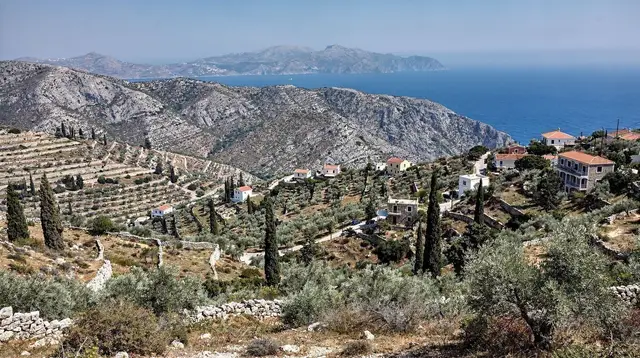
Most visitors to central Crete see Archanes, if they see it at all, as a name on a road sign between Knossos and the hills. That undersells it. Archanes is a real village of around 4,000 people, built on low ground beneath the slopes of Mount Iouktas, with narrow lanes, restored Venetian and Ottoman-era houses, blue-painted doors, and small squares that fill with locals rather than tour groups in the evening. Around it, spreading toward Peza and Dafnes, is one of Crete’s most consistent wine-producing pockets, growing grape varieties that exist almost nowhere else on earth.
This page treats the two as one destination because that is how they work on the ground: a walkable village you can cover in an hour or two, surrounded by a rural wine landscape you explore by car, on a short tour, or on foot between one estate and the next. It is not a single attraction with an entrance gate and a ticket booth. There is no central visitor centre pouring unlimited samples, and no organised circuit that guarantees a set itinerary. What you get instead is closer to how Cretans themselves experience this land: a village square for coffee, a family winery reached by a farm track, a taverna serving what was picked that morning.
Walking Archanes Itself
The village rewards slow walking more than any single sight inside it. The old core is compact enough to cover on foot: whitewashed and stone houses along stepped lanes, a couple of Byzantine-era churches, and a main square shaded by plane trees where older residents still sit out most afternoons.
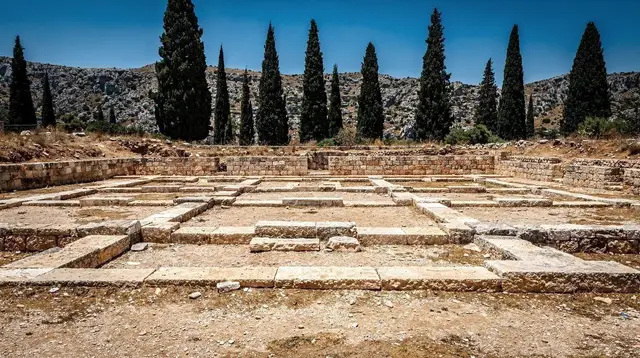
Archanes has produced its own share of history, too — archaeological digs on its outskirts uncovered Minoan remains, including a cemetery site at nearby Fourni, which is part of why the village sits inside the broader story told at Knossos and the Heraklion Archaeological Museum, the museum that actually holds the frescoes most visitors associate with the palace itself.
Come with no fixed plan beyond a coffee and a walk, and Archanes tends to deliver more than destinations that promise a headline sight. It is the kind of place best treated as one stop within a longer loop through Heraklion city and the Minoan sites, rather than a reason to drive out on its own from the coast.
The Wine of Peza, Archanes and Dafnes
The vineyards around Archanes, Peza and Dafnes sit at moderate elevation on the northern flank of Mount Iouktas and Mount Psiloritis’s foothills, with the altitude and cooler nights that make this one of the more distinctive wine zones on the island. Unlike coastal Crete, where international grape names dominate wine lists in resort tavernas, this area has kept faith with indigenous varieties that grow almost nowhere outside Crete.
On the white side, look for Vidiano, a full-bodied grape with stone-fruit character that has become something of a flagship for serious Cretan producers; Vilana, lighter and more everyday, the grape historically most planted around Peza; Dafni, aromatic and named for the laurel it is said to recall; and Thrapsathiri, an old variety enjoying a slow revival. On the red side, Kotsifali brings soft tannins and red fruit, usually blended with the deeper, more tannic Mandilari for structure, while Liatiko is the region’s oldest surviving variety, capable of both light easy-drinking wines and, aged, something more serious.
| Grape | Colour | Character |
|---|---|---|
| Vidiano | White | Full-bodied, stone fruit, the modern flagship |
| Vilana | White | Light, everyday, historically the Peza workhorse |
| Dafni | White | Aromatic, laurel-scented, a niche revival |
| Thrapsathiri | White | Old variety, crisp, increasingly replanted |
| Kotsifali | Red | Soft tannins, red fruit, usually blended |
| Mandilari | Red | Deep colour, firm tannin, adds structure |
| Liatiko | Red | Oldest local variety, light or serious with age |
Family estates here range from small operations pouring tastings in a converted outbuilding to larger producers with proper cellar-door facilities, and the wine appellation Peza itself, one of Crete’s oldest, covers much of this ground. For a fuller picture of how these grapes and the region’s wineries fit together, the dedicated guide to Peza and an Archanes winery day and the wider survey of Cretan wine regions and grapes go deeper than a single destination page can.
a guided walking and tasting route through Archanes’ vineyards gives structure to a first visit if you would rather not knock on winery doors unannounced, and it pairs a physical walk with the tastings rather than treating the wine as the whole point of the day.
Getting There, and Why a Car Matters
Archanes sits about 15 km south of Heraklion and roughly 8 km south of Knossos, both a straightforward 15-25 minute drive on inland roads through low hills planted with vines and olive groves. Dafnes lies a further short drive to the west, and Peza’s scattered wineries sit between the two, so a loop connecting all three in a single outing is entirely realistic in a rental car.
What does not work reliably is public transport. The KTEL coach network genuinely serves the north coast corridor between Chania, Rethymno, Heraklion and Agios Nikolaos, but its coverage of this inland wine country is thin and not something to plan a day around. For this destination, the practical options are renting a car and self-driving, hiring a private driver, or booking an organised tour that includes transport. Anyone unsure about driving in Crete for the first time will find the roads here easier than the mountain passes further south — mostly well-surfaced secondary roads with light traffic outside peak season.
a private jeep tour that includes wine tasting and lunch removes the driving question entirely for travellers who would rather not navigate unfamiliar rural roads themselves, while still keeping the day flexible rather than fixed to a coach timetable.
Opening Hours, Siesta and Sundays
Rural Crete keeps its own clock, and this wine country is no exception. Many small wineries close for a midday siesta, roughly 14:00 to 17:00, reopening for a slower pace into early evening rather than staying open straight through the day the way a resort attraction might. A good number close entirely on Sundays, when family time takes precedence over pouring for passing visitors, and public and religious holidays follow the same rural logic: expect closed shutters rather than adjusted hours or a posted notice.
Weekday mornings, once the coffee crowd around the square has thinned by mid-morning, tend to be the quietest and most forgiving stretch for a winery stop, before the midday heat sets in and while a host still has time to spare for an unhurried conversation. None of this is signposted the way a bus timetable would be. A phone call the day before, or even that same morning, saves a wasted stop far more reliably than anything found on a website, and it is worth doing even for estates that describe themselves as open to walk-ins.
Half a Day or a Full Day: Which to Choose
A half-day built around Archanes alone is enough if the goal is simply the village: an hour or two on foot through the old lanes, a coffee in the main square, and perhaps a single winery stop on the way back to the car. It suits travellers already committed to Knossos or Heraklion that same day, for whom Archanes works as a pleasant detour rather than the centrepiece of the outing.
A full day changes the balance. It allows an unhurried lunch, a second stop in Dafnes or Peza rather than Archanes alone, and enough slack to linger at a winery that turns out to be better than expected rather than watching the clock. Anyone weighing whether to fold Archanes onto an already full Heraklion-Knossos day, versus giving the wine country its own outing, should lean toward the second option if wine, rather than ruins, is the real draw. A rushed thirty-minute tasting squeezed between two bigger sights rarely does the wine, or the visit, any real justice.
When to Go
July and August bring the same heat here that grips the whole island, and the vineyards offer little shade at midday, which makes a summer visit uncomfortable for walking between estates. Late April through June is a strong window: the vines are in leaf, the countryside is still green from spring rain, and daytime temperatures sit comfortably below the peak-season highs. September is the other reliable choice, cooler than August and coinciding with the start of the grape harvest in many vineyards, typically running from late August into October depending on the variety — Vilana and Vidiano tend to come in earlier, Liatiko and Mandilari later.
Outside these windows, in the depths of winter, village life continues much as in Chania or Rethymno’s old towns, but some smaller family wineries reduce their hours or require advance notice, so it is worth checking before driving out on spec. For a broader sense of how the seasons play out island-wide, best time to visit Crete and the month-specific notes for May and September cover the wider picture that this inland pocket largely follows.
What This Is Not
It is worth being direct about what Archanes and the Dafnes wine country do not offer, because expectations shaped by wine tourism elsewhere do not transfer cleanly here. This is not a fenced wine park with a central ticket office, a shuttle bus between tasting rooms, and pours poured on demand from opening to closing. It is a working rural landscape of small and mid-sized family estates, some of which welcome drop-in visitors and some of which prefer a call ahead, especially for a seated tasting with food rather than a quick sample at the counter.
There is also no “unlimited tasting” here in any honest sense — a generous host might pour four or five wines, but a booked tasting with food, of the kind offered on a small-group wine experience with food pairing, is a different and more reliable proposition than hoping to freelance your way through several cellar doors in an afternoon.
And it should not be confused with a beach destination: Archanes and Dafnes are inland, in the hills, with no coastline of their own. Travellers wanting sand as well as wine should plan a separate stop at Agia Pelagia to the north, or treat this as one leg of a longer loop that also touches the coast.
What Can Disappoint
Visitors arriving with images of Tuscany or the Douro valley in mind sometimes find the reality plainer than expected. There is no scenic, signposted wine road linking the estates end to end, no cluster of polished visitor centres, and no consistent English-language signage pointing the way to a cellar door that is often tucked behind an ordinary family house on an unmarked street. Some producers pour wine at a kitchen table rather than a designed tasting bar, and a few speak only functional English, which can leave visitors expecting a curated hospitality experience feeling slightly adrift on arrival.
Mount Iouktas, the peak that shadows Archanes and is said in local tradition to be the sleeping profile of Zeus, tempts some visitors to add a summit walk to the same day. It is a genuine hike rather than a short stroll, and trying to combine it with a full winery afternoon usually shortchanges both. The Fourni cemetery site mentioned earlier is an archaeological area rather than a staffed attraction with regular visiting hours, and travellers hoping to walk straight in from the road are sometimes disappointed to find it fenced or unstaffed outside organised excavation seasons.
Combining It With Knossos, Heraklion and the Coast
The realistic way to see Archanes is as one stop in a fuller day, not a standalone destination requiring its own overnight stay. A common and efficient pairing starts at Knossos in the cooler morning hours, continues south to Archanes for lunch and a winery visit, and finishes back in Heraklion for the late afternoon and evening, when the Heraklion Archaeological Museum is worth the time it takes to see the originals of what Knossos itself only reconstructs.
a combined tour covering Knossos, Archanes village and a winery visit from Heraklion packages exactly this loop for travellers who would rather not plan the logistics themselves, departing and returning to Heraklion in a single day.
Drivers based on the coast at Agia Pelagia or along the Gouves and Hersonissos strip can just as easily fold Archanes into a day trip inland, and food-focused travellers may want to extend the theme with the broader guides to Cretan food, dakos and the Cretan mezze, and hands-on cooking classes elsewhere on the island. Culture-minded visitors with an extra hour might also detour to see where Nikos Kazantzakis, Crete’s best-known writer, is buried on the walls of Heraklion, not far from where this wine country begins.
Archanes and Dafnes, In Practical Terms
| Option | Best for | What to expect |
|---|---|---|
| Self-drive, no booking | Flexible independent travellers | Village walk plus whichever wineries happen to welcome walk-ins |
| Booked tasting tour | First-time visitors wanting structure | Fixed stops, guided context, food pairing included |
| Private driver or jeep tour | Travellers unsure about rural roads | No driving decisions, door-to-door, often combined with lunch |
| Combined Knossos-Archanes day | Time-limited visitors from Heraklion | One organised loop covering the palace, village and a winery |
None of these options turn Archanes into a theme park, and that is the point. The reward here is a slower, self-directed few hours in a working landscape, not a queue-managed attraction with a single correct way to see it.
A Couple More Questions
Do I need to book ahead at wineries around Archanes and Dafnes?
It depends on the estate. Larger producers with a proper tasting room can often take walk-ins outside the Sunday and siesta closures described above, but a seated tasting with food, or a visit to a small family winery, is safer booked a day ahead by phone. Turning up unannounced at a small estate risks finding nobody there to pour.
Is there a marked wine route or trail through Archanes and Dafnes?
No. Unlike some wine regions with a signposted route linking cellar doors, this area has no official trail. Wineries are found by name, through a booked tour, or by asking locally in the village, not by following road signs from one estate to the next.