The Dikteon Cave and the Lasithi Plateau, Before You Descend
What is there to see on the Lasithi plateau before visiting the Dikteon cave?
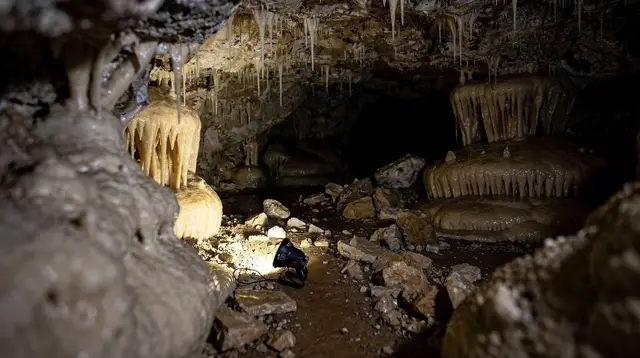
The Lasithi plateau itself, ringed by mountains at roughly 850 metres, is the real sight: a patchwork of small fields, a scatter of stone villages, and the rusted or restored remains of the windmills that once pumped irrigation water. The Dikteon cave at Psychro, Zeus's mythical birthplace, is reached by a steep, uneven and often slippery path, not a casual stroll.
The plateau comes before the cave, not after
Most people plan a visit here around one thing: the cave at Psychro where, according to myth, Zeus was born and hidden from his father Cronus. That cave is genuinely worth the trip, but treating it as the whole point means driving straight past the reason the plateau feels different from the rest of Crete. The Lasithi plateau is a wide, flat basin ringed by mountains, sitting at roughly 850 metres above sea level in the eastern half of the island, in the Lasithi regional unit.
Coming from the north coast, the road climbs steadily out of the lowlands, bends through a pass, and then opens onto several thousand hectares of small, hand-worked fields — beans, potatoes, orchards, walnut trees — laid out in a patchwork that looks nothing like the resort coast an hour away. Spend twenty minutes just looking at that view before you go looking for a cave entrance.
The plateau is dotted with villages, and a short loop through a couple of them, on the way to or from Psychro, tells you more about how people actually live up here than the cave itself does. Kritsa, technically just off the plateau proper on the road toward Agios Nikolaos, is worth the same kind of unhurried stop for its weaving and its Byzantine church. None of this needs to be squeezed into a rushed morning. The cave will still be there in the afternoon.
What replaced the windmills, and what is left of them
The single image most people carry into this trip is wrong, or at least twenty years out of date: rows of white-sailed windmills turning in the wind across the plateau, pumping water up from below for irrigation. That picture belonged to a working landscape that has largely gone. Diesel and electric pumps replaced the sails decades ago, and today what you mostly see from the road are rusted metal frames standing bare in the fields, stripped of their canvas, no longer connected to anything.
A small number have been restored — sails reattached, frame repainted — specifically so visitors have something to photograph near Psychro, and those restored examples are the ones that end up in postcards and social media, which is exactly why the myth of a plateau still busy with turning windmills persists. If a working, sail-driven landscape is what you are picturing, recalibrate before you arrive: what is genuinely still here is the shape of that history — thousands of frames scattered across the fields — rather than the motion.
It is worth saying plainly that this absence is not a disappointment so much as an honest layer of the place. A plateau that used wind power at 850 metres to keep crops alive through a Mediterranean summer, then quietly switched to pumps once it could, is a more interesting fact than a landscape frozen for tourists. The frames themselves, rusting in rows against the mountains, are their own kind of sight.
Getting there: no train, and a mountain road either way
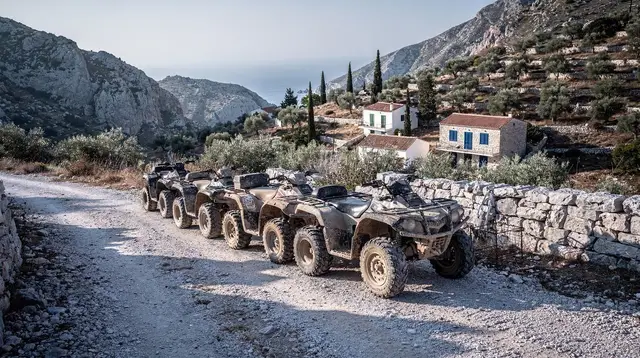
Crete has no train network anywhere on the island, and the Lasithi plateau is not on the reliable spine of the north-coast KTEL coach system either — that network runs strongest along the Chania-Rethymno-Heraklion-Agios Nikolaos corridor and thins quickly once you turn inland and start climbing. Public transport up to the plateau exists but is limited and seasonal, so for most independent travellers a rental car is the practical way in, exactly as it is for most of inland Crete. If you would rather not drive the mountain roads yourself, an organised day trip from Heraklion, Elounda or Agios Nikolaos is a straightforward alternative that also builds in stops most self-drivers skip.
a guided day trip from Elounda that combines the plateau, the cave and a stop at one of Crete’s oldest treesWhichever way you arrive, expect narrow, winding roads with tight switchbacks on the climb up from either the north coast or the Heraklion side. Cretan mountain driving has its own local etiquette: slower drivers habitually pull onto the hard shoulder to let a faster car pass. That is a courtesy, not an invitation to overtake blind on a bend, and it is worth knowing before you find yourself behind a local car that suddenly edges right.
If you are renting, read up on what your contract actually covers before you go — see our notes on renting a car in Crete and on driving in Crete more generally. Anyone determined to do this without a car should check current routes and frequencies for the KTEL buses in Crete rather than assume a service exists.
Psychro village and the walk up to the entrance
The cave sits above the village of Psychro, on the plateau’s edge, and reaching the entrance itself involves a walk up from the parking area before you even start down into the cave. It is not a long approach, but it is uphill, on uneven ground, and worth pacing yourself for rather than rushing in the midday heat of a Cretan summer. Bring water even for a short visit; there is little shade on the approach path.
The descent: steep, uneven, and genuinely slippery
This is the part worth being honest about before you commit to the visit: getting down into the Dikteon cave is a real descent, not a stroll on flat ground. A stepped path drops through the entrance chamber and down into the interior, over stone that is often damp, worn smooth in places by generations of footsteps, and can be genuinely slippery even in dry weather because of natural moisture inside the cave.
Handrails help on the steepest sections but do not remove the need for proper footwear — trainers or hiking shoes with real grip, not sandals — and for taking your time rather than hurrying to keep up with a tour group. Anyone with knee problems, limited mobility, or travelling with very young children should think carefully about the return climb, which is the same uneven path in the opposite direction and noticeably more tiring than the way down.
None of this is meant to talk anyone out of going. It simply is not the level, paved walkway that some photographs of the illuminated chamber suggest. Treat it the way you would treat a proper cave visit anywhere: sturdy shoes, a free hand, and a slower pace than you think you need.
a guided hiking day on the Lasithi plateau that takes in the cave at a walking paceInside: stalactites, myth, and no volcanic drama at all
The cave itself is a limestone chamber, formed the way limestone caves are formed everywhere — water working through rock over an immense span of time, leaving behind stalactites and stalagmites, some of them genuinely striking when lit. It is worth being clear about what this is not: Crete has no active volcanic geology anywhere on the island, no caldera, no fumarole, no thermal vent, and this cave has nothing to do with any of that. The atmosphere here comes from limestone formations and low light, not heat or steam.
The mythology is the other half of the draw. In Greek myth, Rhea hid her infant son Zeus here to save him from his father Cronus, who had taken to swallowing his own children; Zeus was raised secretly in the cave, fed on goat’s milk, before eventually overthrowing Cronus and becoming ruler of the Olympian gods. Archaeological finds inside the cave, including votive offerings, point to it having been a genuine cult site in antiquity, which is part of why it draws serious interest beyond the myth alone — this was a place people actually came to leave offerings, not only a story attached retroactively to a hole in a mountain.
It is also worth knowing there is no wildlife hazard to worry about down there. Crete has no dangerous snakes at all — four harmless species on the whole island, no vipers — so whatever unease the dark and the drop stir up, it is not a real one about anything living in the cave.
a cycling route across the plateau that passes the old windmill frames up closeWhat to bring, and what not to expect
Pack for a cool, damp interior even on a hot day outside — caves hold their own temperature — and for a walk that needs real shoes rather than beach sandals. Bring water for the approach walk, and a light layer for the cave itself if you feel the cold easily. What this guide will not give you is a precise opening time or an exact ticket price: both are set by the site’s managing authority, both shift by season, and printing a figure here that is wrong by the time you read it does you no favours. Check the current schedule and fee locally, at your accommodation, or through whichever tour operator you book with, in the days before you go rather than relying on an old number found online.
The same caution applies to any operator name or specific vendor on the plateau — none is named here for the same reason: what exists changes, and a name printed today may not be accurate next season. Ask locally, or let a booked tour handle those logistics for you.
a full day that pairs the palace at Knossos with the Zeus cave and a traditional village and olive farm stopMaking a full day of the plateau
Because the drive up and back already takes real time, most visitors build a loop around the cave rather than a single stop. A short walk through one of the plateau villages, a look at the old windmill frames scattered across the fields, and — for those coming from the north or east coast — a stop in Agios Nikolaos or a detour to Elounda and Spinalonga on the same trip, turn a single-site visit into a day that actually reflects how varied this corner of Crete is.
If caves specifically interest you, the Melidoni cave and the lesser-visited Sfendoni cave near Zoniana sit elsewhere on the island and make a reasonable comparison for anyone building a caving-focused itinerary.
Travellers with more time can treat the plateau as one stage of a broader eastern loop — our three-day Lasithi and the east itinerary sets out one sensible way to sequence it with the coast. For a shorter, self-guided version of exactly this outing, see the Lasithi plateau day loop, which covers the drive and the villages in more route detail than fits here.
a Heraklion-based day tour that adds a monastery stop alongside the plateau and the caveHikers who want more altitude after the cave, rather than less, can look at Psiloritis summit hike on the mountain that dominates the skyline to the west, though that is a separate and considerably more demanding outing, not something to tack onto the same afternoon.
For a broader sense of what lives on and around this plateau beyond the myth, our notes on Crete’s wildlife, including the kri-kri, are worth a look, and the things to do on the Lasithi plateau page rounds up other activities in the area if the cave and the villages leave you with time to fill. For the wider category of underground sites across the island, see things to do: caves and underground.
FAQ: Visiting the Lasithi Plateau and the Dikteon Cave
Are the Lasithi windmills still working?
No. The thousands of white-sailed windmills that once pumped irrigation water across the plateau at around 850 metres have almost all stopped turning. What remains is mostly rusted metal frames, with a handful restored near Psychro purely for visitors to photograph.
How hard is the walk down into the Dikteon cave?
It is a real descent, not a level path: uneven stone steps and a rocky, often damp and slippery surface down into the chamber, then the same way back up. Sturdy closed shoes and a free hand for the rail make a real difference.
How do I get to the Lasithi plateau without a rental car?
There is no train anywhere on Crete, and the plateau sits away from the reliable north-coast KTEL corridor, so public transport up here is thin and seasonal at best. A rental car on the narrow mountain roads, or an organised day tour from Heraklion, Elounda or Agios Nikolaos, is the practical way in.
What time does the Dikteon cave open?
Opening hours shift by season and are set by the site’s managing authority, so check the current schedule before you drive up rather than relying on an old timetable. Arriving earlier in the day generally means fewer people on the steps.
Are there snakes or other dangers inside the cave?
Crete has no dangerous snakes at all, in the cave or anywhere else on the island, so that is not a real concern. The genuine hazard is footing: wet, uneven rock on a steep path, which is worth more caution than any wildlife.
Is the Dikteon cave volcanic?
No. Crete has no volcanic activity, no thermal features and nothing geothermal about this cave. It is a limestone karst cave, formed by water dissolving rock over a very long time, and the drama comes from its stalactites and its mythology, not from any volcanic origin.
How much does it cost to enter?
There is a ticketed entrance fee, but exact prices are not repeated here since they change and a wrong figure is worse than none; confirm the current fee locally or with your tour operator on the day.
Can I combine the cave with Knossos in one day?
It is possible but long: the plateau sits inland and involves winding mountain roads in both directions, and Knossos deserves unhurried time of its own. Several guided day tours pair the two, which removes the driving and the timing guesswork.
Cave Tours in Crete on GetYourGuide
Verified deep-linked GetYourGuide tours. Book through these links and we earn a small commission at no cost to you.
GetYourGuide does not provide a product photo for this activity — the image shows the meeting point, photographed by us.