A One-Day Loop Around the Lasithi Plateau
How do you plan a day loop around the Lasithi plateau?
Drive up from Agios Nikolaos, Heraklion or the north coast, since KTEL buses barely reach the plateau. Budget a full day for the drive up, a walk across the plain itself, and the steep, slippery path down into the Dikteon cave at Psychro, and expect only a handful of restored windmills rather than the thousands once shown in old brochures.
Setting Expectations Before You Drive Up
The Lasithi plateau is a high, flat basin ringed by mountains at roughly 850 metres, reached by a winding road that climbs out of the Lasithi region east of Heraklion. It is one of the most photographed inland landscapes in Crete, and also one of the most misrepresented. Brochures still print postcard shots of white-sailed windmills spinning against the plain, and travellers arrive expecting a working landscape of irrigation machinery. That landscape is largely gone. Planning a good day here means knowing what you will actually see, not what an old photograph promised.
This guide treats the plateau as a self-contained day loop: the drive up, a walk across part of the plain, a stop in one or two villages, and the descent into the Dikteon cave at Psychro, the site mythology names as the birthplace of Zeus. None of it needs to be rushed if you set off with realistic timing and accept that the cave descent is not for everyone.
Travellers who time the trip for the quieter shoulder months, as the guide to the best time to visit Crete lays out, tend to find both the plain and the cave queue considerably calmer than a July or August visit. July and August also bring the heaviest coach traffic to the cave itself, a crowding pattern covered in more month-specific detail in the guide to Crete in July and the meltemi.
Travellers weighing whether a single eastern loop like this fits into a first Crete trip at all may find the guide to Crete for first-timers useful, and the wider guide to where to stay in Crete helps decide whether a coastal base near Lasithi or a stay in Heraklion suits this kind of day trip better.
The gap between the postcard image and the current reality is common enough on Crete that it has become its own story; the blog post on what happened to the Lasithi windmills traces how the plain went from thousands of working machines to today’s scattered frames, for anyone who wants the fuller history before they drive up.
The Windmills: What’s Actually Left
For much of the twentieth century, thousands of canvas-sailed windmills stood across the Lasithi plateau, pumping groundwater up to irrigate the potato and cereal fields on the plain below. That density of working windmills is the image most people carry into a visit, and it is the image most likely to disappoint them. Modern electric and diesel pumps replaced almost all of that machinery decades ago. What remains today is mostly skeletal: rusted iron frames on stone bases, sails long gone, scattered across the fields in varying states of collapse.
A small cluster of windmills near Tzermiado has been restored, sails fitted, specifically so visitors have something intact to photograph. They are worth a stop, and they are genuinely attractive against the mountain backdrop. But they are a preserved sample, not a working landscape, and this page will not describe them as representative of the plateau as it functions today. If a tour operator’s photos or a blog post shows dozens of turning windmills as a promise of what you will find, treat that as outdated or staged. The honest version of the story — how the plateau went from thousands of active windmills to a handful of restorations — is worth reading before you go.
The plain’s flat floor also makes it one of the few stretches of inland Crete genuinely suited to two wheels rather than four, and the guide to cycling and e-bike routes in Crete covers where to rent a bike for exactly this kind of gentle, high-altitude ride. Horses are another way to cover the plain’s flat ground at a gentler pace than a jeep, and the guide to horse riding in Crete covers where rides are available on this kind of open terrain.
a guided hiking tour across the plateau is one way to get the real context from someone who walks this ground regularly, rather than relying on a decade-old photo.
Photographers drawn here by old postcards should recalibrate rather than skip the visit: the rusted frames scattered across the fields, caught at low sun, often make a more honest and more striking image than the handful of restored mills ever could. The guide to photography spots across Crete covers where else on the island rewards that kind of patient, early or late light.
The Dikteon Cave at Psychro
At the edge of the plateau, above the village of Psychro, a cave in the mountainside is identified in Greek mythology as the birthplace of Zeus, hidden here by his mother Rhea to save him from his father Cronus. It is one of the most visited archaeological and mythological sites on the plateau, and it draws a steady flow of coach groups through the day.
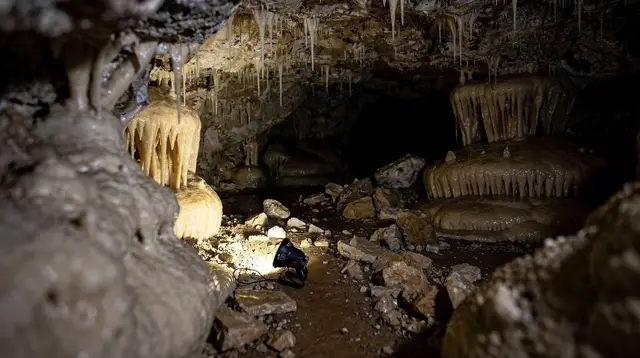
The cave itself is real and striking: a large chamber with stalactites and stalagmites, descending into a lower level associated in myth with the infant god’s hiding place. What this page will not do is soften the physical reality of getting there. The path down from the ticket area is steep, uneven in places, and frequently slippery from moisture on the rock — a condition that has nothing to do with the season and everything to do with a cave environment. Handrails exist along parts of the route, but there is no way to make the descent level or dry underfoot.
This matters for planning. If your group includes anyone who struggles with steep stairs, a stroller-bound toddler, or a visitor who needs a stable, dry surface underfoot, budget for that person to enjoy the approach, the site entrance and the view rather than the descent itself. Do not plan on carrying a child down slick stone steps as a workaround. The cave is a genuine highlight for visitors who can manage it comfortably, and a poor fit for those who cannot — there is no accessible route around that fact.
a day tour that pairs the cave of Zeus with a nearby monastery sets a fixed schedule and a guide who manages the group’s pace at the descent, which suits travellers who would rather not navigate the site logistics themselves.
For the mythology, the geology and a closer look at what the site involves, the dedicated guide to the Dikteon cave and the birth of Zeus goes further than this loop-planning page can.
The Zeus birth myth sits within a wider mythological world that predates classical Greece; the guide to the Minoans in one hour gives the background for why a cave on this plateau carries that story at all. Bronze votive offerings excavated from the cave over generations now sit in the guide to the Heraklion Archaeological Museum, alongside the era’s other Minoan finds.
Crete has other caves worth knowing about if the Dikteon cave leaves you curious rather than satisfied. The Melidoni cave, in the Rethymno foothills, carries its own grim wartime history rather than a myth, and the Sfendoni cave near Zoniana offers an easier, better-lit walkway for visitors who want the geology without the steep Psychro descent. For a different kind of inland scenery altogether, the guide to Lake Kournas and the Argyroupoli springs covers Crete’s only freshwater lake, a lowland contrast to this high mountain basin.
Anyone planning around a wheelchair, a walking frame or simply a family with very young children should read the island-wide guide to accessible Crete before committing to this particular cave, and the dedicated guide to Crete with kids is a better starting point for weighing which sites on the island suit young children and which do not.
The broader guide to safety and health in Crete is worth a skim before any steep, uneven descent like this one, cave or otherwise.
Building the Loop
A sensible day starts from Agios Nikolaos, Elounda, or Heraklion, and treats the plateau as its own excursion rather than an add-on to a coastal itinerary. The road climbs through a series of switchbacks before opening onto the plain, and that climb alone takes longer than the map distance suggests — narrow mountain roads on Crete are slow by design, not by accident.
Heraklion, covered in full in the guide to the city itself, sits close enough to the plateau’s western approach road that it works as a base even for travellers who are not staying on the coast near Lasithi.
Travellers basing themselves in Heraklion who want to pair this loop with the island’s best-known ruin might read the guide to Knossos and the Heraklion Archaeological Museum first, since the two make a natural but separate stop rather than a single rushed day.
Travellers still arranging the trip itself should start with the guide to getting to Crete by flights and ferries and the Heraklion airport guide, since most plateau day loops begin and end at that airport rather than in Chania.
A workable order for the day:
- Leave early enough that the drive up is unhurried.
- Stop at a viewpoint over the plain before descending onto it, where the scale of the basin and its ring of peaks is easiest to appreciate.
- Walk a stretch of the plain itself, past the restored windmills and the rusted frames still standing in the fields, rather than only viewing it from the road.
- Stop in a village — Tzermiado is the largest and has the most services, Agios Georgios has a small folklore museum, Psychro sits closest to the cave.
- Visit the Dikteon cave, allowing time for a queue, the descent, time inside, and the climb back up.
- Head back down before the light fades, since the mountain road is far less forgiving after dark.
| Stop | What it offers | Rough time to allow |
|---|---|---|
| Plateau viewpoint | Panorama over the basin and mountain ring | 15-20 minutes |
| Windmill fields near Tzermiado | Restored windmills plus dozens of rusted frames | 30-45 minutes |
| A plateau village (Tzermiado, Agios Georgios or Psychro) | Cafe, small museum, local produce | 30-60 minutes |
| Dikteon cave at Psychro | Queue, descent, cave interior, climb back up | 60-90 minutes |
Those times are deliberately approximate. This page will not print a fixed opening schedule or a specific ticket price for the cave, because both change between seasons and years — confirm current hours and fees locally or with whichever operator you book through before you commit to a tight afternoon slot.
Villages on the Plateau
Beyond the windmills and the cave, the plateau’s villages are worth slowing down for. Tzermiado is the largest settlement and a natural base for a coffee or lunch stop, with views back across the fields. Psychro sits directly below the cave and exists largely to serve its visitors, with a scatter of tavernas near the car park. Kera, a little off the main loop, is known for its monastery rather than the cave, and features in some organised itineraries that combine plateau villages with a monastic stop.
Travellers drawn to the restored windmills’ craftsmanship may also enjoy a detour to Margarites and its pottery workshops in the Rethymno foothills, a separate day but a natural pairing for anyone interested in traditional Cretan trades. Evenings in a plateau village sometimes bring live lyra music and mantinades, the improvised rhyming couplets explained in the guide to Cretan music, lyra and mantinades, though this is far from guaranteed on a single day visit.
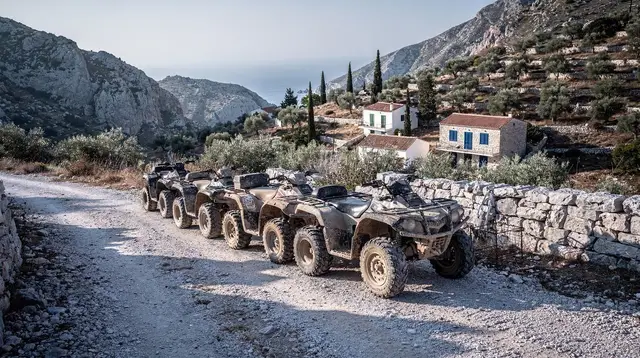
a tour through the plateau villages and Kera monastery covers ground that is easy to miss on a cave-focused day, and works well if you want the agricultural and religious side of the plateau alongside the mythology. For travellers who prefer a broader sweep that mixes local life with the landmarks, a jeep safari across the plateau with a village lunch and tastings folds several of these stops into one organised day.
For a clearer sense of what this kind of trip actually involves before booking, the guide to what a jeep safari really is sets honest expectations against the adventure-tourism marketing.
A stop in any plateau village is also a reasonable place for lunch, and the island-wide guide to what to eat in Crete and the closer look at dakos and the Cretan mezze spread both explain what is likely to turn up on a plateau taverna’s menu, which leans more toward hearty mountain cooking than the seafood of the coast.
Highland dairy also turns up on plateau menus more than coastal seafood does, and the guide to Cretan cheese — mizithra, graviera and staka explains what is likely on the table alongside the dakos.
Getting There: Car Versus Organised Tour
A rental car is the practical default for this loop, as it is for most of inland Crete. The plateau sits away from the VOAK, the north coast highway that carries the island’s most useful KTEL bus routes between Chania, Rethymno, Heraklion and Agios Nikolaos. Coach services onto the plateau itself are limited and not built around a flexible day trip, so self-driving or booking an organised tour are the two workable options.
| Option | Best for | Trade-off |
|---|---|---|
| Rental car | Setting your own pace, stopping at will | You navigate mountain roads and parking yourself |
| Organised day tour | Travellers without a car, or who want a guide’s context | Fixed schedule, shared group pace |
| KTEL coach | Not realistic for this specific loop | Sparse plateau service, no flexibility for the cave descent timing |
This loop is not realistic as a cruise-ship stopover: the drive alone eats most of a port day, and the guide to shore excursions from a cruise ship explains which sites near Heraklion or Agios Nikolaos actually fit that kind of tight schedule.
If you are driving yourself, treat the road up as you would any Cretan mountain route: narrow in stretches, with locals pulling onto the hard shoulder to let faster traffic pass — a courtesy, not an invitation to overtake blind. The practical guide to driving in Crete and the guide to renting a car on the island cover the details worth knowing before you set off, and the KTEL bus guide explains exactly where the coach network is and is not a realistic option.
For travellers who want a car’s flexibility without doing the mountain driving themselves, the guide to private tours and drivers in Crete covers hiring a driver for the day, and the broader comparison of renting a car against booking organised tours works through the trade-offs in more general terms than this page has room for. For arrivals and departures rather than day-trip driving, the guide to airport transfers in Crete covers the simpler, fixed-route version of hiring a driver.
Where the Plateau Sits in the Lasithi Region
The Lasithi plateau belongs to the wider Lasithi plateau destination area, part of the Lasithi region that also holds Agios Nikolaos on the gulf of Mirabello, Elounda and the former leper colony island of Spinalonga, and the hillside village of Kritsa.
Those coastal and lakeside stops sit at sea level and form a natural day out of their own; the plateau is a mountain excursion with a different rhythm, and trying to combine both in a single day usually means rushing the part that most deserves unhurried time — the descent into the cave. Travellers overnighting in Agios Nikolaos itself might end the day with a stroll around the town’s landmark lake, covered in the guide to Agios Nikolaos and Lake Voulismeni, rather than driving straight back to a different base.
If you are building a longer stay around this side of the island, the three-day itinerary for Lasithi and the east gives the plateau its own day rather than squeezing it against the coast, and the guide to how many days Crete deserves helps with the bigger picture of how a plateau day fits into a wider trip.
Hikers who want more than a plain to walk across can continue toward Crete’s higher ground: the guide to the E4 trail across Crete and the guide to the Psiloritis summit hike both cover routes considerably more demanding than this day loop.
Travellers building a full circuit of the island rather than a single eastern loop may prefer the ten-day full-island itinerary, which gives the plateau its own slot alongside the west and south coasts too.
Travellers weighing whether to base themselves in this eastern half of the island at all, rather than spending most of a trip around Chania or Rethymno, may find the comparison of east Crete against west Crete useful context, and the four-day itinerary for east Crete shows how a plateau day slots alongside Agios Nikolaos, Elounda and Sitia without needing a full island crossing.
What to Pack and Practical Notes
Footwear matters more here than on most Cretan day trips. The cave descent is steep and often wet underfoot, so shoes with real grip are worth the extra weight in your bag. The plateau sits at altitude and can be noticeably cooler and windier than the coast, even in summer, so a layer is sensible regardless of the season. A hat and water matter on the open plain, where shade is limited once you are away from the villages.
For a fuller packing list that covers the rest of a Crete trip beyond this one loop, see the guide to what to pack for Crete, and a village taverna stop along the way is also a fine place to note how tipping works locally, covered in the guide to tipping, money and prices in Crete.
If wildflowers or herbs are part of your interest in the plateau’s agricultural landscape, the guide to Cretan honey and herbs gives useful context for what grows across this kind of highland terrain, much of it still farmed around the windmill fields. The wildflowers themselves have their own season and their own guide; see the guide to wildflowers and herbs of Crete for when the plain’s meadows are at their best.
The same highland fields are also one of the more likely places to spot a kri-kri from a distance, and the guide to the kri-kri and Cretan wildlife explains where the wild goat still holds on across the island.
Winter changes the picture completely: snow can settle on the plateau and around the cave entrance well after it has melted at sea level, and the blog post on snow in Crete explains just how much higher ground like this differs from the coastal towns most visitors picture. Outside the main season, check locally whether the cave access road is even open before setting out.
The dedicated guide to Crete in winter goes further into what stays open across the island during those months, beyond this one plateau road.
After a steep climb back up from the cave, some travellers head straight for a soak rather than dinner; the guide to spas and wellness in Crete covers where to find one back on the coast.
Mistakes to Avoid on This Loop
The single biggest mistake is arriving with the wrong mental picture: expecting a field of turning windmills and finding rusted frames instead. The second is underestimating the Dikteon cave descent — treating it as a short, easy walk when it is a steep, slippery stone path that deserves real shoes and real caution, particularly for anyone unsteady on their feet.
The third is trying to bolt the plateau onto a coastal day around Agios Nikolaos or Elounda; the mountain road and the cave both reward a day of their own. The broader guide to common mistakes across Crete and the month-by-month weather guide are both worth a look before you fix a date, since mountain weather on the plateau can differ from the forecast at the coast.
For a wider sense of village life and seasonal festivals that sometimes touch the plateau’s communities, the guide to Cretan villages and festivals is a useful companion, and the full list of things to do on the Lasithi plateau covers activity options beyond this specific loop, including a guided day trip from Heraklion covering the plateau’s traditions and legends for travellers based on the north coast rather than in Lasithi itself.
Frequently Asked Questions About the Lasithi Plateau Day Loop
Are the Lasithi windmills still working?
No. Almost all of the thousands of white-sailed windmills that once pumped irrigation water on the plateau are gone. What remains is mostly rusted metal frames on stone towers, plus a small number restored near Tzermiado for visitors to photograph. Very few, if any, still turn to pump water in the traditional way.
How difficult is the descent into the Dikteon cave?
The path down from the entrance is steep, stepped in places, and often slippery from condensation on the rock even in summer. It is not a stroll, and it is genuinely unsuitable for visitors with limited mobility, small children who need carrying on uneven ground, or anyone unsteady on wet stone.
Can you visit the Lasithi plateau without a car?
It is difficult. The KTEL coach network is reliable along the north coast highway but thins out fast once roads climb into the mountains, and services to the plateau are limited and seasonal. A rental car or an organised tour from Agios Nikolaos or Heraklion is the practical way to see the plateau and the cave in one day.
How long does the Lasithi plateau loop take?
Count on a full day from Agios Nikolaos or Heraklion: roughly an hour or more of mountain driving each way, plus time to walk part of the plain, visit a village or two, and allow at least an hour at the Dikteon cave including the queue, the descent and the climb back up.
What time should you leave to beat the crowds at the cave?
Arriving early or mid-afternoon tends to be calmer than late morning, when tour buses converge on Psychro. The site can close before sunset, so this page does not give a precise closing time — check current hours locally before you commit to a late arrival.
Is the Dikteon cave suitable for young children or visitors with limited mobility?
Not really. The descent involves uneven, often wet stone steps with no barrier-free route, and there is no accessible path to the cave mouth or interior. Families with very young children and anyone who cannot manage steep, slippery stairs should plan to enjoy the plateau itself rather than the descent.
Where does the Lasithi plateau fit with Agios Nikolaos, Elounda and Spinalonga?
The plateau sits inland and uphill from the coastal towns of the Lasithi region. Agios Nikolaos, Elounda and the boat crossing to Spinalonga are a separate, sea-level day out; the plateau is a mountain excursion best treated as its own loop rather than squeezed onto the end of a coastal day.
Lasithi Plateau Tours on GetYourGuide
Verified deep-linked GetYourGuide tours. Book through these links and we earn a small commission at no cost to you.
GetYourGuide does not provide a product photo for this activity — the image shows the meeting point, photographed by us.