Crete vs Santorini: What to Actually Compare
Is Crete or Santorini the better choice?
They are not comparable in size or geology: Crete is 8,336 km2 of limestone mountains and gorges with four distinct regions, while Santorini is a small volcanic caldera you can circle in a day. Choose Crete for depth and a longer stay, Santorini for a short, concentrated island view, or combine both with a seasonal day boat between them.
Two islands that get lumped together and should not be
Crete and Santorini turn up on the same shortlist so often that travellers assume they are variations on one theme: a Greek island, blue domes, a boat ride between them. They are not. They differ in how they were formed, how large they are, how you move around them, and how long a visit actually needs. Getting the comparison right matters more than picking a “winner,” because the two islands answer different questions. This guide sets out what to weigh before booking either one, or both.
Geology first: no caldera, no volcano, no hot springs on Crete
Santorini’s defining feature is not a beach or a town, it is a documented volcanic caldera, the collapsed rim of an eruption that still shapes the island’s dramatic profile, its dark sand beaches and its thermal seawater. That geology is the whole reason for the view from Oia and Fira.
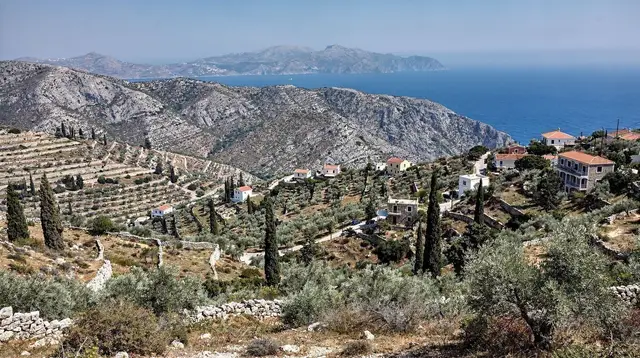
Crete has none of it. There is no caldera on Crete, no active volcanism, no fumarole, no thermal bathing pool and no lava field anywhere on the island. Crete is limestone and folded mountain rock, built up and pushed skyward over millions of years, then cut through by gorges. The Samaria gorge is the best known of these cuts, a 16 km descent through walls that narrow to a few metres at the Iron Gates, but it is one of dozens across the island. If a Santorini-style caldera view or a volcanic hot spring is the goal, Crete will not deliver it under any itinerary; that landscape belongs to Santorini, not to this island.
This is worth stating plainly because marketing photography blurs the two together. A page selling “Greek island magic” can show either island’s cliffs and make them look interchangeable. They are not the same rock.
Scale: an island you drive across versus an island you drive along
Santorini is small enough to circle by scooter or rental car in an afternoon. Crete is not comparable in size. At 8,336 km2, with roughly 620,000 residents, Crete is the largest island in Greece and the fifth largest in the Mediterranean. It runs about 260 km from west to east and 12 to 60 km north to south, and it is organised into four regional units that read almost like four separate trips: Chania and the west, the south-west around the Samaria and Imbros gorges, Rethymno and its mountains, Heraklion and the centre, and Lasithi in the east.
Driving Chania to Sitia, the two ends of the island, is about 270 km and takes over four hours without stops. No single hotel base covers Crete the way a hotel in Fira or Oia effectively covers Santorini. Planning a Crete trip means choosing which region, or regions, to see, then accepting that the rest waits for another visit. Our guide to how many days you actually need and the north coast versus south coast breakdown both start from that scale problem.
| Crete | Santorini | |
|---|---|---|
| Area | 8,336 km2 | About 76 km2 |
| Shape | 260 km long, 12-60 km wide | A few kilometres across |
| Landscape | Folded limestone, mountains, gorges | Volcanic caldera rim |
| Regions to plan around | Four (Chania, Rethymno, Heraklion, Lasithi) | One compact island |
| Typical stay | One week to two weeks | Two to four days |
| Getting around | Rental car recommended; coastal KTEL buses; no train | Small enough for scooter, bus or taxi |
What each island actually offers
Santorini’s strength is concentrated: one extraordinary rim view, wineries built into volcanic soil, and a small, walkable geography that rewards a short, unhurried stay. It is genuinely hard to see much of it “wrong,” because there is not much ground to cover.
Crete’s strength is range, spread across its four regions. In the west, the Venetian harbour of Chania town sits near the beach strip of Platanias and Agia Marina, with the turquoise lagoon of Balos and Gramvousa further along the coast, reached by boat or, for a rougher trip, a dirt-track drive. The south-west holds the Samaria gorge and the boat-only village of Loutro, unreachable by any road.
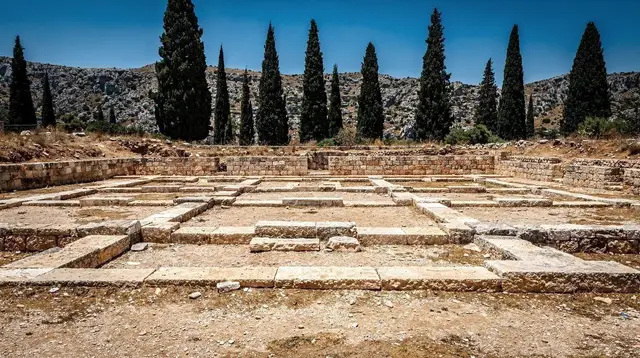
Around Rethymno, the mountains rise toward Psiloritis, with the 1866 monastery of Arkadi and the palm-lined gorge at Preveli on the Libyan coast. In the centre, Heraklion sits a few kilometres from the Minoan palace of Knossos and the museum that holds its real frescoes, since the ones standing at the palace site itself are replicas. To the east, Lasithi’s plateau and the Dikteon cave sit inland from Agios Nikolaos and the fortress island of Elounda and Spinalonga.
None of that fits into a two-day Santorini-style visit. It is the trade-off: Crete rewards time and movement between regions, Santorini rewards staying still in one very good spot. Our Crete versus Rhodes comparison and the Chania versus Rethymno versus Heraklion breakdown go further into how Crete’s own regions differ from each other, which is a comparison Santorini simply does not need.
Weather and season on both islands
The Aegean climate pattern is broadly shared: long dry summers, a short shoulder season on either side, and a quiet winter. On Crete, July and August are the hottest stretch, typically 30-35 degrees Celsius and hotter still in a heatwave, and also the busiest and most expensive weeks of the year. That combination of heat, crowding and price is worth planning around rather than defaulting into; late spring and September carry warm seas and thinner crowds on Crete. Our month-by-month pages, including Crete in July and the meltemi and the general best time to visit Crete guide, cover this in detail.
Santorini follows a similar summer peak and a similar high-season crush around its caldera-view hotels, though its far smaller size means the crowding is more visible in its narrow lanes and cliffside paths, especially around sunset in Oia.
Cost: not a simple “cheaper island” answer
There is no single honest number to put on either island’s cost without quoting fares, room rates or operator prices this guide has no verified source for, and it will not invent one. What can be said reliably: Santorini’s caldera-view accommodation is scarce by geography, since only a limited stretch of cliff faces the view, and that scarcity tends to push prices up in the high season.
Crete’s accommodation is spread across a much larger area and four separate regions, giving a wider range of price points, from resort strips like Hersonissos and Malia to quieter bases in Rethymno or Sitia. On both islands, July and August remain the most expensive weeks regardless of which coast or town you choose. For a fuller planning view, see Crete on a budget.
Getting from Crete to Santorini
Both islands are reachable from mainland Greece by air or by the overnight ferries that run from Piraeus, and seasonal day boats connect Crete and Santorini directly in the warmer months, typically running from Crete’s northern ports. This guide will not name a specific ferry operator or quote a schedule or fare, since none of that is fixed enough to state as fact here; check current timetables directly before booking.
What is worth knowing in advance is that the meltemi, a strong north wind that blows through Crete mainly in July and August, disrupts small-boat crossings and day-trip sailings on the north coast, including runs toward Santorini, so a rigid single-day plan around that crossing carries real risk of cancellation in peak summer. Our ferries from Piraeus to Crete guide and the getting to Crete flights and ferries overview cover the wider transport picture, and the dedicated Santorini day trip guide goes into what a one-day crossing actually involves.
Building a trip around both islands
A combined trip works best when Crete carries the bulk of the time and Santorini is treated as a short, deliberate add-on rather than an equal half. Given Crete’s scale, a week is the minimum to see even two of its four regions properly; stacking a rushed Santorini day onto a Crete itinerary that is already tight tends to shortchange both. A more comfortable shape is ten days to two weeks on Crete, following something like our seven-day west-to-east itinerary or the fuller ten-day full-island route, with two or three days carved out at the end for Santorini via a seasonal boat or a short flight back through Athens.
Travellers who want a taste of Crete’s mountain and gorge landscape without giving up a day of the trip to logistics can look at a guided option instead of self-driving every leg. A half-day jeep route across Crete’s back roads and coastal viewpoints for sunset covers ground a short Santorini-style visit never reaches, and for travellers pairing Crete’s food culture with its landscape, a guided tasting through Crete’s wine and olive oil producers fills an afternoon around Heraklion or Rethymno without a rental car.
Those who specifically want the pink-tinged sand comparison point to Santorini’s volcanic beaches can visit on an organised day trip to Elafonissi, at Crete’s south-west corner, keeping in mind that its colour is a patchy, natural effect, not the saturated postcard version.
Which island actually fits your trip
If the goal is one striking view, a short stay, and minimal logistics, Santorini answers that directly. If the goal is a longer trip with real variety, from Venetian old towns to Minoan ruins to mountain gorges to quiet south-coast villages, Crete answers a different, larger question, and needs the time to match. Neither island is a smaller or lesser version of the other; they are simply not the same kind of place, geologically or in scale, and a good itinerary treats that difference as the starting point rather than an afterthought. For travellers still weighing the wider field, Crete versus Rhodes and the Crete for first-timers guide round out the comparison.
Crete vs Santorini: your questions answered
Is Crete or Santorini better for a first trip to Greece?
Crete suits a first trip built around a full week or more, with beaches, mountains, a Minoan palace and old harbour towns in one place. Santorini suits a shorter add-on for the caldera view, best paired with Crete or another island rather than visited alone for a week.
Can you visit Santorini from Crete as a day trip?
Yes, seasonal day boats connect the two islands in the warmer months, and some visitors base in Crete and add a single day on Santorini. Check current timetables directly with operators, since this guide does not quote fares or a fixed schedule.
Is Santorini volcanic and Crete is not?
Correct. Santorini sits on a caldera formed by a documented volcanic eruption, with hot springs and dark sand from lava. Crete has no caldera, no active volcanism and no thermal bathing; its landscape is folded limestone cut by gorges such as Samaria.
Which island is more expensive, Crete or Santorini?
Santorini is generally the pricier island for accommodation, particularly caldera-view rooms in Oia and Fira, because supply is limited on a small island with a short main season. Crete has a wider spread of prices across four regions, though July and August are the most expensive and busiest weeks on both islands.
How many days do you need to see Crete properly?
A week covers one or two of Crete’s four regions well; ten days to two weeks lets you move from Chania in the west to Lasithi in the east without rushing. Santorini, by contrast, can be seen in two to three days since the whole island is a fraction of Crete’s size.
Is Crete bigger than Santorini?
By a wide margin. Crete covers 8,336 km2 and is around 260 km end to end, the largest Greek island and the fifth largest in the Mediterranean. Santorini is a small island you can drive across in well under an hour.
Do Crete and Santorini feel like the same kind of Greek island?
No. Santorini is defined by one dramatic view, the caldera rim, and a compact, walkable scale. Crete is four regions with different landscapes each, from Venetian harbours in the west to Minoan sites and mountain plateaus further east, and no single base covers all of it.
Top-Rated Crete Tours on GetYourGuide
Verified deep-linked GetYourGuide tours. Book through these links and we earn a small commission at no cost to you.
GetYourGuide does not provide a product photo for this activity — the image shows the meeting point, photographed by us.