Crete vs Rhodes: What the Numbers Actually Say
Is Crete or Rhodes the better Greek island to visit?
This guide only verifies facts about Crete: 8,336 km², about 260 km east to west, and four regional units from Chania to Lasithi. Rhodes is a separate Dodecanese island we have not fact-checked here, so no size, population or price comparison is made.
Two Islands, One Verified Data Set
Searches that pair “Crete” and “Rhodes” usually want a straight comparison: which island is bigger, which is cheaper, which is better. We can’t honestly give you that comparison, because this guide’s fact-checking covers Crete only. Rhodes is a real, separate island in the Dodecanese group, southeast of Crete in the Aegean, and we have no verified figures for its area, population or prices to set against Crete’s. Rather than fill that gap with a plausible-sounding number, this page sticks to what is actually documented about Crete, so you can use it as one half of your own comparison rather than a finished verdict.
That means no invented square kilometres for Rhodes, no guessed population, no made-up flight or hotel price gap between the two. What follows is what is actually checked and current for Crete as of this review.
Crete’s Scale, in Numbers
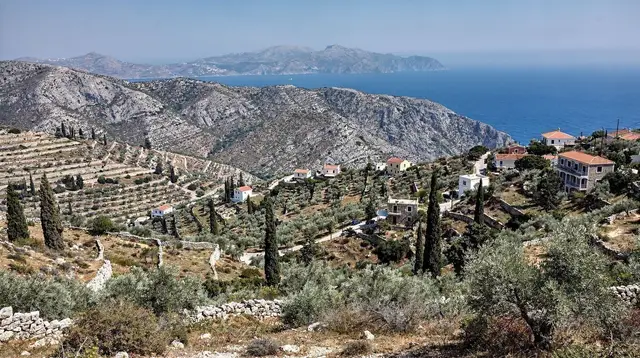
Crete is the largest island in Greece and the fifth largest in the Mediterranean. It covers 8,336 km², runs about 260 km from west to east, and varies between 12 km and 60 km north to south. Roughly 620,000 people live there, spread across four regional units that this guide treats as four different trips rather than one destination: Chania in the west, Rethymno in the mountains and south-west, Heraklion at the centre, and Lasithi in the east.
| Measure | Crete |
|---|---|
| Area | 8,336 km² |
| Length, west to east | About 260 km |
| Width, north to south | 12–60 km |
| Population | Roughly 620,000 |
| Regional units | 4 (Chania, Rethymno, Heraklion, Lasithi) |
| Highest point | Psiloritis / Mount Ida, 2,456 m |
| Rank in Greece | Largest island |
| Rank in the Mediterranean | Fifth largest |
Those numbers are the reason a lot of first-time planning goes wrong. An island the size of some small countries doesn’t behave like a single resort town with a beach at each end.
Why the Distance Changes the Plan
The number that matters most for a Crete itinerary isn’t the total area, it’s the drive time. Chania to Sitia, the two towns that roughly bookend the island, is about 270 km and takes over four hours on the VOAK/E75 north-coast highway — before you factor in a stop, a town centre, or a mountain detour. That is why this site treats how many days you need in Crete as a real planning question, not a formality: a week gets you through two, maybe three, of the four regions properly. Ten days to two weeks is what it takes to see the island west to east without every day being a transfer day.
No single hotel or town works as a base for the whole island. Chania puts you close to Souda and Akrotiri and the west, but Lasithi and the east are a half-day’s drive away. Heraklion sits centrally and is the practical base if Knossos and the archaeological sites are the priority, but it still leaves the far west and the south-west gorges out of easy reach. Most itineraries on this site split the stay across two or three bases rather than commuting from one.
Four Regions, Four Different Trips
Crete’s four regional units don’t just divide the map, they divide the kind of holiday you have:
- Chania and the west — the Venetian harbour town itself, the beach strip around Platanias and Agia Marina, and further out the Balos lagoon, Imeri Gramvousa and the pink-tinged sand at Elafonissi.
- The south-west — the Samaria gorge and the boat-only villages of the Sfakia coast, reached by sea rather than road.
- Rethymno and its mountains — the old town, the 1866 monastery at Arkadi, and the Libyan coast around Plakias.
- Heraklion and the centre — the city, Knossos, and the wine villages of Archanes and Dafnes.
- Lasithi and the east — the high plateau, Agios Nikolaos on the Gulf of Mirabello, and Spinalonga.
A comparison of the north and south coasts or of east versus west Crete will tell you more about how these regions differ from each other than any single-line verdict against another island could.
If You Only Have a Few Days: West or East
With limited time, the honest choice inside Crete is west or east, not “a bit of everything.” The west and south-west concentrate the island’s best-known scenery — the Samaria gorge, the Balos lagoon, Elafonissi, and the boat-only villages along the Sfakia coast — at the cost of more driving on narrow mountain roads. The east, built around the Lasithi plateau, Spinalonga and the Vai palm beach, is gentler driving and often warmer in the shoulder season, but without the dramatic gorge walking. Heraklion and the centre sit between the two and make sense if Knossos and the archaeological sites are the actual priority.
Half a week realistically covers one of those thirds. A full week lets you combine two adjoining regions — west with Rethymno, or Heraklion with Lasithi — without every day becoming a transfer day. Ten days or more is what it takes to string all four together properly, which is the same conclusion the numbers in the table above already point to.
Getting Around a Long Island
A rental car is the practical default for covering Crete’s distances, and this site has a full guide to renting a car in Crete along with notes on driving in Crete, including the local habit of pulling onto the hard shoulder to let a faster car pass — courtesy here, not an invitation to overtake blind. The KTEL coach network genuinely works along the north coast corridor between Chania, Rethymno, Heraklion and Agios Nikolaos, but thins out south of the mountains to a handful of seasonal runs. There is no train on the island.
For travellers who’d rather not drive the mountain roads themselves, a full-day option like a Land Rover full-day tour into the Cretan back country covers ground a rental car might not, with someone else doing the navigating.
Getting to Crete: Airports and Ports
Crete has three airports, not one, and that shapes the same west-to-east distance problem this page keeps coming back to. Heraklion (HER) is the busiest and most central gateway; Chania (CHQ), at Souda near the coast, is the practical arrival point for the west and the south-west gorges; and the small Sitia (JSH) field serves the far east with limited scheduled traffic. A new airport at Kastelli is under construction and not open to travellers — plan around the three that actually operate.
By sea, overnight ferries from Piraeus run to Heraklion and to Chania (Souda), each roughly nine hours, alongside routes to Rethymno, Kissamos, Agios Nikolaos and Sitia, and seasonal day boats to Santorini. Flying into Chania and out of Heraklion, or the reverse, is a straightforward way to avoid retracing the same 260 km twice on a single trip — a routing option this page can describe with confidence because it’s Crete’s own airport and ferry network, not a guess about how Rhodes connects to anywhere.
Money and Tax: What’s Actually True Here
The standard Greek VAT rate is 24 percent, and Crete has never carried the reduced island VAT rate that applied on some smaller Aegean islands. Prices shown to travellers in Crete are displayed VAT included, and tipping runs as a round-up, roughly 5 to 10 percent, not the 15 to 20 percent common in North America. Full detail is in the guide to tipping, money and prices in Crete.
That 24 percent standard rate is a national Greek tax rule, so it plausibly applies on Rhodes too — but “plausibly” isn’t good enough for a page that promised not to guess, so we’re not stating it as fact here. If you need that confirmed for Rhodes, check it against a source that has actually verified Rhodes-specific pricing, not this page.
When Crete Is Actually Open
The “which island is better” question depends heavily on when you travel, and that’s something this page can answer honestly only for Crete. The season runs roughly May to October. July and August are the hottest stretch, commonly 30 to 35°C, the busiest and the most expensive, and the meltemi — a strong north wind typical of those two months — regularly cancels the boat trips to Balos and Gramvousa and to Chrissi island, while leaving the Libyan Sea coast in the south calm.
Late April to June and September to mid-October are the better balance for most travellers: the gorges are open, the sea reaches 21 to 25°C by June and 24 to 27°C in September, and the crowds thin out noticeably. November to March is Crete’s honest low season — the coast stays mild at 12 to 18°C, the mountains hold snow, the Samaria gorge closes entirely, and many south-coast and resort businesses shut for winter. The three old towns, the museums, Knossos and the monasteries stay open year-round regardless of season, which is worth knowing if your trip falls outside the main window.
Crete or Rhodes? What This Page Won’t Tell You
We’re not going to rank Crete against Rhodes, and we’re not going to hand you a flight price, a hotel price, or a “days needed” figure for Rhodes, because none of that has been checked for this page. What we can do is hand you a clean, verified picture of Crete’s own scale — the 8,336 km², the four regions, the 270 km, four-hour drive end to end — so that whatever you already know or find out about Rhodes, you’re weighing it against real numbers rather than against a guess dressed up as a fact.
If your actual decision is less “which island” and more “how do I plan Crete well,” that’s where this site can help directly. Start with Crete for first-timers, or go straight to an itinerary: a west-to-east week or, for those with more time, the full ten-day route across the island.
Choosing Your Base in Crete
Because no single town covers the island, the more useful question than “Crete or Rhodes” is often “which part of Crete.” The where to stay in Crete guide breaks that down by region, and the direct Chania vs Rethymno vs Heraklion comparison is the closest thing on this site to the head-to-head format you might be looking for — just applied inside Crete, where every figure has actually been checked.
A day built around the Samaria gorge is one of the clearest examples of why region matters: the gorge itself sits in the south-west, a one-way walk down to a village with no road out except by boat. A guided option such as a full-day hike through the Samaria gorge handles the transfer to Omalos and the boat and coach back out, which is the part independent drivers most often get wrong on a first attempt.
Central Crete’s wine villages are a different kind of day entirely, closer to Heraklion than to Chania, and better suited to an afternoon than a full itinerary reshuffle — something like a wine and olive oil tasting day around the central vineyards fits naturally alongside a Knossos morning rather than as a separate base change.
Crete vs Rhodes: Your Questions Answered
Is Crete bigger than Rhodes?
We can confirm Crete’s own figures here: 8,336 km², the largest island in Greece and the fifth largest in the Mediterranean. We have not verified a surface area for Rhodes, so this page does not state or imply a comparison.
Can I visit both Crete and Rhodes on the same trip?
They are separate islands in different island groups, and this guide does not cover inter-island transport or scheduling for Rhodes. For Crete itself, plan around its own distances: Chania to Sitia alone is roughly 270 km and over four hours of driving.
Does Crete have a reduced VAT rate like some Aegean islands?
No. Crete has never had the reduced island VAT rate that was applied on some smaller Greek islands. The standard 24 percent rate applies here, and prices shown to travellers are VAT included. Whether any reduced rate applies on Rhodes is outside what this guide has verified.
How long does it take to cross Crete from one end to the other?
Chania in the west to Sitia in the east is about 270 km and takes over four hours by road on the VOAK/E75 north-coast highway. That single figure is why most itineraries treat Crete as several regions rather than one base.
Is Rhodes part of the same island group as Crete?
No. Rhodes belongs to the Dodecanese island group, while Crete stands on its own as Greece’s largest island, divided into four regional units: Chania, Rethymno, Heraklion and Lasithi. Beyond that grouping fact, this guide does not carry verified detail on Rhodes.
Which island should I choose, Crete or Rhodes?
This guide does not make that call. It sets out verified facts about Crete’s size, regions and cost structure so you can weigh them against whatever you already know about Rhodes, rather than offering a ranking built on unchecked numbers.
How many days do I need to see Crete properly?
Most first-time visitors need at least seven to ten days to move between two or three of Crete’s four regions without rushing. A single three or four day stay realistically covers one region, not the island.
Can one hotel or town work as a base for the whole of Crete?
Not comfortably. Crete runs about 260 km east to west and 12 to 60 km north to south across 8,336 km², so a base in Chania puts Lasithi and the east several hours away, and a base in Heraklion does the same to the far west. A trip built around private south coast beaches or, for a driver-led day without the base-hopping logistics, a private tour to the south coast beaches is often the easier fix than trying to relocate hotels every two nights.
What airports and ports actually serve Crete?
Crete has three airports — Heraklion (HER), Chania (CHQ) at Souda, and the small Sitia (JSH) — plus overnight ferries from Piraeus to Heraklion and to Chania (Souda), each roughly nine hours. The new Kastelli airport is still under construction and not open to travellers. Flying into one airport and out of another is a practical way to avoid backtracking across the island’s 260 km length.
When is the best time to compare a Crete trip against anything else?
Late April to June and September to mid-October give Crete its best balance: hiking trails and gorges are open, the sea is already 21 to 25°C by June, and crowds are thinner than July and August, when the meltemi wind also cancels boat trips to Balos, Gramvousa and Chrissi. November to March is Crete’s honest low season, when the Samaria gorge closes and many south-coast businesses shut for winter.
Top-Rated Crete Tours on GetYourGuide
Verified deep-linked GetYourGuide tours. Book through these links and we earn a small commission at no cost to you.
GetYourGuide does not provide a product photo for this activity — the image shows the meeting point, photographed by us.