Wildflowers and Herbs Around Spili and the Psiloritis Foothills
When and where can I see wildflowers in Crete?
Wildflowers peak in April and May, before the July-August heat, and the foothill villages around Spili and Mount Psiloritis show the widest range because altitude keeps the season staggered. By June the lowlands dry out while the higher slopes stay green a little longer.
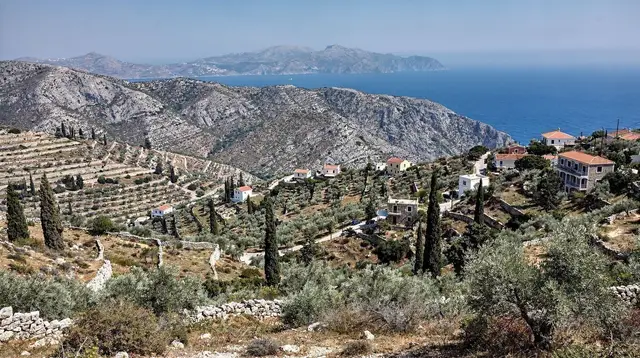
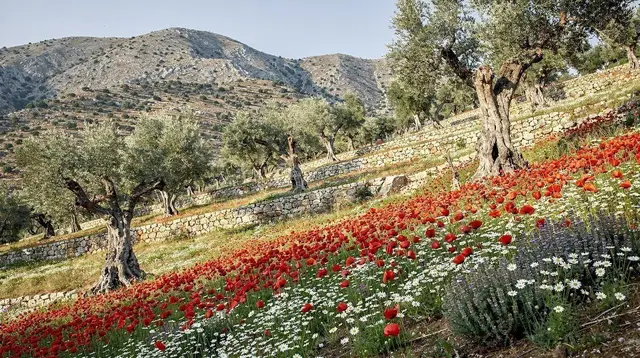
Crete’s wildflowers are not a single event you can circle on a calendar and expect everywhere at once. They move with altitude, and nowhere on the island shows that better than the foothills around Spili, the small village below Mount Psiloritis that has been a stop on the road between Rethymno and the south coast for centuries. Walk out from its shaded main street in spring and the terraces close to the village, the drystone-walled fields, and the rougher slopes higher up all flower on slightly different schedules within the same short drive.
Reading the calendar from valley to summit
The short version is that wildflowers in Crete run mainly through April and May, before the dry heat of July and August strips the ground bare. That window is not a rough guess - it lines up with the period most visitors and residents already consider the best-balanced stretch of the year to be on the island, for the same underlying reason: the winter rain has done its work, the gorges are open, and the heat has not yet arrived.
What makes the Spili area worth singling out is altitude. Down near the coast, flowering starts earlier and finishes earlier - by late May the lowland fields are already turning gold and dry. Climb into the foothills and the season lags behind, because the ground stays cooler and damper for longer.
Keep climbing towards the upper slopes of Psiloritis itself, and the lag stretches further still, helped by snow that can sit on the summit into May or even June in a heavier winter. That single mountain, at 2,456 metres the highest point on the island, effectively runs three flowering calendars at once across a few hundred metres of elevation change, which is the whole reason a foothill base like Spili rewards more than one visit in the same spring.
Villages such as Anogia, higher on the Psiloritis massif, sit close enough to the peak that their fields and sheep pastures can still be green and flowering when the coast around Rethymno has already gone quiet for the summer. If you are trying to time a trip around blooms rather than beaches, this staggered geography matters more than any single date.
Why the foothills, specifically
Psiloritis is a limestone massif, not a gentle hill, and that geology shapes what grows where. Lower slopes hold deeper soil and more shelter, so they carry denser stands of flowering plants close to field edges and old terraces. Higher up, thinner soil and more exposed rock favour tougher, low-growing plants that cling to crevices and thin pockets of earth - a different-looking landscape from the valley floor a short drive below.
Spili itself sits at a useful in-between point: low enough to reach easily, high enough that the surrounding land already behaves like foothill country rather than coastal plain. A short walk from the village - along field tracks, past the platania plane trees the village is known for, and up towards the rougher ground - crosses several of these zones in under an hour. It is one of the more efficient ways to see how much the same spring can look, in Crete, depending on where exactly you are standing.
The best-time-to-visit guide lays out the seasonal case for the island as a whole; the flowering calendar is really a more detailed version of the same argument, told from ground level rather than from a weather chart. If you want the month-by-month detail behind that argument, the May guide and the wider weather month-by-month guide both go further into what changes week to week.
What to wear and when to walk
A wildflower walk around Spili rewards timing within the day as much as timing within the season. Mornings are calmer and cooler, and the light is better for seeing colour against the drystone terraces before the midday sun flattens everything out. By early afternoon in April and May the valley floor can already be warm enough that a walk feels more like exercise than a stroll, even though the coast further down is still weeks from its summer heat.
Footwear matters more than the gentle description suggests. Field tracks around the village are easy, but the rougher ground higher up towards the foothill pastures is uneven, loose in places, and unmarked - there is no signed nature trail here, just tracks that farmers and shepherds have walked for generations. Trainers are fine for the lower terraces; anything higher up benefits from a proper walking shoe with some ankle support.
Layers are worth carrying even on a warm-looking morning, since the temperature drop between the valley and the higher slopes of Psiloritis is real and can catch out anyone who left a jacket in the car. The what to pack guide covers this kind of layering in more general terms for the island as a whole.
Herbs on the same hillsides
The plants that end up dried in a village shop, or scattered into a taverna’s lamb, are largely the same hillsides doing double duty. Wild herbs and wildflowers share the same slopes around Spili and the wider Psiloritis foothills, and the growing season for both runs on the same clock - which is part of why spring here smells noticeably different from the same paths in August, when the ground has dried and gone quiet.
This is grazed, gathered land. Goats and sheep move across these slopes for most of the year, and the same terraces that carry flowers in April are the ones locals have long walked with a bag for wild greens and herbs. A farm visit built around goats, music and local culture or a stop at a botanical garden near Spili, Preveli and Plakias gives a more structured look at how that gathering tradition connects to what ends up on a plate - honey, dried herbs, and the greens that turn up in a spring mezze. The herbs and honey guide covers the produce side in more depth than a walking guide can.
None of this calls for naming exact species on a page like this one - flower and herb identification changes with the year, the rainfall, and who is doing the identifying, and getting it wrong in print is worse than leaving it general. What is reliable is the pattern: April and May, lower slopes first, higher slopes later, and a mountain behind it all still holding snow.
If you only have a morning
Not every visitor to Spili has a spare day to give purely to flowers, and the honest advice is not to force one. A morning is enough to get a real sense of the staggered blooming this page describes: start on the terraces closest to the village, where the walking is flat and the flowers are densest, then climb for twenty or thirty minutes towards the rougher ground above before turning back. That short loop alone crosses two or three of the zones described above, which is usually enough to notice the difference between valley and foothill without committing to a full day.
A longer stay changes the calculation. Spending two or three nights in or near Spili during April or May means revisiting the same paths a few days apart and actually seeing the calendar move - a terrace still closed in bud on day one can be fully open by day three, and the upper slopes keep changing for weeks after the valley has gone quiet. Anyone building this into a wider trip rather than a single stop should look at the hiking week itinerary, which already assumes several days in this kind of terrain rather than a single pass through.
Walking these slopes without worry
One genuinely reassuring fact belongs on any page sending people off the main road and onto foothill paths: Crete has no dangerous snakes. Four species live on the island and none of them are vipers, so an encounter on a quiet path near Spili is a non-event rather than a hazard. The real things to plan around are more mundane - loose stone on unmarked tracks, quick weather changes at altitude even in spring, and the fact that shade thins out fast once you climb above the village.
If a longer walk into the mountain proper appeals rather than a gentle foothill stroll, the ground above Spili eventually connects to routes covered in the Psiloritis summit hike guide and the Kourtaliotiko gorge walk, both a step up in effort from anything described here. For wildlife alongside the flowers, the kri-kri and Cretan wildlife guide covers the wild goat that shares this kind of terrain, though sightings near Spili itself are far less likely than in the Samaria gorge or on the offshore islets where the population is protected.
What this walk will not give you
It is worth being direct about what a wildflower visit here is not. There is no single dramatic bloom event to plan a trip around, because the flowering is staggered by altitude and shifts by a week or two from one year to the next depending on how wet the winter was. A visitor expecting one unmissable weekend will be disappointed; what is actually on offer is a broad, slow-moving window that rewards flexibility rather than precision.
There are also no facilities built around this as an attraction. No visitor centre, no marked interpretive trail, no ticket booth - Spili’s flowers are a byproduct of working farmland and grazed hillside, not a managed nature reserve. That is part of what makes the walk feel unstaged, but it also means there is nothing to fall back on if the weather turns.
Checking the weather month-by-month guide before heading out is a reasonable precaution, since a spring shower at altitude can arrive with little warning even on an otherwise clear morning.
Basing yourself around Spili
Spili works as a base precisely because it sits between worlds: close to Preveli and the Libyan coast to the south, within easy reach of Plakias and Damnoni, and a manageable drive from Rethymno town and the pottery village of Margarites to the north. A few days here in April or May lets a flowering-focused visit sit comfortably inside a wider south-coast or mountain itinerary rather than standing apart from it - the hiking week itinerary is built around exactly this kind of foothill-and-gorge combination.
For travellers who would rather have the terrain explained on the ground than work it out from a map, a handful of local tours cover this stretch of country. A tour combining the Kourtaliotiko gorge and the Kalypso fjord with Spili itself takes in the foothill and coastal contrast in a single day.
For a gentler, produce-focused version of the same landscape, the botanical garden route linking Spili, Preveli and Plakias spends more time at a slower pace among cultivated and wild planting side by side. And for anyone drawn further up the mountain once the foothills have been seen, a guided hike onto Psiloritis reaches ground that a casual walk from the village will not.
Whichever way you approach it, the underlying advice stays the same: come in April or May if the flowering itself is the point, base yourself somewhere with real elevation range like Spili, and expect the mountain above you to still be finishing its own winter while the valley below has already moved into spring. For the wider practicalities of visiting outside the peak summer months, the things-to-do category for wildlife and nature and the general hiking trails category both link out to the rest of what this stretch of Crete offers beyond its flowers.
Frequently asked questions about wildflowers around Spili and Psiloritis
What is the best month to see wildflowers in Crete?
April and May are the strongest months island-wide. Flowering starts lower down in April and moves up the slopes of Psiloritis as the weeks pass, so a May visit to the foothills often catches blooms that have already finished near the coast.
Is Spili a good base for wildflower walks?
Yes. Spili sits in the foothills below Mount Psiloritis, so short walks around the village move between valley terraces and rockier upland ground within a couple of kilometres, which is why the mix of plants changes quickly as you climb.
Why does Psiloritis affect the flowering season so much?
Psiloritis rises to 2,456 metres and holds snow into May or June. That snowmelt and the cooler upper slopes keep the ground damp later than the coast, which stretches the flowering window at altitude even after the lowlands have dried out and gone brown.
Are there snakes to worry about when walking through the flowers?
No dangerous snakes live in Crete. The island has four snake species and none are vipers, so an encounter on a foothill path is not a safety concern, though it is still sensible to watch your footing on loose stone.
Can I pick wildflowers or wild herbs while walking?
Treat picking with restraint. Some areas around gorges and protected slopes limit collection, and a flower left in the ground is one the next walker still gets to see. Buying dried herbs and honey from a village shop supports the same landscape without stripping it.
Do I need a guide to see the wildflowers, or can I just walk?
A self-guided walk from Spili works well for flowers alone, since the paths are gentle and well used. A guided tour adds value mainly through terrain knowledge on gorge or mountain routes, and through introductions to herb and farm producers you would otherwise drive past.
What else grows alongside the wildflowers around Spili?
Wild herbs are part of the same landscape - the hillsides around Spili and the wider Psiloritis foothills are grazed and gathered ground, and the same slopes that carry spring flowers also carry the herbs that turn up dried in village shops and on taverna tables.
Is late spring also a good time to visit Crete for reasons beyond flowers?
Yes. Late April through June is widely considered the best-balanced season on the island - the gorges are open, the sea is warming, and the crowds and prices of July and August have not yet arrived, which makes it a practical window as well as a flowering one.
Is there one specific week that marks the peak of the wildflower season?
No. The flowering shifts gradually by altitude and by a week or two each year depending on winter rainfall, so there is no single fixed peak to book around. Late April through May is reliably strong across the foothills, but the exact best days on any one terrace vary from year to year.
What should I bring for a wildflower walk from Spili?
Sturdy walking shoes for the rougher upper ground, water, sun protection, and a light layer for the cooler air higher up the foothills - the temperature difference between the valley and the slopes above can be more noticeable than expected, even on a warm-looking spring morning.
Wildlife Tours in Crete on GetYourGuide
Verified deep-linked GetYourGuide tours. Book through these links and we earn a small commission at no cost to you.
GetYourGuide does not provide a product photo for this activity — the image shows the meeting point, photographed by us.