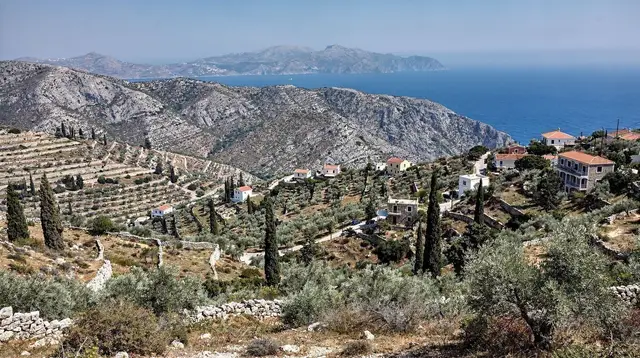
Crete Hiking Week: Gorges, Sfakia and Mount Psiloritis in 7 Days
Why this week is built around rest days, not just hikes
Crete’s best hikes are not the problem here — stacking two of them on consecutive days is. Samaria alone empties most legs for 24 hours; Psiloritis, even without a summit push, is a long day on rough ground with snow lingering into early summer. This route deliberately separates every serious effort with either travel time or a genuinely easy day, so the week ends with legs that still work. If you are looking to fill every day with a trek, this is not that itinerary — it is one built by people who have watched hikers limp through their last two days of a Crete trip because nobody planned the recovery.
The route runs west to east: Chania and the Samaria gorge, then Loutro and Chora Sfakion, then Therisso in the White Mountains, then Anogia and Mount Psiloritis, and finally Sitia, Vai and Zakros in the far east. It needs a rental car for every leg except the Samaria transfer itself, which is usually easier left to an organised pickup.
| Day | Focus | Effort |
|---|---|---|
| 1 | Chania, acclimatise | Low |
| 2 | Samaria gorge, Xyloskalo to Agia Roumeli | Very high |
| 3 | Loutro and Chora Sfakion | Low, active rest |
| 4 | Therisso gorge, White Mountains | Moderate-high |
| 5 | Anogia and the slopes of Psiloritis | High |
| 6 | Sitia | Low-moderate |
| 7 | Vai and Zakros | Low |
Day 1: Chania, before the effort starts
Base yourself in Chania town the night before Samaria. Walk the Venetian harbour and lighthouse in the evening, eat early, and stock up on water and a real breakfast for the morning — there is nowhere to buy food once you are on the Xyloskalo. Pack light: a 16 km descent punishes anything you are carrying that you don’t need.
If you’d rather not drive to Omalos at dawn and arrange your own return from the south coast, a organised day out such as Samaria the Longest Gorge in Europe handles the transfer, the gorge and the boat back in one booking, which matters more here than on almost any other hike in Crete because the logistics are one-way by design.
For background before you go, the complete Samaria guide and the Chania-specific version both cover permit-free entry, opening months and what the gorge actually charges at the gate.
Day 2: The Samaria gorge, and nothing else
This is the one day of the week that gets no companion activity, on purpose. The Samaria gorge starts at the Xyloskalo, a stepped path that drops from 1,227 m at Omalos into the gorge proper, and runs 16 km one-way to Agia Roumeli, a village with no road in or out. The narrowest point, the Iron Gates, is roughly 3-4 m wide between walls that rise over 300 m on either side — the photograph everyone takes, and a fair sample of what makes the whole walk feel enclosed rather than open.
There is no way to shortcut the exit. From Agia Roumeli the only routes out are a ferry to Chora Sfakion, Sougia or Palaiochora, followed by a coach back around the island — which is why the descent, the boat and the bus together easily fill a full day, and why pairing this with a second hike the same afternoon is not realistic for most walkers.
The park runs roughly May to October, closes on flood or fire risk, and the gates shut in the early afternoon regardless of how far you’ve got, so start at first light. If your legs are not up for the full 16 km, the easy Samaria from Agia Roumeli walk — 3-4 km up from the coast and back — is a different, much shorter route using the same trailhead by boat.
Sleep in Chora Sfakion tonight rather than driving back to Chania; it sets up Day 3 without another long transfer.
Day 3: Loutro and Chora Sfakion, deliberately easy
After Samaria, the itinerary steps back. Loutro has no road — you arrive only by boat or on foot along the coast path from Chora Sfakion — and the whole point of the day is that nothing here demands another 16 km effort. Take the short boat over, walk the quiet lanes, swim off the small harbour beaches, and let yesterday settle.
The village with no road guide covers the boat schedule, and the nearby Sfakia beaches — reachable only by boat or a walking path, Glyka Nera among them — are worth an afternoon if you want to move at all without hiking. A day trip such as Rethymno’s Glyka Nera Loutro Sfakia day trip covers the same ground by boat if you’d rather not drive the cliff road back and forth twice.
Chora Sfakion itself is worth an evening — a small, unhurried harbour town that has fed generations of Samaria hikers coming off the ferry, and a good place to eat well without planning anything for the next morning.
Day 4: Therisso gorge, into the White Mountains
Drive up from Chania into the Lefka Ori, the White Mountains, for the Therisso gorge, a narrower and far shorter walk than Samaria — closer to two or three hours than a full day — through a village with its own place in Cretan history as a base for 1905 revolutionary resistance against Ottoman rule. It is a genuine hike, with a real gradient and loose stone underfoot in places, but it is scaled to follow a rest day, not to be another Samaria.
If you’d rather see the gorge from a vehicle with a guide who explains the village’s history along the way, a trip like Chania’s Therisso Gorge Cultural Experience covers the drive and the village stops in one afternoon. The Therisso gorge drive guide has the road notes if you’re taking your own car.
Head back toward Rethymno in the afternoon and overnight there, setting up the longer drive to Anogia the next morning.
Day 5: Anogia and the slopes of Psiloritis
Psiloritis, also called Mount Ida, is Crete’s high point at 2,456 m, and this is the physically hardest day of the week outside Samaria itself. Base the morning in Anogia, a mountain town known for weaving and lyra music, then head onto the lower and mid slopes of the mountain.
Snow lingers into May or June most years, which changes both footwear and how far up it’s sensible to go on foot — there is no train and no ski lift anywhere on this mountain, or anywhere on the island; whatever height you gain, you gain by walking. The Psiloritis summit hike guide lays out the route and the season realistically, and if the White Mountains interest you more than Ida, the Pachnes and the White Mountains guide covers Crete’s other 2,400 m-plus peak.
For a day that trades summit ambitions for a guided, vehicle-supported route through the same landscape, Rethymno’s private jeep tour to Anogia and the Psiloritis chalet covers the mountain roads and a chalet stop without requiring a full trekking day, which is a reasonable way to bank an easier fifth day if Samaria and Psiloritis back-to-back-minus-two still feels like a lot by this point in the week.
Day 6: Sitia, the long drive east
The transfer from the Psiloritis area to Sitia is close to three hours, so treat this as a travel day with a short walk rather than another hike. Sitia itself is an easy, unhurried town — walk the harbour, and use the afternoon to recover properly before the week’s final day. If you’d rather see more of the eastern coast and countryside without another trek, an operator route like Crete’s Eco and Nature Tour from Rethymno gives a sense of the kind of low-key countryside day that suits this point in the trip, adapted here to the drive east rather than around Rethymno.
For the town itself, the Sitia town guide has the practical detail; for context on the wider region’s wine and olive oil, the Sitia wine and olive oil guide is worth a look if you have an extra hour.
Day 7: Vai and Zakros, low effort by design
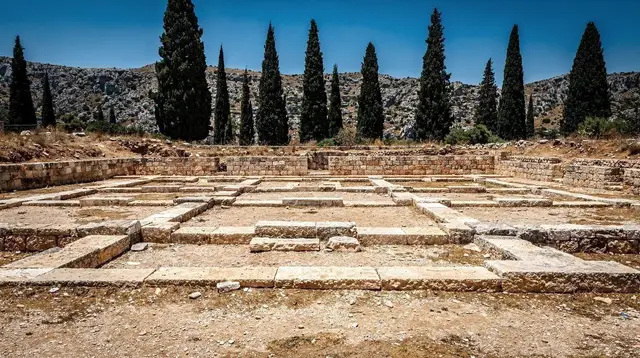
Close the week at Vai, the beach backed by the largest natural palm forest in Europe — Phoenix theophrasti, the same species that regrew at Preveli after its 2010 fire, fenced here to protect it, with camping banned. This is a beach and a short walk, not a hike, and that is deliberate: after five demanding days, the itinerary ends by lowering the effort rather than adding a sixth big trek. If you have the afternoon, the Minoan site of Zakros nearby rounds out the archaeological thread of the week without asking anything more of your legs. The Vai palm beach guide and Zakros and the Minoan east cover both in detail.
If a night trek up Psiloritis or a longer cross-island walk still appeals after this week, the E4 trail across Crete links most of what this itinerary visits into one continuous long-distance route for a future trip.
Planning a demanding week of hiking in Crete
Can Samaria gorge and another hike be combined on the same day?
No. Samaria is 16 km one-way, ends with a boat and then a coach, and the descent alone takes most walkers five to seven hours. Every operator and every honest itinerary treats it as a standalone day.
How hard is this week really?
It suits fit, experienced hikers who are comfortable on uneven ground for six or more hours. The gorge days are long rather than technical; the mountain day on Psiloritis is the most physically demanding, especially with snow underfoot in May.
Do I need a rental car for this route?
Yes. Loutro, Therisso, Anogia and the Sitia-Vai road are not realistically linked by public transport on this schedule. A car is the only way to keep the week moving without losing whole days to bus connections.
Is there snow on Psiloritis in late spring?
Often, yes. Psiloritis holds snow into May or June most years. There is no lift and no train anywhere on the mountain; getting higher than the lower slopes means walking on snow, which changes what footwear and timing make sense.
What is the rest day in Loutro and Chora Sfakion for?
It absorbs the fatigue from Samaria before the next demanding day. Loutro has no road in, the pace is set by the ferry timetable, and the walking on offer is short and flat rather than another gorge.
Why end the week in Sitia and Vai instead of another gorge?
Vai and the Zakros area are about a fenced palm forest, a Minoan site and a quiet coastline, not a strenuous trek. After five days of serious walking, the itinerary deliberately lowers the effort rather than closing with a sixth big hike.
tours.7 days
Verified deep-linked GetYourGuide tours. Book through these links and we earn a small commission at no cost to you.
GetYourGuide does not provide a product photo for this activity — the image shows the meeting point, photographed by us.