Crete in May: Weather, Crowds and What to Expect
Is May a good time to visit Crete?
May falls inside Crete's best travel window, which runs from late April through June and again from September to mid-October, with open gorges, lingering wildflowers and light crowds. The sea is still cool at 16-18°C, only warming toward 21-25°C from June onward, so May suits hiking and sightseeing more than long swims.
Where May Sits in Crete’s Calendar
Crete’s good season runs in two long stretches either side of a hot, crowded, expensive middle. The first stretch opens in late April, holds through May and June, and the second picks up again in September and carries into mid-October. Between them sit July and August, when temperatures push into the 30s, prices peak, resorts fill and the meltemi wind starts blowing hard enough to cancel boat trips on the west and east coasts. May sits near the start of the first of those two better stretches, which is what makes the question worth asking properly rather than answering with a reflex “yes, spring is always nice.”
It is a genuinely good month. It is not, however, a fully arrived summer, and a page that promises warm swimming and a settled high season in May is setting a traveller up to be cold in the water and surprised by a jumper in the evening. The honest version: May is a transition month inside the best travel window, closer in character to a long, warming spring than to the July heat that arrives once the meltemi sets in. For a broader view of how the months compare, the month-by-month weather guide and the general best time to visit Crete page cover the whole calendar; this page stays on May specifically.
How Warm Is the Sea, Really
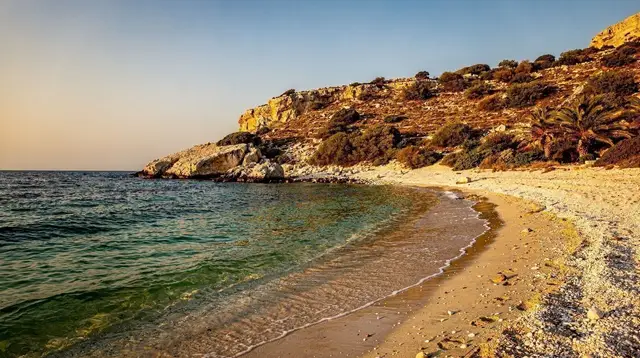
This is the detail that most changes a May itinerary. The sea around Crete is still cool in spring, typically 16-18°C, a temperature that supports a bracing dip on a sunny afternoon rather than the long, easy swims of high summer. It climbs into the 21-25°C range only from June, and the warmest water of the year, 24-27°C, arrives in August and September, well after the air temperature has already peaked.
| Month | Typical sea temperature | Swimming comfort |
|---|---|---|
| May | 16-18°C | Short dips, best in afternoon sun |
| June | 21-25°C | Comfortable, full swims |
| July-August | 24-26°C | Warm, crowded beaches |
| September | 24-27°C | Warmest of the year |
| October | 21-23°C | Still swimmable, cooling fast |
The practical effect is that a May trip built around long beach days will feel thinner than the same trip in July, while a May trip built around gorges, old towns, villages and short coastal stops, with swimming as a bonus rather than the plan, tends to feel well matched to the season. Beaches on the Libyan coast in the south, sheltered from the meltemi, and the sandy stretches near Elafonissi and Falassarna in the far west, warm a little faster on sunny afternoons than the open north coast.
The Mountains Still Hold Snow
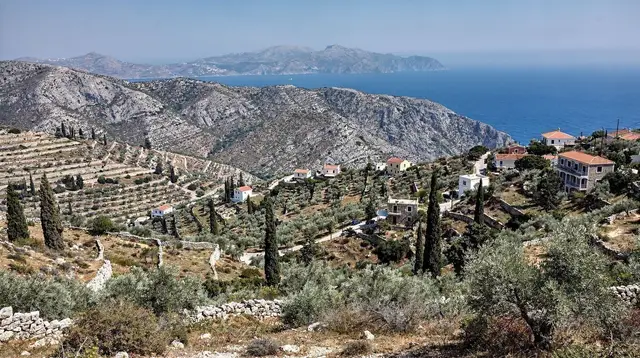
Crete looks like an island of beaches from the coast road, but its spine is genuine high mountain. Psiloritis (Mount Ida), the island’s high point at 2,456 m, and Pachnes, the highest peak of the Lefka Ori (White Mountains) at 2,453 m, both hold snow into May, and in a heavier winter into June. That snowmelt is also what keeps the Samaria gorge closed early in the season and its stream running fast once it opens; it is part of why the gorge’s exact opening date shifts from year to year rather than falling on a fixed calendar day.
Seeing snow on the peaks above a coastline warm enough for a spring walk is one of the more striking contrasts of a May visit, and worth building into a west-Crete itinerary around Anogia, under Psiloritis, or a drive toward the White Mountains. It is a reminder, too, that “warm island in the Aegean” undersells how much of Crete is actually vertical rock.
The Gorges Are Open, and Emptier Than Summer
May is a strong month for the island’s hiking, precisely because the gorges are open but the crowds have not yet built to the July-August level. The Samaria gorge, the best-known walk on the island, normally opens in early May once the path has been checked after winter, and the 16 km descent from the Xyloskalo at Omalos down to Agia Roumeli, a village reachable only by boat, is at its most comfortable before the midsummer heat sets in.
a guided day trip that handles the transport, the entrance and the boat back from Agia Roumeli is one practical way to do it without arranging the coach, the gorge fee and the ferry timetable independently, and it suits May well: cooler mornings on the trail, a functioning gorge season, and lighter foot traffic on the path than the peak weeks of summer.
The complete Samaria gorge guide and the route from Chania cover logistics in more detail, and the Imbros gorge, an easier alternative in the same corner of the island, is worth keeping as a backup on days when Samaria is closed for flood or fire risk. Confirm the current opening date locally rather than assuming the first week of May is guaranteed; the park authorities set it based on conditions, not the calendar.
Beyond Samaria, May is also a comfortable month for less strenuous walking around Rethymno and its mountains, through villages like Margarites, or along the coast near Loutro, the village with no road.
Wildflowers, Past Their April Peak but Still Going
Crete’s wildflower season peaks in April and runs into early May, when the hillsides, olive groves and gorge margins fill with wild orchids, anemones, chamomile and cistus. By the second half of May that lowland bloom is thinning as the heat builds, but flowering continues later at altitude, on the Lasithi plateau at around 850 m and on the slopes below Psiloritis and the White Mountains, where the season simply runs a few weeks behind the coast.
A May visit still catches meaningfully more of this than a June or July trip would, without matching the saturation of peak April. It is one of the genuine, specific advantages of travelling in May rather than waiting: the wildflowers and herbs of Crete guide goes into which areas hold their bloom longest, and a loop through the Lasithi plateau is a reasonable way to combine lingering flowers with the Dikteon cave and the plateau’s old, mostly rusted irrigation windmills.
No Meltemi Yet: the Boats Still Run
The meltemi, a strong, dry north wind, is specifically a July-August event, and it regularly cancels the boat crossings to Balos lagoon, Imeri Gramvousa and the protected islet of Chrissi, three trips that exist only by boat. In May, before the meltemi season begins, these crossings generally run close to schedule, which makes May a genuinely better month for reaching them than the height of summer, when a wasted morning waiting on a cancelled sailing is a real possibility.
That does not mean every sailing is guaranteed; ordinary spring weather can still cancel an individual crossing, and it is worth checking the day before rather than assuming a fixed schedule. For Balos and Gramvousa, the boat from Kissamos remains the sane option over the unpaved access road, which most rental contracts exclude from cover. For the pink-tinged sand near the island’s south-west corner, a day trip to Elafonissi that skips the two-hour mountain drive is a straightforward way to see it without self-driving the route.
Full detail on both crossings sits in the Balos guide, the Imeri Gramvousa fortress page, and the Chrissi island day trip guide; what the meltemi does to these routes later in the summer is covered separately in what the meltemi does to your holiday.
Crowds and Prices Compared With Summer
May crowds are noticeably lighter than July and August across the island: shorter queues at Knossos, easier parking near trailheads, and accommodation that has not yet reached its peak-season rate. It is not empty — the main sights and the old towns of Chania, Rethymno and Heraklion see steady visitor numbers all season — but May avoids the specific crush of late July through August, when resort towns like Hersonissos and Malia are at full capacity.
Prices track the same curve: flights, car hire and hotel rates in May sit below the summer peak, generally closer to the shoulder-season end of the range than the August one. A Crete on a budget guide has more detail on where the seasonal swing is largest.
What Still Feels Like Early Season
Not everything is fully open by May. Some south-coast tavernas, seasonal beach bars and a handful of smaller family-run guesthouses that close for winter open gradually through April and May rather than all at once on a fixed date, and a few may still be getting ready in the first half of the month.
The three main old towns, the museums, Knossos, the monasteries and the bulk of tavernas run all year and are unaffected by this, but a trip built around a specific small business on the south coast is worth confirming ahead of time. The Crete weather month by month page and the destination pages for places like Sougia and Palaiochora are a reasonable way to check what is realistically running before locking in a route.
May or June: How to Decide
Both months belong to the same good season, and the choice between them comes down to what matters more for a given trip.
| Factor | May | June |
|---|---|---|
| Sea temperature | 16-18°C, short dips | 21-25°C, full swims |
| Crowds | Lighter | Light, building toward July |
| Prices | Lower | Still below peak |
| Wildflowers | Fading but present, especially at altitude | Mostly gone at low elevation |
| Samaria gorge | Open, cooler trail | Open, warmer |
| Boats to Balos, Gramvousa, Chrissi | Running, pre-meltemi | Running, pre-meltemi |
| South-coast businesses | Some still opening for the season | Fully open |
A trip weighted toward hiking, wildflowers, villages and sightseeing, with swimming as a bonus, tends to suit May well. A trip built around beach days and warm, unhurried swimming suits June better. Either sits comfortably ahead of the July-August peak covered in Crete in July and the meltemi, and both compare favourably with the quieter but colder Crete in winter, when the Samaria gorge is closed and boat trips barely run at all.
For travellers weighing the whole calendar rather than one month, the best time to visit Crete guide sets May and June inside the full year, alongside the second good window in September and early October.
Planning a May Trip
A May trip works well built around a west-to-east route, or a slower stay in one region. The 7-day west-to-east itinerary suits the month’s mix of gorge hiking, old towns and boat trips, and a shorter 3-day west itinerary works for a focused trip around Chania, Samaria and the west coast. Renting a car remains the practical default for reaching trailheads and villages outside the north-coast KTEL network; details are in the renting a car in Crete guide and driving in Crete.
Away from hiking and boats, May is also a comfortable month for slower activities that do not depend on the sea being warm. A stop at one of the wine villages around Archanes, Dafnes and Peza, where indigenous Cretan grapes like Vidiano and Kotsifali are grown, works well as a break from walking. Along similar lines, a half-day wine and olive oil tasting in the countryside near Heraklion pairs naturally with a visit to Knossos or the Heraklion Archaeological Museum, both unaffected by sea temperature and comfortable to visit before the midsummer heat.
Travellers short on time who want a broad first look at the island’s landscapes rather than a single gorge or beach might also consider a half-day sunset safari that covers coastal viewpoints without a long hike, a lighter alternative on a day when the legs need a rest from Samaria or Imbros.
Frequently Asked Questions About Visiting Crete in May
Is May a good time to visit Crete?
Yes, with a caveat. May sits inside the best shoulder season, alongside early June and September to mid-October, with open gorges, thinner crowds and lower prices than July or August. The trade-off is a sea that is still cool, so it suits an island that mixes hiking, villages and short dips more than a beach-only week.
How warm is the sea in Crete in May?
Around 16-18°C, similar to spring temperatures across the Mediterranean. It is swimmable for short dips, especially on a sheltered, sunny afternoon, but it does not reach the 21-25°C range until June, and the warmest water of the year comes in August and September.
Is the Samaria gorge open in May?
Yes. The gorge normally opens in early May, once the winter meltwater has eased and the path has been checked for rockfall, and stays open through October. Conditions can still vary year to year, so it is worth confirming the exact opening date locally before planning a fixed day for the hike.
Can you still see wildflowers in Crete in May?
Mostly yes. The peak bloom runs through April and into early May, when the hillsides and gorge paths are thick with orchids, anemones and cistus. By late May the lowland flowers are fading in the heat, but flowering continues longer at altitude, on the Lasithi plateau and the slopes below Psiloritis and the White Mountains.
Is it hot in Crete in May?
Not yet in the summer sense. Coastal daytime temperatures are typically in the low-to-mid 20s Celsius, rising toward the high 20s by late May, with cool mornings and evenings. It is comfortable for walking and sightseeing, unlike the 30-35°C of July and August.
Are the boats to Balos, Gramvousa and Chrissi running in May?
Generally yes. The meltemi, the strong north wind that regularly cancels these crossings, is a July-August phenomenon and has not started by May, so the boats from Kissamos and Ierapetra run close to their normal schedule. Any single sailing can still be cancelled for ordinary bad weather, so it is never a certainty.
Should I visit Crete in May or wait for June?
Both belong to the same good season. May brings thinner crowds, lower prices and a last stretch of wildflowers, at the cost of a cooler sea and a shorter opening season for some south-coast businesses. June adds a warmer sea and fully open services while crowds and prices are still well below the August peak.
Popular Crete Tours on GetYourGuide
Verified deep-linked GetYourGuide tours. Book through these links and we earn a small commission at no cost to you.
GetYourGuide does not provide a product photo for this activity — the image shows the meeting point, photographed by us.