Honey and Herbs of Crete: A Guide to the Island's Mountain Flavours
When is the best time to see Crete's honey and herb season?
Wildflowers and the maquis scrub bloom island-wide from April to May, which is when bees produce most actively before the dry heat of July and August sets in. Around Spili, in the Rethymno region below Psiloritis, the mix of altitude and moisture supports an unusually wide range of foraged herbs and flowering plants.
Why the mountains behind Spili matter as much as the spring flowers
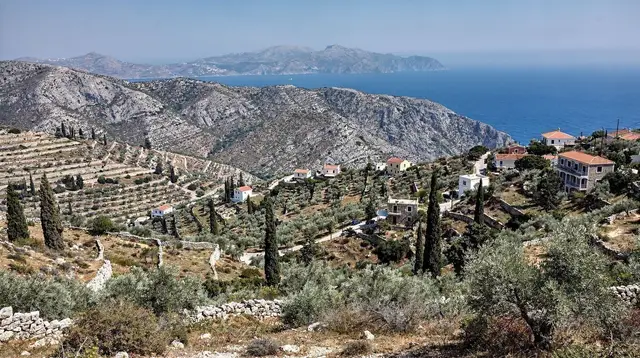
Ask where Crete’s honey comes from and most visitors picture a jar on a taverna table, poured over yoghurt or warm cheese pie. The more useful question is where the bees themselves have been working, and on the island’s honey and herbs, the answer usually points inland and upward. The wild flowering that feeds Cretan hives runs across the whole island from April to May — the maquis scrub on hillsides, the wildflowers along gorge edges, the herbs that grow low and tough in thin mountain soil. But not every part of Crete offers a hive the same range of plants. Around Spili, in the Rethymno region, the slopes climbing toward Psiloritis add a second layer to that spring bloom: altitude.
Psiloritis, also called Mount Ida, is the highest point on Crete at 2,456 metres, and its upper slopes hold snow into May or June in many years. That single fact does more to explain the character of honey and herbs around Spili than any producer’s marketing ever could. Meltwater keeps the mid-altitude ground around Spili and Anogia damper for longer into the season than the coastal lowlands, which dry out fast once the summer heat sets in.
The result is a longer flowering window and a wider mix of plants — wild thyme, oregano, sage, and dozens of lesser-known herbs that locals still gather by hand — growing within a fairly small radius of hillside and gorge. Bees kept in this zone are not working a single crop; they are working a patchwork that changes by elevation, and the honey reflects that.
Spili’s place on the map
Spili is a small hill town in the Rethymno regional unit, set into a fold of the mountains rather than on the coast, which is part of why it rarely appears on a first-time itinerary built around beaches. It sits close to the Kourtaliotiko gorge and within easy reach of the villages around Margarites, known for pottery as much as for the honey and oil sold alongside it.
The town itself is a stop on the road between Rethymno on the north coast and Agia Galini on the Libyan Sea to the south, which makes it a natural midpoint for travellers moving between the two coasts rather than a destination reached by a dedicated detour.
What sets the area apart is the terrain directly behind it. Where the coastal strip runs flat and increasingly built up toward the resort towns further east, the ground around Spili rises quickly into foothills, then into the bare grey shoulders of Psiloritis itself. That climb in altitude over a short distance is exactly the kind of terrain that supports a wide range of maquis and mountain herbs in one relatively compact area, which is why food-focused tours based here often combine a short walk, a farm or garden stop, and a tasting rather than a long driving loop.
What actually flowers, and when
The wildflower season on Crete runs broadly from April through May, tapering as the dry heat of July and August takes hold. This is not a single event but a rolling one: lower, coastal maquis flowers earlier in the spring, while the higher ground around Psiloritis follows a few weeks behind as snowmelt keeps the soil workable for longer. For a beekeeper, that staggered timing across altitude is valuable — hives can be moved, or simply benefit passively, from an extended window rather than one short burst.
Wild thyme is the plant most associated with Cretan honey, and thyme honey from the island has a reputation that extends well beyond Greece. But thyme is only part of the picture. Sage, oregano, wild fennel, and a long list of herbs gathered informally by villagers for tea, cooking or home remedies all grow across the same hillsides. Higher up, where pine forest takes over from open maquis, pine honey becomes more common — a darker, less floral product than thyme honey, and one that many Cretan producers blend rather than sell separately.
Because flowering shifts with elevation and season, a jar labelled simply “Cretan honey” without more detail is really describing a category, not a single recognisable flavour — which is one reason this guide avoids naming specific producers or fixed prices: what a hive yields changes year to year with the weather, and claims about a named brand’s exact honey type would be guesswork rather than fact.
a minivan day from Spili that pairs a walk near the Patsos gorge with a garden lunch stop is one practical way to see this landscape up close rather than only reading about it — the gorge edges are exactly the kind of damp, shaded microclimate where the herb mix around Spili tends to be richest.
Herbs as a mountain culture, not a garnish
It is worth separating two things that get blurred together in most tourist descriptions of Cretan food: cultivated herbs grown for the kitchen, and the wild, semi-wild plants gathered from hillsides and gorge edges for tea, tonics and traditional remedies. Around Spili and up toward Anogia, foraging herbs by hand from the mountainside is still a normal, unremarkable activity for older residents, not a tourist activity revived for visitors.
Mountain tea, made from a dried plant that grows at altitude, is a common household drink through the colder months, and wild greens gathered from the hillside — collectively called horta — turn up boiled and dressed with olive oil on tables across the region, honey and herbs both being part of a wider rural food culture rather than novelty souvenirs.
This is also where the geography does real work in explaining the food. A hive or a forager working the coastal strip near Georgioupoli has access to a narrower band of plants than one working the slopes toward Psiloritis, simply because altitude changes what grows and when. The mountain behind Spili is not decoration for the view — it is the reason the honey and herb tradition here has more range than a beach-town souvenir shop suggests.
a Rethymno day that pairs olive oil and honey tasting with a stop in the pottery village of Margarites is a straightforward way to taste both products side by side without needing to track down a farm on your own.
Honey, olive oil and the villages nearby
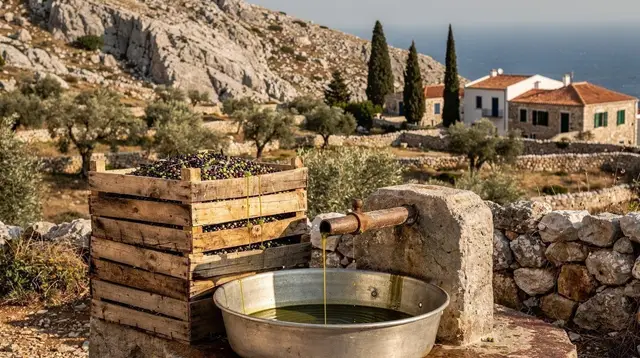
Honey rarely travels alone on a Cretan table. It shows up drizzled over fried cheese, stirred into yoghurt, or poured over the local version of doughnuts, almost always alongside olive oil, which the same rural economy produces in far larger volume. The village of Margarites, a short drive from Spili, is better known for its pottery workshops, but food stops built around the area often combine all three — pottery, oil and honey — into one afternoon, since the villages sit close enough together that a single loop covers them without much driving.
Further along, near the Melidoni cave, farm-style stops sometimes combine a honey and olive oil tasting with a short visit to the cave itself and a small reptile park, aimed more at families wanting a mixed half-day than at anyone chasing a single specialist subject.
a combined stop near Melidoni that covers the cave, an olive oil and honey tasting, and a small reptile park works well if you are travelling with children and want food, history and a low-key wildlife stop on the same afternoon rather than three separate outings.
Where raki fits, and where it does not
Any conversation about Crete’s rural food traditions eventually reaches raki, and it is worth being precise about what it is and is not. Raki, also known locally as tsikoudia, is a clear spirit distilled from the pressed grape skins and stems left over after winemaking — the marc. It contains no anise, which makes it distinct from ouzo, and it has no relation to Turkish rakı beyond a shared name. It is typically offered free, unbidden, at the end of a meal in a taverna, a gesture of hospitality rather than a drink you order and pay for by the glass.
What raki shares with honey and mountain herbs is the culture behind it: small-batch, seasonal, tied to a specific rural calendar — the grape harvest for raki, the spring bloom for honey, the year-round gathering of wild plants for herbs. But the three are genuinely separate products from separate processes, and it is a mistake to treat raki as flavoured with honey or herbs by default; most raki is plain, unflavoured grape spirit, though herb-infused versions do exist as a variation rather than the norm.
a Rethymno-based gastronomy day built around Cretan food, wine and tradition is a reasonable way to see how these pieces — honey, herbs, oil, wine and raki — sit together in a single regional food culture rather than as unrelated souvenirs.
Getting up into the herb country
Because altitude drives so much of what grows around Spili, it is worth going up rather than only through. The lower slopes of Psiloritis are reachable on marked paths and forest tracks from villages like Anogia and Fourfouras, and even a partial walk up through the tree line changes the plant mix underfoot noticeably within a couple of hundred metres of climbing.
a guided hike onto the lower slopes of Psiloritis is the most direct way to see the shift from lowland maquis to higher mountain scrub in a single outing, and guides on these routes typically point out the herbs and plants underfoot as a matter of course, since local knowledge of what grows where is inseparable from walking the ground itself.
For travellers without the time or fitness for a full mountain route, the gorge walks nearer Spili — particularly the Kourtaliotiko gorge — offer a shortcut to the same damp, shaded microclimate at a fraction of the effort, since gorge floors trap moisture in much the same way higher altitude does.
A practical spring visit around Spili
| When | What is happening | Worth planning for |
|---|---|---|
| April | Wildflowers beginning island-wide; snow still on Psiloritis | Cooler mornings at altitude; pack a layer for gorge walks |
| May | Peak wildflower and maquis bloom; snow retreating on the summit | Best window for combining herbs, honey tastings and a mountain walk |
| June | Flowering tapering off; snow largely gone most years | Still workable, but the freshest bloom has passed |
| July–August | Dry heat, flowering mostly finished | Focus shifts to tastings and shaded gorge walks rather than open hillside |
This table is a general pattern, not a fixed calendar — Crete’s spring shifts by a few weeks year to year depending on winter rainfall, and Psiloritis holding snow into June in some years but clearing by mid-May in others is a normal range rather than an exception.
Setting expectations honestly
None of this is a reason to build an entire trip around honey and herbs alone. Spili and the Psiloritis foothills reward a day, or at most two, layered into a wider loop through Rethymno and the villages around it — see the wider food and wine week through Crete for how that fits into a longer stay.
And it is worth being upfront that this guide deliberately avoids naming specific producers, brands or exact prices: honey yields, opening days and small farm operations change from one season to the next in ways that go stale quickly in print, and a fixed price quoted here would likely be wrong within a year. What stays reliable is the geography — the altitude, the spring bloom window, and the villages positioned to make the most of both — and that is the part worth planning around.
For the wider seasonal picture beyond honey and herbs specifically, see how Crete’s weather changes month by month and what a May visit to the island generally looks like. And for the food culture this all sits inside, what to eat across Crete, the island’s wine regions and grapes, and a plainer explanation of raki and tsikoudia round out the picture that a single afternoon near Spili can only partly cover.
For the broader wild plant story across the whole island rather than just the Psiloritis foothills, see the general guide to wildflowers and herbs of Crete, and for the craft side of the same villages, the pottery workshops of Margarites sit a short drive from Spili and pair naturally with a food-focused day. Anyone weighing up the wider category of farm and tasting experiences on the island can also browse food and gastronomy activities across Crete before choosing a single outing.
Questions about Cretan honey and mountain herbs
When does the wildflower season peak in Crete?
Roughly April through May, island-wide. That is when the maquis, gorge edges and mountain slopes flower most heavily, giving bees the widest range of nectar before the dry heat of July and August cuts flowering short.
Why is Spili a good base for honey and herbs specifically?
Spili sits in the Rethymno region at the foot of the slopes rising toward Psiloritis, Crete’s highest point at 2,456 metres. That mid-mountain setting, cooler and damper than the coast, supports a wider range of wild plants than the lowland maquis alone.
Is Crete’s honey thyme honey or pine honey?
Both exist, and blends of the two are common. Thyme and other maquis herbs dominate lower slopes and hillsides, while pine forest honey comes from higher, cooler ground. Which one a hive produces depends on where it is placed and what is flowering that season.
Does snow on Psiloritis affect the herbs below it?
Yes, indirectly. Psiloritis holds snow into May or June in many years, and the meltwater keeps the mid-altitude slopes around Spili and Anogia damper for longer than the coast, which is part of why the local plant range is broader than a purely coastal maquis.
What is raki and how does it relate to honey and herbs?
Raki, also called tsikoudia, is a spirit distilled from grape marc left over from winemaking. It contains no anise and is not ouzo. It shares the same rural, small-batch culture as mountain honey and foraged herbs, but it is a separate product, not a flavouring made from either.
Can I buy honey directly where it is produced?
Small producers and farm visits exist around Rethymno and the Psiloritis foothills, though this guide does not name specific brands or prices, since those change season to season. Tastings built into wider farm or gorge tours are a reliable way to try honey alongside olive oil and cheese in one stop.
Is honey tasting worth combining with a gorge walk near Spili?
It works well logistically, since the Kourtaliotiko and Patsos gorges sit close to Spili and several tours pair a short walk or lunch stop with a tasting. It suits travellers who want one slower, food-focused day rather than a long driving loop.
What is the difference between Cretan herbs and Cretan wine grapes?
Herbs and honey come from wild or semi-wild maquis and mountain plants gathered or foraged near villages like Spili and Anogia. Wine grapes are cultivated varieties such as Vidiano and Kotsifali, grown mainly around Peza, Archanes and Dafnes further east — a different product from a different part of the island’s food culture.
Food Tours in Crete on GetYourGuide
Verified deep-linked GetYourGuide tours. Book through these links and we earn a small commission at no cost to you.
GetYourGuide does not provide a product photo for this activity — the image shows the meeting point, photographed by us.