The Boats That Hold the South Coast Together
Where the Road Simply Stops
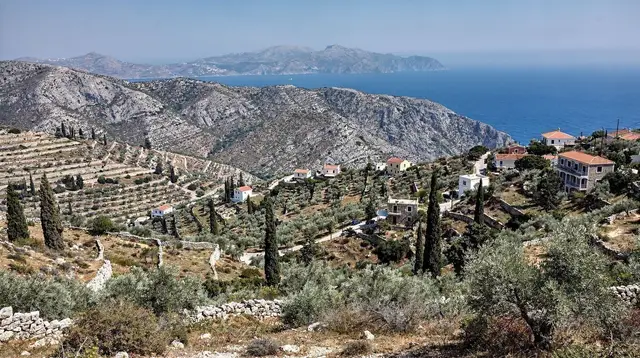
The first time I stood on the jetty at Agia Roumeli, sweaty from sixteen kilometres of gorge, I did the thing every first-timer does: I looked around for a road out. There isn’t one. There never has been. The village sits at the mouth of the Samaria gorge, boxed in by cliffs on three sides and the Libyan Sea on the fourth, and the only way anyone leaves is by boat. That single fact reorganises how you have to think about the whole south coast of Crete, not just this one village.
North of the White Mountains, the island runs on the logic of a normal Mediterranean place: rental car, decent roads, a coach if you’d rather not drive. South of them, in Sfakia and along the stretch toward Sougia and Palaiochora, that logic breaks down in patches. A handful of villages simply aren’t reachable by car, and small passenger boats do the job a road would do anywhere else.
Getting Out of Agia Roumeli
If you walk the Samaria gorge, you don’t really choose whether to take the boat, it chooses you. The trail is one-way, downhill, and it ends at the sea. From Agia Roumeli, the boat runs east to Chora Sfakion, where a KTEL coach waits to carry gorge-walkers back over the mountains to Chania, and west toward Sougia and on to Palaiochora for those based that way instead.
In July or August this feels almost routine — full boats, a queue at the ticket booth, everyone slightly delirious from the heat and the descent. What it never is, in any month, is guaranteed. These are small operators running a seasonal route, not a scheduled public ferry with a fallback service. The Samaria gorge itself is only open roughly May to October, and the boats exist because the gorge does; close one and the other stops too.
Not everyone wants that one-way commitment, and there’s no shame in avoiding it. The Imbros gorge has a road at both ends, so you walk it, get picked up, and never touch a boat schedule at all — a fair trade if wind or a tight itinerary makes the Samaria exit feel like a risk. For visitors who want the atmosphere of the gorge without the full descent, the easy Samaria walk from Agia Roumeli goes partway up from the coast and back on its own clock, with the boat still there for the return regardless of how far you went.
Loutro, Sougia and Palaiochora, the Rest of the Chain
Agia Roumeli gets the attention because of Samaria, but it isn’t the only place on this coast where a boat is the plan rather than the backup. Loutro has no road in at all — you arrive by boat or on foot, and that’s part of why it has stayed so quiet. Frangokastello, a little further east, does have road access, but the coastal path and boat hops between these villages are still how a lot of people string a few days together without backtracking to Chania each time.
Sougia and Palaiochora, at the western end of this chain, do have roads over the mountains, so they’re not stranded the way Agia Roumeli and Loutro are. But the boat that links all of them — Palaiochora to Sougia to Agia Roumeli to Loutro to Chora Sfakion, in whichever direction and combination the day’s schedule allows — is what makes it possible to see this coast as a single stretch rather than four separate day trips from Chania.
One thing that catches people out: some of the coast’s best swimming also rides on this same network rather than on a road. The pebble cove at Glyka Nera, between Loutro and Chora Sfakion, is reachable only by the coastal footpath or by the same small boats — so a cancelled afternoon crossing doesn’t just strand a hiker at the wrong end of the coast, it can just as easily cancel someone’s beach day.
Don’t Confuse This With the Real Ferries
It’s worth being clear about what this network is not, because the word “ferry” gets used for two completely different things on Crete. The overnight boats from Piraeus to Heraklion and to Chania at Souda are proper car ferries, roughly nine hours overnight, running year-round on a fixed schedule, along with connections from Rethymno, Kissamos, Agios Nikolaos and Sitia. Those are dependable transport infrastructure.
Anyone weighing that overnight option against flying is better served by a dedicated look at how the Piraeus ferries actually work, since the practicalities — cabins, car deck, which port suits which base — don’t sit comfortably alongside a piece about small boats that carry no cars at all. Kissamos, out on the west coast, is the odd one among the big ports: smaller than Heraklion or Chania, and used as much for the Kythira run as for the Piraeus crossing.
The south-coast network is nothing like that. It’s a handful of small passenger boats, no cars, timed around hiking traffic and daylight, cut back or suspended outside the main season, and cancelled outright when the wind picks up. Treating the two as the same kind of thing is the mistake I see people make most often when they’re planning — booking a night in Loutro in late October the way they’d book a night anywhere else, only to find the last boat of the season already ran.
| Route | Type | Season | Reliability |
|---|---|---|---|
| Piraeus to Heraklion / Chania | Overnight car ferry | Year-round | Scheduled, dependable |
| Agia Roumeli to Chora Sfakion | Small passenger boat | Roughly May to October | Tied to the gorge being open |
| Loutro to Chora Sfakion / Sougia | Small passenger boat | Seasonal, thinner in winter | Weather-dependent |
| Sougia to Palaiochora | Small passenger boat | Seasonal | Sometimes daily, sometimes not |
Where the Buses Stop Helping
The KTEL coach network is genuinely good along the north coast — Chania to Rethymno to Heraklion to Agios Nikolaos runs often and on time. South of the mountains, that thins fast. Chora Sfakion gets a reasonably reliable coach connection to Chania, timed loosely around the boats. Palaiochora has its own coach link over to Chania too. But once you’re relying on both a bus timed to a boat timed to a hiking crowd, you’ve stacked three variables that each depend on the one before it running on time.
What I Actually Do Before Trusting a Boat
After a couple of trips down this coast, I stopped assuming and started asking, out loud, the evening before. Whoever is running my accommodation in Loutro or Sfakion almost always knows that day’s actual boat situation better than any app or printed timetable, because the operators are neighbours, not a call centre. If a south-coast day depends on a boat showing up, I check locally, in person, the day before — not three weeks out when I booked the trip.
The other habit worth having: build in slack. If the boat from Agia Roumeli is your only way to Chora Sfakion that evening, don’t also book a table, a train, or a flight for a few hours later. Sfakia has taught me to treat “the boat runs” as a plan for the day, not a certainty for the calendar.
Boats Elsewhere on the Island, for a Different Reason
The same logic — boat instead of road — shows up in a couple of other corners of Crete, though for a different cause than a missing coastal road south of the mountains. Over on the Akrotiri peninsula near Chania, no road reaches the cove at Seitan Limania directly by sea, which is why some visitors book a private boat trip along that stretch of coast rather than only walking down the steps.
And on the far west coast, the dirt track to Balos is rough enough, and hard enough on a rental car’s insurance, that most people book a boat tour to Balos lagoon and Gramvousa island instead of driving in.
Those aren’t part of the south coast’s seasonal chain, and I don’t want to blur them together — they’re a different rule solving a different problem. But it’s the same underlying idea: on an island this folded and mountainous, a boat sometimes isn’t a scenic extra, it’s the only door. If you’re heading down into the gorge itself, going with a guided Samaria descent at least means someone experienced is tracking that day’s boat and bus timing on your behalf, rather than you piecing it together solo at the bottom.
If You’re Building Time Around This Coast
For travellers who want to give this stretch of coast more than a rushed day trip, a dedicated three-day loop through the White Mountains and Sfakia allows a night in Loutro or Chora Sfakion without racing to catch the last coach back to Chania. Visiting off season changes the calculus completely: a four-day winter itinerary sensibly skips the boat network altogether and leans on the towns, monasteries and museums that stay open all year instead.
South Coast Boats: Questions I Get Asked
Is there a boat from Agia Roumeli every single day?
In season, yes, timed to meet hikers coming down the Samaria gorge, usually one or two departures in the afternoon. Outside the roughly May to October season the gorge is closed and the boats stop running altogether.
Can I rely on this boat network in November or December?
No. Most of the small operators along the south coast wind down for winter, and some stop completely. If you are travelling the south coast off season, check with a specific operator or a local hotel before you plan a day around a boat.
How do I get from Chora Sfakion back to Chania?
By KTEL coach. There is a coach connection from Chora Sfakion up over the mountains to Chania, timed loosely around the boats arriving from Agia Roumeli and Loutro in season.
Do the KTEL buses meet the boats at every port?
Only at the main ones, chiefly Chora Sfakion and, less reliably, Palaiochora and Sougia. Once you are west of Palaiochora or east of Ierapetra, bus service along the south coast thins to a few runs a day, or fewer.
Is the overnight Piraeus ferry to Crete worth it over flying?
It suits travellers bringing a car, or those who enjoy a slow overnight crossing rather than a one-hour flight. It runs roughly nine hours to Heraklion or Chania and does not connect directly to the small south-coast network, which is a separate, shorter-hop system.
What happens if a south-coast boat is cancelled for wind?
You wait, or you walk out, if the terrain allows it. Villages like Agia Roumeli and Loutro have no road, so a cancelled boat is not an inconvenience to route around, it genuinely closes the exit until conditions or the schedule change.
Should I book the coastal boats in advance?
For the Samaria to Chora Sfakion run in peak season, buying on the day at the small ticket booth by the jetty is normal and usually works. For quieter routes, or shoulder season, asking your accommodation to confirm the day’s schedule the evening before is the safer habit.
Do the small south-coast boats carry cars?
No. None of the small south-coast boats take vehicles — that’s only the overnight Piraeus ferries to Heraklion, Chania, Rethymno, Kissamos, Agios Nikolaos and Sitia. If you’re touring by rental car, you leave it at whichever end of the coast has road access and pick it up, or a different one, on the other side.
Is there a good base for spending more than a day on this coast?
Loutro or Chora Sfakion work best, since both put you close to the boat departures rather than requiring an early coach down from Chania. A few nights based there, rather than day-tripping, is really what a three-day loop through the White Mountains and Sfakia is built around.
tours.Practical
Verified deep-linked GetYourGuide tours. Book through these links and we earn a small commission at no cost to you.
GetYourGuide does not provide a product photo for this activity — the image shows the meeting point, photographed by us.