Margarites Pottery and Cretan Crafts
Is Margarites a genuine pottery-making village, and what should I expect?
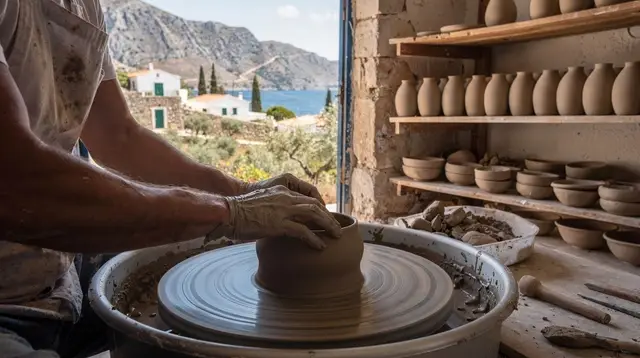
Margarites sits in the hills of the Rethymno regional unit, inland from the north coast, and is known locally as a pottery village. This guide does not have verified details on individual workshops, potters, or the exact age of the craft here, so it sticks to the geography, access, and practical facts that can be confirmed rather than filling gaps with invented history.
What This Guide Can and Can’t Tell You About Margarites
Margarites has a reputation, repeated in guidebooks and on travel forums, as “the pottery village” of Crete. That reputation is worth taking seriously as a starting point, and worth being honest about as a limit. This guide does not have verified information about which specific workshops are currently open, who runs them, what techniques are used, or how far back an unbroken tradition of ceramic production in this exact village actually goes. Rather than invent names, dates, or craft details to fill that gap, this page sticks to what can be confirmed: where the village sits, how you get there, what the surrounding region offers, and the practical facts of visiting Crete that apply everywhere on the island.
If you’re looking for a directory of specific potters or a documented history of the craft here, treat that as a gap to fill in on the ground, not something a guide written in advance should guess at. What follows is the geography and the logistics, laid out plainly.
Where Margarites Sits
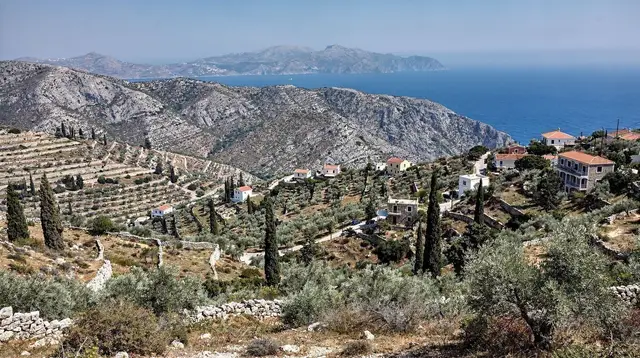
Margarites is an inland hill village in the Rethymno regional unit, one of Crete’s four regional units running west to east alongside Chania, Heraklion and Lasithi. It sits in the hill country behind the north coast, in the general direction of Anogia and the Psiloritis foothills, rather than on the coast itself.
That inland, elevated position is the main reason it developed as a village built around clay and kilns rather than around a harbour or a beach strip — hill villages across Crete have historically specialised in crafts, farming and herding rather than fishing or trade shipping, though the specific dates and lineage for Margarites itself are not something this guide can pin down with confidence.
The village is close enough to the Melidoni cave and to Arkadi monastery that all three are commonly combined into a single loop out of Rethymno town, which is roughly 25 to 30 minutes away by car depending on the exact route through the hills.
Getting There: No Train, and KTEL Thins Out Fast
Crete has no train network anywhere on the island — that’s true from Chania to Sitia, not just here. The KTEL coach system is genuinely useful along the north coast highway, the VOAK/E75, linking Chania, Rethymno, Heraklion and Agios Nikolaos on a reasonably frequent schedule. Once you leave that corridor and head inland into the hills, as you do to reach Margarites, coach service thins out to a handful of seasonal or limited runs, if it exists on a given route at all.
In practice, that makes a rental car the realistic way to visit. If you’re not driving, an organised tour is the main alternative, and several run through this village as part of a wider loop rather than as a solitary stop — more on that below. For background on the practicalities, see our guides to renting a car in Crete, driving in Crete, and KTEL buses in Crete if you want to check what coach coverage looks like on the specific route you’re planning.
Driving the Mountain Roads
The roads into Margarites and the surrounding villages are narrow, winding through hill country rather than running along a flat coastal strip. This is standard for inland Crete generally, not something unusual to this particular village, but it’s worth being ready for if you’re used to wider roads.
One local habit is worth knowing before you arrive: on these narrow roads, drivers who feel a faster car behind them will often pull onto the hard shoulder to let it pass. That’s a courtesy extended to other drivers, not a signal that it’s safe to overtake blind on a bend, and it’s a habit worth returning if someone is stuck behind your rental. Go slowly on unfamiliar bends, watch for oncoming traffic on single-lane stretches, and don’t assume the road will stay as wide as it started.
Opening Hours: The Realistic Pattern, Not a Village-Specific Promise
Small Cretan villages generally follow a split working day: shops and workshops open in the morning, close for a long midday stretch roughly from early afternoon into late afternoon, then some reopen in the early evening, especially in high season. This guide hasn’t verified that pattern workshop by workshop in Margarites, but it’s the standard rhythm across inland hill villages on the island, and it’s worth planning around rather than discovering on arrival.
Sundays are the other variable. Retail and craft businesses in small villages across Crete are more likely to be closed or running reduced hours on a Sunday than on a weekday, and the same applies in the low season, roughly from November to March, when many businesses outside the main towns scale back or close for the winter. None of that is a confirmed statement about any specific shop in Margarites — it’s the general pattern this guide can responsibly describe. The practical takeaway: aim for a late-morning to early-afternoon visit on a weekday during the main season, from roughly May to October, and don’t build a special winter or Sunday trip around the assumption that workshops will be open and working.
Walking Around: Terrain and Access
Once you’ve parked, Margarites is a village to explore on foot, and the terrain is what you’d expect from a hill settlement rather than a purpose-built pedestrian zone: narrow lanes, some slopes, and paving that is not consistently flat or smooth. This guide doesn’t have verified, workshop-by-workshop accessibility information — step-free access, ramps, or accessible parking are not things it can confirm for individual premises here.
If accessible travel is a requirement rather than a preference, treat Margarites as unconfirmed and plan around better-documented options; our guide to accessible Crete covers the island-wide picture in more depth than this village-level page can responsibly attempt. Parking itself is informal and roadside rather than a dedicated lot, which is typical for a small village but worth knowing if you’re arriving with a larger rental vehicle or during a busier part of the day.
What the Pottery Reputation Rests On
Crete as a whole has a long relationship with ceramics — the island’s Minoan-era sites, including Knossos and Phaistos, have produced enormous quantities of pottery that now sit in museums, above all the Heraklion Archaeological Museum. That deep background is well documented. What is not something this guide can verify is a precise, sourced account of Margarites specifically: when production started here, how many workshops currently operate, whether particular techniques are unique to the village, or which family names or studios are worth seeking out by name.
Village reputations like this one are usually built on a real core of truth — a cluster of working potters, visible kilns, shops selling local ceramics — but the specifics shift over time as workshops open, close, or change hands, and secondhand write-ups tend to copy each other’s claims rather than check them. Rather than repeat unverified details as though they were settled facts, this guide is pointing you at the geography and the access logistics, and leaving the on-the-ground specifics — which studios are open, what they’re currently producing, what a demonstration or a purchase actually costs — for you to confirm when you’re there or through a currently listed tour itinerary.
What Might Disappoint You
Setting expectations honestly cuts both ways. Across Greece generally, villages with a craft reputation tend to sell a mix of goods in their shop windows — some genuinely made on-site, some brought in from elsewhere, including imported pieces that have nothing to do with the local tradition. This guide has no verified breakdown of that mix for Margarites specifically, and neither, most likely, does the average blog post that describes it as an unbroken artisan tradition without checking. If a specific piece’s origin matters to you, ask directly rather than assume a village reputation guarantees it.
It’s also worth adjusting scale expectations. Margarites is a small hill village, not a curated crafts quarter with a continuous run of boutiques. Depending on the day, the season, and which businesses happen to be open, you may find a handful of shops and workshops rather than a long strip of them, with quiet stretches of ordinary village street in between. That’s consistent with what a small inland settlement in the Cretan hills generally looks like, not a sign that something has gone wrong with your visit — but it’s worth knowing before you arrive with an image built from a handful of curated photographs.
Melidoni Cave and Arkadi Monastery Nearby
Two more substantial and better-documented sites sit near enough to Margarites to be worth combining into the same outing.
The Melidoni cave is a short drive away and has a grim, well-recorded history: villagers and refugees sheltering inside were killed there during the Ottoman period, and the cave today is a memorial site as well as a natural one. Arkadi monastery, a working monastery dating to 1866 in its present form, has a similarly weighted history — the gunpowder magazine explosion during the Ottoman siege killed hundreds of people sheltering inside, and it remains a Cretan national symbol. Both sites ask for modest dress, covered shoulders and knees, in keeping with their status as active or memorial religious sites.
If you’re building a day around this part of Rethymno’s hill country, the loop through Margarites, Melidoni and Arkadi is a natural one, and it’s also the shape most local tours follow, since the three sit close together off the same set of inland roads.
If You Only Have Half a Day: Where Margarites Fits
If your time in this part of Rethymno’s hill country is limited to a half day, it’s worth being honest about where the strongest, best-documented payoff sits. The Melidoni cave and Arkadi monastery both come with a substantial, verifiable history — the memorial at Melidoni, the 1866 monastery and siege history at Arkadi — that this guide can describe with confidence. Margarites, by contrast, is documented here mainly as a place, not as a named list of workshops or a confirmed craft history, so its pull is more about atmosphere and a general sense of the village than about a specific, guaranteed highlight.
That doesn’t mean skip it. For a half-day loop, Margarites works well as a waypoint between the other two sites rather than a destination that needs a dedicated block of time of its own — a stop of thirty to forty-five minutes to walk the main street and see what’s open is enough to get a feel for it without gambling the rest of a tight schedule on workshops being open or interesting on the day. If you already know pottery is a specific interest, or you have a full day rather than a half day, give it more room and treat the other two sites as the flexible add-ons instead.
Buying Pottery: What’s Actually Confirmed on Price
One thing that applies uniformly across Crete, including here, is tax. Displayed prices in Greek shops already include VAT, and the standard Greek VAT rate is 24 percent. Unlike some Aegean islands that have historically had a reduced island VAT rate, Crete has never had that discount — the standard rate applies everywhere on the island, Margarites included. That’s worth knowing if you’re comparing a price here to something you might have read about a different Greek island; the tax treatment is not the same everywhere in Greece, and Crete sits at the full rate.
Beyond that, this guide doesn’t have verified figures for what pottery typically costs in Margarites specifically, how prices there compare to shops in Rethymno’s old town or Heraklion, or whether bargaining is customary. Treat any specific price you see quoted online as a snapshot that may be well out of date, and check current prices once you’re browsing in person.
Visiting as Part of an Organised Tour
If you’d rather not navigate the hill roads yourself, or you want Margarites bundled with other stops in a single planned day, several tours run through this part of Rethymno’s interior. A half-day loop covering the Melidoni cave, Margarites pottery village and Arkadi monastery is one option that mirrors the natural geography of the area. A shorter version covering the same three stops runs as an Arkadi, Melidoni and Margarites half-day trip.
For a version that adds tastings alongside the village stop, there’s a tour combining Rethymno oil and honey tasting with a visit to Margarites pottery village. And if you’d prefer a private vehicle rather than a group itinerary, a private SUV tour from Rethymno covering Arkadi monastery and Margarites gives more flexibility on timing and stops.
None of these tour descriptions is this guide’s own verification of what you’ll see in the village — they’re commercial itineraries, and what a given workshop is doing on the day you visit will vary. They’re listed here as a practical alternative to self-driving on the inland roads, not as confirmation of specific craft details.
Two More Questions Worth Asking Before You Go
Are shops and workshops in Margarites open every day, including Sundays and in winter?
Not reliably, based on the general pattern across small Cretan villages rather than a confirmed schedule for this specific village. Expect a midday lull most days, a higher chance of closures or reduced hours on Sundays, and a real chance that some businesses scale back or shut entirely in the low season from roughly November to March. Plan a weekday, main-season visit, May to October, in the late morning or early afternoon for the best odds of finding things open.
Is everything sold in Margarites actually made in the village?
This guide can’t confirm that for any specific shop. The honest, general pattern across Greek villages with a craft reputation is a mix: some goods made locally, some brought in from elsewhere. If it matters to you whether a piece was made on-site, ask directly rather than assume the village’s reputation settles the question for every shop you walk into.
Planning the Rest of Your Trip Through This Region
Margarites works best as one stop within a wider day through Rethymno’s hill country rather than as a destination on its own — there isn’t enough independently verified detail here to justify a special trip built around the village alone. If you’re planning how much time to give this part of Crete, our guide to how many days in Crete covers the broader question, and where to stay in Crete can help you decide whether to base in Rethymno town itself for easy access to this loop.
Before you drive the hill roads, it’s worth reading through mistakes to avoid in Crete and tipping, money and prices in Crete so the practical side of the day — fuel, cash versus card in small villages, and how tipping actually works here — is settled before you set off. And if food is part of your plan for the day, what to eat in Crete covers the island-wide basics, separate from anything specific to this village.
For the full picture of what’s nearby, browse things to do around Margarites and Melidoni, or the wider pottery and crafts category for other villages and workshops across the island where crafts are part of the draw.
Pottery & Craft Tours in Crete on GetYourGuide
Verified deep-linked GetYourGuide tours. Book through these links and we earn a small commission at no cost to you.
GetYourGuide does not provide a product photo for this activity — the image shows the meeting point, photographed by us.