Why I Stopped Worrying About Snakes in Crete's Gorges
What I Actually Watched For on the Trail
I will admit it: before my first walk down the Samaria gorge, I had done the thing everyone does before a Mediterranean hike and typed “snakes in Crete” into a search bar at eleven at night. What I found, once I got past the forum posts written by people who had clearly never set foot on the island, surprised me. Crete has exactly four snake species. Not four families, not four genera with dozens of species between them — four species, full stop, and not one of them is a viper.
That single number did more to calm me down than any amount of vague reassurance could have. “Don’t worry, it’s probably fine” is the kind of thing people say about places they have not checked. “There are four species and none are vipers” is a fact I could hold onto on a rocky descent through the Iron Gates, where the walls close to a few metres and the last thing I wanted was one more variable to track.
Why Crete Is Different From the Mainland
Compare that to mainland Greece, or to plenty of other Mediterranean hiking regions, where nose-horned vipers and other genuinely venomous species are part of the landscape and part of the safety briefing. Crete’s isolation as an island — cut off from the mainland for long enough that its wildlife evolved its own quieter rules — left it without vipers entirely. What remains are grass snakes and whip snakes that want nothing to do with a hiker’s boots, and a cat snake with weak, rear-positioned fangs evolved for catching lizards, not for anything resembling a threat to a person walking past.
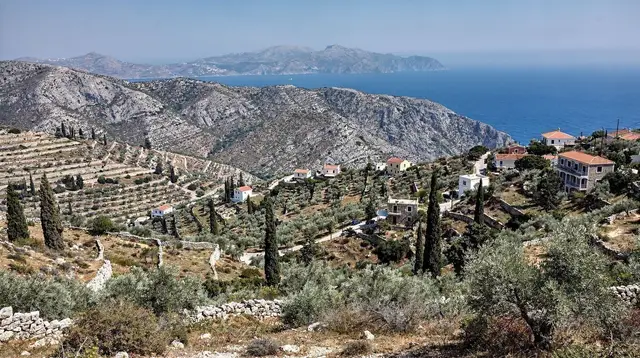
I mention this not to build a new obsession around snake-spotting, but to close the loop on a fear that does not belong here. It is easy for a general, diffuse unease about “snakes in a hot rocky place” to attach itself to any Mediterranean island, whether or not the island’s actual wildlife justifies it. Crete does not. If you are choosing between a gorge walk here and one somewhere with vipers in the undergrowth, the calculation is simply different, and it is worth knowing that before you talk yourself out of a trail you would otherwise love.
When Snakes Are Actually Out and About
Timing matters more than most hikers realise. Cretan reptiles are cold-blooded, and they are most visible in spring, when May mornings warm the rocks just enough to draw them out to bask before the heat of the day sets in — that overlaps neatly with what most guides already flag as the best time to visit Crete for gorge walking, before the summer’s dust and glare arrive. By the peak of a Cretan July, most reptile activity has shifted to dawn and dusk, the same low-light hours the month-by-month weather guide recommends for an early gorge start anyway.
That overlap is not a coincidence so much as a reminder that the advice for a good hike and the advice for a snake-free hike were always the same advice: start early, avoid the flat glare of midday, and let the mountains set the schedule rather than the ferry timetable back at the coast.
The Animal Worth Your Patience
What I did spend real attention on, once the snake question was settled, was the kri-kri. The Cretan wild goat is a genuinely old animal on this island — a subspecies that has held on in a handful of refuges while it vanished almost everywhere else. The Samaria gorge is the mainland stronghold, and a handful of protected islets off the north coast — Dia, Theodorou and Agii Pandes near Souda and Akrotiri — hold populations that never mix with the gorge goats at all.
I did not see a kri-kri on my first Samaria walk. I saw one on my second, standing motionless on a ledge above the trail for long enough that I assumed it was part of the rock formation until it turned its head. That is the honest version of “wildlife spotting” in Crete: not a guarantee, not a photo-safari, but a quiet possibility that rewards walking without headphones and without rushing the flatter stretches of the gorge, where the goats tend to graze in the early morning before the day’s hikers arrive in numbers.
If gorges are not on your itinerary this trip, a boat out to Dia island from Heraklion is the calmer alternative — you trade the drama of the walls for a decent chance of spotting kri-kri from the water instead, along with seabirds that do not bother with the mainland at all. For a fuller picture of the goat’s population and how conservationists have worked to protect it, the dedicated wildlife guide goes well beyond what I can cover here.
Other Gorges, Same Four Species
Samaria is not the only place this reassurance applies, and it is worth saying so because plenty of hikers assume the snake question is somehow specific to that one famous canyon. The Imbros gorge, shorter and narrower and near Frangokastello, and the Agia Irini gorge south of Chania both run through the same limestone terrain and hold the same four harmless species — there is no gorge on this island where the calculation changes. If waterfalls interest you more than dry scree underfoot, the Richtis gorge walk in the east ends at a beach rather than a bus pickup, and it carries the identical non-story on snakes.
What Actually Deserves Your Attention
None of this means gorge walking in Crete is risk-free, and I would rather be straightforward about the real hazards than let a myth about snakes distract from them. The terrain underfoot through most of Crete’s gorge network is loose limestone scree, not packed dirt, and a twisted ankle is a far more likely way to end a hike early than any animal encounter. The sun through open stretches of the Samaria gorge in July can be brutal by mid-morning, and the walk is long enough — sixteen kilometres one-way with no way back up — that starting early and carrying enough water matters more than anything else on this list.
Good boots with real ankle support, a hat, more water than feels necessary, and a realistic sense of your own pace: that is the actual safety briefing for Crete’s gorges, and it has nothing to do with wildlife. I would rather hikers spend their nervous energy on those basics than on a snake risk this island simply does not carry.
The same rocky terrain that keeps the four snake species so understated also supports wildlife worth watching instead of fearing. Look up on a clear day in the White Mountains and there is a real chance of spotting bearded vultures, one of Europe’s rarest raptors, gliding the ridgelines above the gorge. Look down in spring and the trailside is dense with the wildflowers and herbs that feed the insects and lizards the cat snake actually hunts — the quiet food chain that makes “dangerous snakes” the wrong question to be asking on this particular island.
If you want the fuller rundown of what to actually prepare for, both the general safety and health guide and the packing list built for Cretan trails cover ground I have only sketched here, and the common mistakes hikers make on this island rarely have anything to do with wildlife either.
After the Trail
The days I did not hike, I found myself drawn west instead, toward the coast and the villages that feel a world away from gorge walls. One afternoon out toward a guided trip combining Falassarna’s beach with a local winery visit did more to reset tired legs than anything else on the trip, and it is a good way to see a different side of the island’s landscape without another climb involved. On a different day, I joined a day trip down to Elafonissi’s pink-tinged sand from Chania, which asks nothing of your ankles at all.
If wine interests you more than beaches, a wine and olive oil tasting tour through the historic inland villages is a good way to spend a rest day between hikes, and it puts names to the grapes you will otherwise just see on a taverna wine list. And for a very different kind of walk through Crete’s history, one with its own weight rather than any wildlife concern, a two-day tour tracing the Battle of Crete is worth the time if the island’s twentieth-century history interests you as much as its goats and gorges do.
Snakes and Wildlife in Crete: Your Questions Answered
Are there dangerous snakes in Crete?
No. The island has only four snake species, and none of them are vipers. There is no resident snake in Crete capable of a medically dangerous bite, which sets it apart from mainland Greece and several other Mediterranean hiking destinations.
What snakes actually live in Crete?
Crete’s four species include harmless grass and whip snakes and the mildly venomous cat snake, whose rear fangs and weak venom are built for lizards, not humans. None behave aggressively toward people, and bites are rare and non-serious.
Is the Samaria gorge safe from snakes?
Yes, in the sense that matters: there is nothing venomous to fear there. The gorge’s real hazards are loose rock, heat, and the length and one-way nature of the walk, not wildlife.
What is a kri-kri and where can I see one?
The kri-kri is the Cretan wild goat, a stocky, sure-footed animal that survives mainly in the Samaria gorge and on the protected islets of Dia, Theodorou and Agii Pandes off the north coast. It is shy, so seeing one takes quiet patience rather than searching.
Should I still worry about snakes while hiking in Crete?
Not particularly. It is sensible to watch where you place your hands and feet on rocky ground, as you would anywhere, but that is general trail sense, not a response to a real snake danger on this island.
What hiking hazards should I actually prepare for in Crete?
Heat, dehydration, loose limestone underfoot, and exposed midday sun matter far more than any animal. Sturdy shoes, water, a hat and an early start cover almost every real risk on Cretan trails.
Can I see kri-kri without hiking a gorge?
Yes. Boat trips to Dia island off Heraklion, and occasionally past Theodorou near Akrotiri, give a calmer way to spot the population that lives away from the mainland gorges.
When are snakes most active on Cretan trails?
In spring, when cool mornings send cold-blooded reptiles onto sun-warmed rocks to bask before the day heats up. By midsummer most activity shifts to dawn and dusk, well outside the hours most hikers are on the trail anyway.
Should I worry about scorpions in Crete instead of snakes?
Not really. Crete does have small scorpions, mostly under stones and loose bark, and a sting is roughly comparable to a bee sting rather than a medical emergency. Shaking out boots left outside overnight is sensible caution, not a real fear.
I still think about that goat on the ledge more than I think about the snake question I lost sleep over beforehand. That, more than any statistic, is the honest measure of what deserves your attention in a Cretan gorge — and it is not fear.
tours.Explainer
Verified deep-linked GetYourGuide tours. Book through these links and we earn a small commission at no cost to you.
GetYourGuide does not provide a product photo for this activity — the image shows the meeting point, photographed by us.