What a Jeep Safari in Crete Actually Is
The question I kept turning over on the drive up
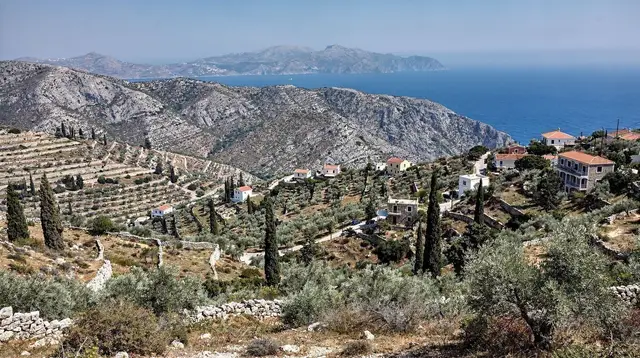
Before I did one, I pictured a jeep safari in Crete as something between a nature documentary and a fairground ride: dust plumes, a spotter scanning for wildlife, maybe a river crossing. What I got instead was a slow, careful climb out of a coastal village, first lane markings, then none, then a track just wide enough for the vehicle I was in and whatever came the other way. No wildlife scanning. No river crossing. Just a mountain, and a road that took it seriously.
That gap between expectation and reality is worth closing before you book anything, because the two mental images — African savanna track, or a simple drive up a hill in a bigger car — point to very different holidays, and neither one is quite right.
Why the terrain is the whole answer
Crete is not a volcanic island. There is no caldera here, no fumarole, no lava field, nothing like the geology that makes Santorini’s landscape so dramatic from a boat. Crete is limestone, folded and lifted by tectonic pressure over millions of years, then cut into by water. The signature landform is the gorge, not the crater. Samaria is the famous one, but the same forces carved dozens of smaller ravines across the island, and the roads that safaris use are threaded along the shoulders of exactly that kind of terrain.
That matters for what a jeep safari feels like. You are not crossing open ground where a vehicle can, in principle, go anywhere the driver chooses. You are following a route that the landscape itself has already decided, a narrow shelf of road cut into a hillside, climbing toward a village that sits above a gorge because there was nowhere flatter to build it. The driving is deliberate because the terrain leaves no other kind.
No train, no lift, no other way in
Here is the detail that reframes the whole experience for me: Crete has no train anywhere on the island, and despite mountains high enough to hold snow into May or June, it has no ski lift either. None. If you want to reach a village tucked into the foothills of the Lefka Ori or under Psiloritis, the mountain road is not one option among several. It is the option.
That is what a jeep safari is actually doing. It is not manufacturing adventure on ground that a paved road already reaches comfortably. It is using a vehicle built for a rough surface to get to places that genuinely have no other access — a hamlet above the Therisso gorge, a spring-fed village on the flank of a ravine, a plateau road that a normal rental car’s insurance would not cover. The safari exists because the geography demands it, not because someone decided a paved destination needed spicing up.
I found that changed how I felt about the whole day. It is less a thrill ride and more a delivery service to somewhere you could not otherwise stand.
The etiquette that keeps these roads workable
The roads themselves are narrow almost everywhere off the main coastal highway, and Cretan drivers have a habit that took me a full day to understand correctly: on a blind bend or a tight straight, a slower vehicle will often pull onto the hard shoulder, or as close to it as the drop allows, to let a faster car go by. The first time it happened to us, I assumed we were being waved through to overtake there and then, on a corner with no visibility. Our guide corrected me fast. It is a courtesy, not an invitation. The car ahead is making room; it is not telling you the road ahead is clear.
A good driver, and a good guide, treats that gesture as exactly what it is — a small act of shared patience on a road too narrow for two full lanes — and waits for an actual straight with real sightlines before using it. I watched our own guide do this all day: acknowledge the courtesy with a raised hand, then hold position until the road genuinely opened up. Nobody I traveled with treated the mountain roads as a place to prove anything. The operators who last on this terrain are the ones who drive like the road, not the itinerary, sets the pace, and that is worth checking for before you book: ask whether the tour is guide-driven, and whether the operator talks about the route in terms of villages and gorges rather than in terms of thrills.
What this is not, and what it is
So, to put it plainly: a Crete jeep safari is not an extreme off-road crossing, and it is not a wildlife-viewing exercise dressed up in four-wheel-drive language — there is nothing here resembling a savanna game drive, and no operator honest about the island will sell it that way. It is also not simply a bigger, bumpier version of a normal rental car outing, because the roads it uses are frequently outside what a standard rental contract even covers.
What it is: a guided way to reach villages, viewpoints and gorge edges that the standard road network does not touch, on terrain shaped by limestone and water rather than by lava, driven with the same shoulder-courtesy and patience that every local driver on these roads extends to every other. If you go in expecting careful mountain driving to genuinely inaccessible places, rather than a stunt, you will get exactly what the island can actually offer — which, on the roads above Therisso or in the foothills below the White Mountains, is more than enough.
If gorge villages and mountain back roads are what drew you to this in the first place, a guided route through the Therisso gorge villages on a small guided tour covers similar ground with a driver who already knows where the shoulder-courtesy actually matters. For the coastal counterpart to the mountains, a private day trip from Souda Bay to Knossos Palace shows how differently the terrain reads once you drop back to the plain.
Jeep safaris in Crete, answered plainly
Is a jeep safari in Crete an extreme off-road adventure?
No. It is a guided drive on narrow, paved or graded mountain roads to villages that have no other practical access, since Crete has no train and no ski lift anywhere on the island. The island is limestone, cut by gorges rather than shaped by volcanic terrain, and the driving is careful rather than daring.
Do I need off-road experience to join a jeep safari?
No. Guides drive the vehicles on most trips, and the pace is set by the road, not by the passengers. You need patience for switchbacks and dust, not a driving qualification.
Why does Crete not have volcanic terrain like Santorini?
Crete sits on a limestone plateau folded by tectonic pressure, not on a caldera. There is no lava, no fumarole and no thermal pool anywhere on the island; the landscape is defined by gorges and karst rather than by volcanic rock.
Why do drivers pull onto the hard shoulder on Crete’s mountain roads?
It is a local courtesy that lets a faster car pass a slower one on a road too narrow for two full lanes. It is not a signal to overtake blindly, and safaris that respect it are the ones that keep these roads workable for everyone.
Are there trains or cable cars to reach mountain villages in Crete?
No. There is no train anywhere on the island and no ski lift despite snow settling on the high peaks into May or June. The mountain road is the only way in and out of many villages a safari visits.
Can I rent my own 4x4 instead of joining a guided safari?
You can, but most rental contracts exclude unpaved roads, so any damage off the paved surface is uninsured. A guided safari uses vehicles and routes cleared for that terrain, which is the main reason to book one instead of self-driving the same tracks.
Which region of Crete has the best jeep safari terrain?
The hinterland behind Chania, through the Therisso gorge and its villages, and the foothills of the Lefka Ori and Psiloritis are the classic ground, since both regions are laced with the kind of mountain roads a safari is built around. Further east, the Lasithi plateau and the roads near Anogia offer a quieter, less-touristed version of the same idea.
If you want the background on driving culture and road rules before you go, driving in Crete and how Cretans actually drive cover the parts a safari guide will not stop to explain, and the KTEL bus guide is worth a glance if you are weighing a safari against public transport for the coastal legs.
For the quad and buggy alternative on similar ground, see quad and buggy tours in Crete, and for a wider list of what trips like this get wrong, mistakes to avoid in Crete is a useful check before booking. Two more relevant stops: the drive through Frangokastello on the south coast, and a reminder that Crete is not a small island — a jeep safari covers one corner of it, not the whole thing.
tours.Explainer
Verified deep-linked GetYourGuide tours. Book through these links and we earn a small commission at no cost to you.
GetYourGuide does not provide a product photo for this activity — the image shows the meeting point, photographed by us.