Antikristo and Sfakian Lamb: The Food of Chora Sfakion
What is antikristo and where do you find it?
Antikristo is a traditional Sfakian way of slow-cooking lamb, associated with the Sfakia region around Chora Sfakion in south-west Crete. There is no single verified recipe or standard price to quote here, so treat any dish sold under that name locally as a regional specialty rather than a fixed formula.
A Table Shaped by Mountains and a Boat Timetable
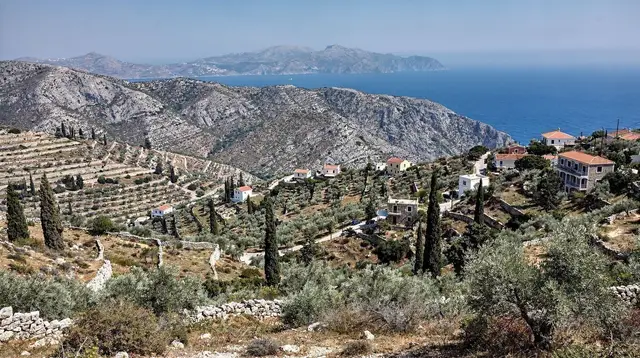
Ask what makes Sfakian food different from the rest of Crete, and the honest answer starts with geography, not a recipe. Chora Sfakion sits on the Libyan Sea at the foot of the Lefka Ori, the White Mountains, whose highest point, Pachnes, reaches 2,453 m almost directly above the village.
The road over the mountains from the north coast is narrow and winding, and for centuries the sea was often the easier way in and out. That isolation shaped a food culture built on what the mountains and the water actually provide: grazing lamb and goat on steep, herb-covered slopes, wild greens gathered by hand, and fish worked from small boats along a rugged coast with few sheltered harbors.
This page does not claim to hand you a verified recipe for antikristo, the dish most associated with Sfakian lamb. Reliable, checked detail on the specific technique is thin, and a food page that invents a method or a menu price to sound authoritative would be doing you a disservice. What follows instead sticks to what is actually established: the setting antikristo comes from, how Chora Sfakion functions as a crossroads between mountain and sea, and the two things every visitor should get right at the table here — raki and tipping.
Chora Sfakion: Where Hikers Meet the Sea
The single fact that explains Chora Sfakion’s role in Crete is simple: it is one of the boat exits for walkers finishing the Samaria gorge. The gorge runs one-way, 16 km down from the Omalos plateau to Agia Roumeli, a village with no road at all. From there, walkers take a ferry along the coast, and Chora Sfakion is one of the villages that ferry serves, alongside Loutro, Sougia and Palaiochora. Read the full route in the complete Samaria gorge guide or the Samaria from Chania planning guide if you are building the day around the walk itself.
What that means in practice is a daily rhythm: buses meet the boats, tired hikers fill the harbor tavernas by mid-afternoon, and the village earns its living from a mix of gorge traffic, boat trips and its own fishing fleet. Unlike Loutro just along the coast, which has no road access at all, Chora Sfakion is reachable by car over the mountains, which makes it the practical hub for this whole stretch of the south coast — a base for beach days, for boats out to Glyka Nera and the other Sfakia beaches, and for excursions up into the gorges behind it.
That crossroads position, mountain herders and villagers on one side, boats and the open Libyan Sea on the other, is the real reason Sfakian food reads differently from a taverna menu in Rethymno or Heraklion. It is not one signature dish; it is proximity. Grazing land runs close to the coast here in a way it does not on the more built-up north shore, and produce from both sides turns up in the same kitchen.
Antikristo and Sfakian Lamb: What Is Actually Known
Antikristo is a traditional way of slow-cooking lamb that is associated with the Sfakia region around Chora Sfakion. Beyond that, this page is deliberately cautious. The specific cooking technique, the exact cuts used, and any claim to a single “authentic” method vary by source and by household, and there is no single standardized version to describe with confidence. The same caution applies to price: menus, portions and availability differ taverna to taverna and season to season, and quoting a fixed figure here would be guessing.
What can be said reliably is the context. Sfakian lamb comes from animals grazed on the steep, herb-covered slopes below the Lefka Ori, which is the same terrain that shapes the region’s honey and cheese. Slow, direct cooking of whole cuts of meat is a long-standing approach in mountain communities across Crete, where fuel for an open fire was more available than an oven. If you want to try it, the honest approach is to ask locally in Chora Sfakion which taverna is preparing it on the day you visit, rather than expecting a fixed dish available on demand everywhere. Sfakian food in general rewards that same approach: ask what is cooking today, rather than pointing at a printed description.
Beyond Antikristo: What You Can Actually Expect
While antikristo itself resists a tidy write-up, the wider Sfakian table draws on ingredients that are well documented and easy to find. Expect grilled or oven-roasted lamb and goat more generally, horta (wild greens) gathered from the hillsides, and the Cretan cheeses mizithra and graviera, often served simply with bread and oil.
Dakos, the barley rusk topped with tomato, mizithra and olive oil, appears on most tables here as it does across the island — see the Cretan mezze guide for how it fits into a wider spread. For a broader introduction to what is on the menu across Crete before you narrow in on Sfakia specifically, the Cretan food primer is the place to start.
Honey from the mountains above the village is also worth seeking out directly from small producers rather than only from souvenir shops in the harbor. None of this needs an invented backstory to be worth trying: it is the same mountain-to-table logic that shapes the rest of Sfakian cooking, just without the uncertainty that surrounds antikristo’s exact method.
Raki, Not Ouzo: The Real End-of-Meal Ritual
If there is one drink you should understand before sitting down at a Sfakian taverna, it is raki, also called tsikoudia in Crete. It is a grape marc spirit, distilled from the skins, stems and pulp left over after the wine harvest is pressed. Crucially, it contains no anise. That puts real distance between it and ouzo, which is anise-flavored, and it is also a different drink from Turkish rakı, despite the similar name and the shared distillation tradition. Confusing the three is a common mistake for first-time visitors, and one worth avoiding before you order.
In Crete, raki is traditionally poured free at the end of a meal, often unannounced, as a gesture of hospitality rather than an item on the bill. It is meant to be sipped slowly, sometimes with a small sweet on the side. For more on how it is made and how it differs from Crete’s other spirits, see the dedicated raki and tsikoudia guide. Expect it in Chora Sfakion just as you would anywhere else on the island — it is one of the few genuinely island-wide constants at a Cretan table.
Tipping in Sfakia: A Round-Up, Not a Percentage
The other detail worth getting right before you eat in Chora Sfakion is tipping, and it is simpler than visitors from North America often expect. Across Crete, including in Sfakia, tipping is a round-up rather than a calculated percentage. Rounding the bill up to the next convenient figure, or adding roughly 5 to 10 percent for service you were happy with, covers local expectations. The 15 to 20 percent norm from North American restaurants does not apply here, and over-tipping at that rate is unnecessary rather than expected generosity. The money and tipping guide covers this alongside prices more broadly if you want the fuller picture before your trip.
Getting to Chora Sfakion, and Making a Day of It
Chora Sfakion is reachable by road over the mountains from the north coast, which sets it apart from Loutro and Agia Roumeli further along the coast, both of which depend entirely on boats. Most visitors combine a visit with one of two things: walking the Samaria gorge and taking the ferry out through Sfakia, or basing here for a day on the water along this stretch of coastline.
The boats that link the Sfakia villages are also how most visitors reach beaches and coves that have no road at all. A short hop along the coast covers ground that would otherwise mean hours on mountain switchbacks.
a boat day built around Loutro’s car-free harbor, reached from the Sfakia coast, is one straightforward way to see why this stretch of coastline draws walkers back after the gorge is done. For beaches further along the coast that have no road access at all, an excursion built around the beaches near Glyka Nera and Loutro covers ground a rental car simply cannot reach.
If you would rather get up into the gorges behind the village, a trip combining the Aradena gorge with a stop in Loutro pairs mountain and coast in a single day, echoing the same crossroads geography that shapes the food here. And for a different angle on the coast, a daytime fishing trip out of Sfakia puts you on the same waters that supply the village’s tavernas.
For a longer plan that treats this whole corner of the island properly rather than as a single afternoon stop, the White Mountains and Sfakia three-day itinerary lays out a route that gives the region the time it needs. If you are approaching from the E4 long-distance trail rather than the coast road, the E4 across Crete guide covers how this region connects to the wider network of mountain paths.
Nearby Villages Worth Knowing
Sfakia is not only Chora Sfakion. Frangokastello, a short drive east along the coast, pairs a Venetian fortress with quieter beaches and its own small tavernas. West along the coast, Sougia and Palaiochora are reachable by the same boat network that serves Agia Roumeli and Loutro, and each has its own version of the mountain-meets-sea table, shaped by whichever gorge or valley feeds into it. None of them claim antikristo as their own the way Chora Sfakion’s surroundings do, but all of them share the same reliance on local grazing, wild greens and the day’s catch that defines eating well in this part of Crete.
Planning Notes for Eating Well in Sfakia
A few practical points worth carrying with you. Availability of any specialty dish, antikristo included, depends on the individual taverna and the day, so asking directly when you arrive beats planning around a specific dish in advance. Portions in mountain villages tend to be generous, and sharing several plates works better here than ordering individually. And because much of Sfakia’s economy runs on the seasonal rhythm of gorge walkers and boat trips, quieter months outside peak summer can mean shorter hours or a taverna closed altogether, so a quick check ahead is worth the minute it takes.
FAQ: Antikristo, Raki and Eating in Chora Sfakion
What is antikristo, exactly?
It is a traditional method of slow-cooking lamb associated with the Sfakia region. Details of the technique vary by household and taverna, and there is no single standardized recipe, so it is best approached as a regional specialty rather than a dish with one fixed method.
Is antikristo available in every taverna in Chora Sfakion?
No. It is a specialty rather than an everyday menu item, and availability depends on the individual taverna, the season and advance notice. Ask locally rather than expecting to find it on demand.
What makes Sfakian food different from the rest of Crete?
The geography does more of the work than any single ingredient. Chora Sfakion sits where the Lefka Ori mountains meet the Libyan Sea, cut off from the north coast by the White Mountains, so grazing, fishing and mountain produce sit closer together here than almost anywhere else on the island.
Is raki the same as ouzo or Turkish raki?
No. Raki, also called tsikoudia in Crete, is a grape marc spirit distilled from the leftover skins and stems of the wine harvest. It contains no anise, unlike ouzo, and it is a different drink from Turkish raki, which is anise-flavored. In Crete it is traditionally poured free at the end of a meal.
How much should I tip in Chora Sfakion?
Tipping across Crete, including Sfakia, is a round-up rather than a percentage. Rounding a bill up, or adding roughly 5 to 10 percent for good service, is normal. The 15 to 20 percent expected in North America is not the local custom.
Why is Chora Sfakion connected to the Samaria gorge?
Chora Sfakion is one of the villages where walkers who complete the Samaria gorge exit by boat. The gorge itself has no road at its southern end, so the ferry connection through Sfakia is part of how the whole route works, and it brings a steady flow of hungry, tired hikers into the village’s tavernas each afternoon in season.
Can I drive to Chora Sfakion?
Yes, a road connects Chora Sfakion to the rest of Crete over the mountains, unlike Loutro or Agia Roumeli, which have no road access at all. Many visitors still arrive or leave by the coastal boats that link the Sfakia villages.
What else should I eat while I am in Sfakia?
Look for grilled or oven-baked lamb and goat, wild greens (horta), Cretan cheeses such as mizithra and graviera, dakos with local olive oil, and honey from the mountains above the village. These are established Cretan staples you can expect to find, unlike a fixed antikristo recipe.
Food Tours in Crete on GetYourGuide
Verified deep-linked GetYourGuide tours. Book through these links and we earn a small commission at no cost to you.
GetYourGuide does not provide a product photo for this activity — the image shows the meeting point, photographed by us.