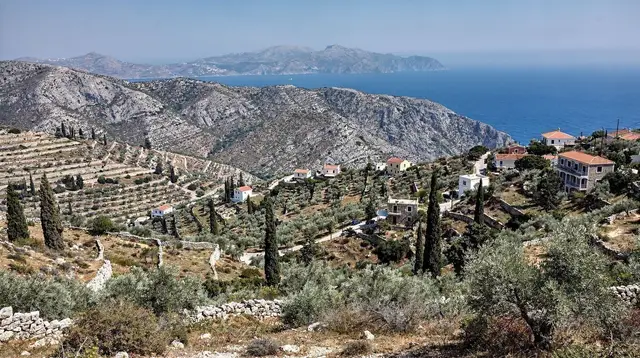
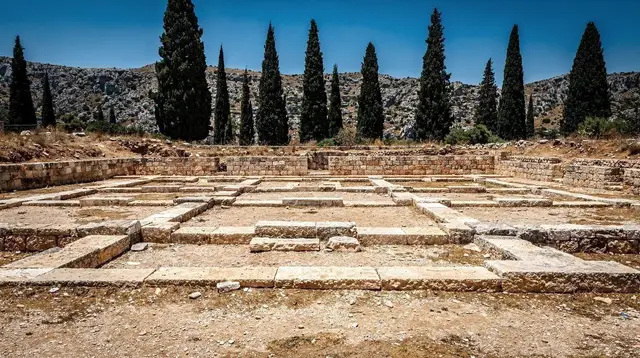
A fishing port on Crete’s south coast
Agia Galini sits on the Libyan Sea at the western edge of the Messara plain, in the south of the Rethymno regional unit, close to the border with Heraklion. It is a small place: a curve of tiered, whitewashed houses stacked above a working harbour, a short seafront of tavernas, and a beach that was never built to hold a resort’s worth of sunbeds. Fishing boats still go out from here, and the pace of the village outside the first two weeks of August still owes more to that than to tourism. Travellers curious about joining one of those boats rather than just watching them from a taverna table can read the guide to fishing trips in Crete.
That matters for how to plan around it. Agia Galini is not a hub on the scale of Rethymno or Heraklion, and it is not a package-holiday strip like the north-coast resorts further east. It is a modest, southern base — useful, quiet, and honest about what it is, which is a fishing village that took on a tourist trade rather than a resort built for one.
Getting there and getting around
The direct route from Rethymno town is about 35 km and takes roughly 50 minutes, climbing over the hills through Spili before dropping down to the coast. It is a mountain road with bends rather than a fast highway, so the drive itself is part of the visit — pine slopes, a pass near Spili, then the sea opening up ahead. From Heraklion, the drive is longer, roughly 65 to 70 km, usually routed south through the Messara plain past Phaistos.
Most travellers reach this corner of the island through Heraklion airport, the nearer of Crete’s two main gateways, or by the overnight boat from the mainland, covered in the guide to ferries from Piraeus to Crete. Anyone still piecing together the wider journey from home can start with the overview of getting to Crete by flight and ferry, which lays out how the airports and the ports fit together before narrowing down to this one route.
A rental car is the practical way to reach Agia Galini and to make use of it as a base. The KTEL coach network, genuinely useful along the north coast between Chania, Rethymno, Heraklion and Agios Nikolaos, thins out badly once it crosses the mountains to the south. Agia Galini gets a service to and from Rethymno, but outside the high season it can run down to one or two buses a day, and connections onward to Matala or Phaistos by bus require patience and a printed timetable rather than an app. There is no train anywhere on Crete, so for a traveller without a car, Agia Galini works best as a single, deliberate stop rather than a base for daily excursions.
Travellers weighing whether to hire a car at all for a trip built around a base this quiet should read the comparison of a rental car against organised tours in Crete before deciding, since the thin bus network here tips the balance more than it would on the north coast.
Inside the village itself, everything is within easy walking distance: the harbour, the beach, the seafront tavernas and the small grid of lanes climbing the hill behind them.
That hillside layout is worth knowing before booking a room. Agia Galini’s older lanes are stepped and steep in stretches, without ramps, which makes the village a poor match for a wheelchair or a loaded stroller — travellers weighing accessibility across the island as a whole should start with the guide to accessible Crete rather than assume every coastal village here is flat.
Families weighing whether a base like this suits a stroller-age child at all may find the broader guide to Crete with kids more useful than the accessibility guide alone. Anyone renting specifically for the Spili crossing benefits from reading what to check before renting a car in Crete beforehand, since a compact hire car handles the switchbacks far more comfortably than a larger family model, and a scarce parking spot near the harbour is easier to find with a smaller vehicle.
When to visit, and why the season here has sharp edges
May to October is the useful season, in line with the rest of Crete. Within that window, Agia Galini has one real advantage over the north coast: when the meltemi, the strong north wind, blows through July and August, the Libyan Sea on Crete’s south side is usually noticeably calmer. Travellers based in Chania, Rethymno or Heraklion in those weeks sometimes drive south for a day specifically to escape the wind and find flatter water — Agia Galini and the coast around Plakias and Damnoni are common answers to that.
Late spring and early autumn — May, June, and September into early October — bring warm, settled weather without the peak-August crowding, and are the most comfortable months to base here.
Travellers wanting month-by-month detail rather than a single season label can check the guide to Crete’s weather month by month, along with the dedicated pages on July and the meltemi and on September, the month that best matches Agia Galini’s quiet, settled appeal.
Travellers still deciding when to go at all, rather than which week within the season, are better served starting from the island-wide guide to the best time to visit Crete, since Agia Galini’s own calendar simply mirrors the wider pattern rather than setting one of its own. The quiet that settles over the south coast from November has its own logic too, covered in why Crete empties in November, which explains the seasonal shutdown beyond the bare fact that shutters go up.
The other side of that seasonality is real, and worth planning around rather than discovering on arrival. From November to March, Agia Galini goes quiet in a way that catches some visitors out. Many tavernas, rental car offices and the small excursion boats close for the winter. This is also when the Samaria gorge, further west, is shut entirely, and when ferries and day-boat trips along the south coast run at reduced frequency or stop altogether.
A winter visit to Agia Galini is possible and can be pleasant on a mild day, but it is not the season to expect an active harbour or a choice of open restaurants. For travellers set on that season anyway, the four-day winter itinerary builds a realistic loop around what actually stays open.
The blog post on what actually closes in Crete in winter goes further than the bare list above, useful for anyone weighing a low-season stop here against one in a town that stays open year-round.
What Agia Galini actually is — and isn’t
It is worth being direct about this, because the name shows up in enough holiday brochures to create expectations the village does not meet. Agia Galini has no real nightlife: a few harbourside bars stay open into the evening in August, and that is close to the ceiling. It has no long sandy beach to rival the resort coast further east — the town beach is narrow and fills up fast in peak season, and the appeal of the place has always been the setting rather than the sand.
What it does have is a genuine fishing-village character that many of the bigger resorts on Crete’s north coast have long since traded away: working boats, a harbour that still smells of the sea rather than sun cream, and a skyline of stacked houses that looks much as it did before tourism arrived, just with more tavernas underneath it. Travellers who come expecting a quiet, photogenic overnight stop tend to leave satisfied; travellers expecting a beach club and a late night out will not find either here.
That contrast is sharpest against the package coast further east: a traveller wondering whether the clubs and late bars are worth chasing should read whether Hersonissos is actually worth it before assuming Agia Galini is simply a smaller version of the same thing — it isn’t, and expecting one to behave like the other is one of the more common mistakes travellers make in Crete. Travellers weighing the resort towns against each other, rather than against a village like this one, may find the comparison of Hersonissos, Malia and Stalida more useful than either page alone.
The beach, and small boat trips along the coast
The town beach sits right below the village, a narrow strip that is easy to reach on foot and gets crowded quickly once August arrives. A short walk or a five-minute local boat ride reaches a few smaller coves along the coast, which are the better option on a busy day. In season, small boats also run short excursions along the Libyan coast toward quieter stretches of shoreline — nothing on the scale of the boat network further west around Loutro and Chora Sfakion, but enough for a half day on the water without driving. Travellers who would rather get into the water than just look at it from a boat can check the guide to sea kayaking in Crete.
That wider network of boat-only villages further west is covered in the guide to Loutro, the village with no road, and the blog post on how the south coast’s boat network actually fits together puts Agia Galini’s small excursions into that bigger picture.
None of this adds up to a beach holiday base in the way that the Chania or Heraklion coasts do. Travellers set on long beach days are better placed in Plakias and Damnoni, a similar stretch of the Libyan coast with more sand, or on the north-coast resort strip around Hersonissos. Further west again, the boat-only beaches covered in Glyka Nera and the Sfakia beaches show how much more remote the south coast can get.
Anyone renting a sunbed on the town beach or further along the coast is covered by the same rules as the rest of the island, set out in the guide to sunbeds and your rights on Cretan beaches.
Half a day here, or press on?
Travellers with only half a day on this stretch of coast face a genuine choice: spend it slowly in Agia Galini itself, over a long lunch and a walk around the harbour, or use the time to reach Phaistos or Matala instead. The village rewards lingering rather than sightseeing, so it suits a traveller who has already ticked off the Messara plain’s ruins and simply wants an afternoon by the water more than one who is still working through a list.
For anyone drawn purely to the tiered harbour houses, the guide to photography spots in Crete points to where else on the island rewards that kind of patience. Couples specifically weighing a quiet stop like this one against a livelier base further along the coast may find the guide to Crete for couples useful for sorting out priorities before booking.
Phaistos, Matala and the Messara plain
Agia Galini’s real value as a base is its position at the western edge of the Messara plain, Crete’s biggest agricultural lowland and the heart of its Minoan south. The Minoan palace of Phaistos, smaller and far less visited than Knossos but set on a hill with genuinely striking views across the plain to the mountains, is about 25 minutes east by car. The Roman site of Gortyna, capital of the island under Rome rather than Knossos, sits close by on the same drive. Many of the objects found at both sites ended up at the Heraklion Archaeological Museum, an hour or so further on.
a guided day covering Gortyna, Phaistos, Agia Triada and Matala is a straightforward way to see the Messara plain’s main Minoan and Roman sites without juggling three sets of opening hours and a rental car on unfamiliar back roads.
South of Phaistos, the beach village of Matala, known for its sea caves carved into the cliff, is roughly the same distance from Agia Galini as Phaistos itself, which makes the two easy to combine in a single day. For travellers overnighting in Agia Galini specifically to cover this corner of the island, a day trip linking Agia Galini, Matala and Spili packages the loop for anyone without their own car, and an organised outing from Agia Galini and Matala into Rethymno works the same idea in reverse, toward the old town.
Read more in the guides to Phaistos and Gortyna and Matala’s caves and its red beach before deciding how to split the day. Travellers building a trip specifically around these sites rather than a single day among several can use the five-day archaeology itinerary instead.
West toward Preveli and the Kourtaliotiko gorge
Agia Galini also sits within reach of the Libyan coast running west toward Plakias, including two of the region’s best-known sights: the Kourtaliotiko gorge, a short, dramatic canyon on the road down from the mountains, and the palm-lined river mouth and beach at Preveli, backed by its monastery. The palm grove there burned in 2010 and has regrown; it belongs to the same endemic species, Phoenix theophrasti, found at Vai in the far east of the island. Travellers who enjoy the Kourtaliotiko’s short drama might also compare it with the longer, quieter Imbros gorge further west toward Sfakia.
a tour covering both the Kourtaliotiko gorge and Preveli beach is the practical way to see them together without a long, winding self-drive on narrow roads, and a similar trip built around the gorge and the beach covers the same ground for travellers based further along the coast. For the walking route itself, see the guide to the Kourtaliotiko gorge and the separate one on Preveli’s monastery and palm beach.
Where to eat and what a day costs
Eating in Agia Galini means the tavernas lining the small harbour and the lanes just behind it, most serving fresh fish alongside the standard Cretan taverna menu — dakos, grilled meats, local raki poured free at the end of the meal. Prices sit noticeably below the north-coast resorts: a simple taverna meal with a drink runs roughly EUR 12 to 20 per person, a full day including a rental car, fuel, lunch and an evening meal is workable on EUR 40 to 90 per person depending on how much driving and how many excursions are involved. As on the rest of the island, prices are quoted with Greek VAT already included, and a rounded-up tip of roughly 5 to 10 percent is the local norm rather than a larger North American-style tip.
For a wider view of what shows up on a Cretan table beyond this one harbour, the guide to what to eat in Crete is a useful starting point before narrowing down to the dakos and raki covered below. The wine that usually accompanies it is its own subject, covered in the guide to Crete’s wine regions and grapes.
For more on what actually lands on the table, the guide to dakos and the Cretan mezze spread explains the small-plates habit behind that taverna menu, and the separate guide to raki and tsikoudia is worth reading before assuming the free glass at the end of the meal is ouzo — it is not. Anyone budgeting a longer trip rather than just this one stop can cross-check the numbers here against the wider guide to tipping, money and prices in Crete and the dedicated advice on travelling Crete on a budget, since Agia Galini’s lower prices are the exception rather than the island-wide rule.
Where Agia Galini fits in a wider Crete trip
Agia Galini works best as a deliberate one- or two-night stop rather than a full base for a Crete holiday, because the island genuinely does not fit around a single point — Chania to Sitia alone is over 270 km. It slots naturally into a south-coast leg between Rethymno and the Heraklion regional unit, particularly for a trip already built around Phaistos, Matala and the Messara plain, or for travellers deliberately avoiding the north coast during the July and August meltemi weeks.
For planning the rest of the route around it, see the guides on how many days to allow for Crete, choosing between the north and south coasts, driving in Crete and what the KTEL coach network actually covers, plus the six-day south-coast itinerary that strings Agia Galini together with Plakias, Preveli and Matala.
Travellers still choosing which half of the island to prioritise can read the comparison of east Crete against west Crete, and those narrowing down a north-coast anchor to pair with a stop this quiet may find the comparison of Chania, Rethymno and Heraklion useful.
Travellers building their first Crete itinerary from scratch are usually better off reading the broader guide to Crete for first-timers and the island-wide advice on where to stay in Crete before deciding whether a fishing village this small belongs in the plan at all. For anyone who would rather not drive the Spili crossing themselves, private tours and drivers in Crete covers the alternative of a hired driver for the day.
Basic health and safety questions that apply to a stop this remote from a hospital are answered in the guide to safety and health in Crete, worth a look before relying on a small village pharmacy alone. The general packing advice in what to pack for Crete is worth pairing with it before a trip this far from a large supermarket.
A winter visit has its own rules, covered in the guide to Crete in winter, and the practicalities of gorge season generally are set out in the complete Samaria gorge guide, useful context even for travellers based well east of it. Nearby, the old town of Rethymno, the hill village of Spili on the road in, and the coastal village of Panormos round out the wider south-Rethymno picture.
Agia Galini questions answered
Is Agia Galini worth visiting?
Yes, for what it is: a small, still-working fishing port on the Libyan Sea, not a resort. It suits travellers who want a quiet overnight stop close to Phaistos and Matala rather than a full beach holiday base.
Does Agia Galini have a good beach?
It has a modest town beach that fills quickly in August, plus a smaller cove and a couple of nearby beaches reachable by a short walk or a local boat. There is nothing here on the scale of the sandy strips on the north coast.
Is there nightlife in Agia Galini?
No. Evenings mean a handful of harbourside tavernas and a few bars that close early outside peak August weeks. Travellers looking for clubs and late bars should base themselves in Hersonissos or Malia instead.
How do I get to Agia Galini without a car?
A KTEL coach connects Agia Galini to Rethymno, but the south-coast timetable is thin, often one or two buses a day outside high season. A rental car is the practical way to reach the village and to continue on to Phaistos or Matala.
What closes in Agia Galini in winter?
Many tavernas, rental offices and the small boat trips close from November to March. The Samaria gorge is shut over the same months, and ferries and excursion boats along the south coast run at reduced frequency or not at all.
Is Agia Galini a good base for Phaistos and Matala?
It is a reasonable base for both. Phaistos is about a 25-minute drive east across the Messara plain, and Matala is roughly the same distance further along the coast, which makes Agia Galini a workable overnight stop between Rethymno and the Heraklion regional unit.
Does the meltemi affect Agia Galini in summer?
The meltemi is a north wind, so it hits the north coast harder. Agia Galini, on the Libyan Sea, is usually calmer in July and August, though the sea can still get choppy and some small excursion boats cancel on the windiest days.
Is Agia Galini wheelchair or stroller friendly?
No. The older lanes above the harbour are stepped and steep in places, with no ramps, which makes the village a poor fit for a wheelchair or a loaded stroller. Flatter, more accessible bases exist elsewhere on the island for travellers who need one.
Should Agia Galini be a first-time visitor’s only base in Crete?
No, and it was never meant to be. It works as a one- or two-night stop within a wider south-coast route, not as a sole base for a first trip to Crete, which needs at least one north-coast town and Heraklion or Chania in the plan as well.