Snorkelling Spots in Crete: Is the Sea Warm Enough?
Is the sea in Crete warm enough for snorkelling in spring?
Not really. Spring sea temperatures run about 16-18°C, cold for most snorkellers without a wetsuit. The water warms to 21-25°C in June and peaks at 24-27°C in August and September, which is when snorkelling in Crete is most comfortable.
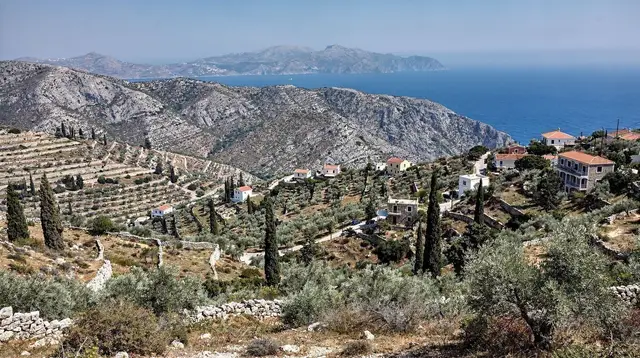
Crete gets asked one question about snorkelling more than any other, and it is not “where,” it is “when.” The island’s clear water and rocky coves photograph beautifully at any time of year, but the sea itself is genuinely cold well into spring, and the coast that looks calmest on a map is not always the one that is calm on the day you arrive. This guide sets out the real sea temperatures month by month, explains why the south coast on the Libyan Sea behaves so differently from the north in summer, and points to specific coves and bays worth the drive, from the far west to the far east of the island.
Sea temperature by month, and what it means underwater
Sea temperature is the single biggest factor in how enjoyable snorkelling in Crete actually is, more than water clarity or the exact cove you choose. The water lags well behind air temperature, so a hot, sunny day in May can still mean a sea that makes you gasp when you go in.
| Period | Typical sea temperature | What it feels like |
|---|---|---|
| Late April - May | 16-18°C | Cold; a wetsuit or a short swim only for most people |
| June | 21-25°C | Comfortable for most, cool on entry |
| July - August | Warm, but often choppy on the north coast | Pleasant temperature, conditions depend on the meltemi |
| Late August - September | 24-27°C | The warmest, most reliable stretch for snorkelling |
| October | Cooling from the September peak | Still swimmable, best in the afternoon |
| November - March | Well below swimming comfort | Not a snorkelling season |
Spring visitors sometimes plan a snorkelling trip around Easter or in May expecting a Mediterranean-warm sea because the sun is already strong. It is not. At 16-18°C the water is workable for a fit swimmer in a wetsuit for a short session, but it is not the relaxed, hours-in-the-water snorkelling that photographs from summer suggest. If your trip falls in April or May, treat snorkelling as one activity among several rather than the plan for every afternoon — see what to pack for Crete if you want a wetsuit or rash guard on the list before you fly, and check Crete in May for what else fills the days.
By June the sea has usually climbed into the 21-25°C range, which most swimmers find comfortable without extra insulation, and this is genuinely the start of the good snorkelling season, with the added advantage of thinner crowds — see Crete in June. The sea keeps warming through the summer and peaks in late August into September at around 24-27°C, largely because water retains heat far longer than air and keeps absorbing it through the hottest weeks.
September in particular is the month locals themselves tend to recommend for the sea: warm water, a meltemi that has usually eased off, and a coastline that has emptied out from its August peak. October is still swimmable, especially in the afternoon once the morning has warmed the shallows, but by then the drop-off has begun.
Why the south coast stays calmer when the north does not
Crete has two very different seas. The north coast, from Kissamos to Sitia, faces the open Aegean and takes the brunt of the meltemi, a strong, dry north wind that is concentrated in July and August. On a bad meltemi day the north coast turns choppy and turbid, sand gets stirred up in the shallows, and visibility for snorkelling drops sharply. Boat operators on the north coast routinely cancel or reroute trips on these days, and the excursions to Balos, Imeri Gramvousa and to Chrissi off Ierapetra are among the first to be called off, because all three depend on an open-water crossing that becomes genuinely rough in a strong meltemi.
The south coast, on the Libyan Sea, is a different story. It is more sheltered from the meltemi’s direction, and in practice it runs a degree or two warmer and calmer through the same weeks that the north coast is being blown around. Villages like Loutro, reachable only by boat or on foot, and the coves around Plakias and Agia Galini, tend to stay snorkelable on days when the north coast is a washout.
If your trip lands in July or August and snorkelling matters to you, building in a day or two on the south coast is the single most reliable hedge against losing a day to wind — a private outing that reaches a few of these quieter bays in one day is easier than chaining together public buses, and a private tour of the south coast’s quieter beaches covers ground that would otherwise take a full rental-car day. For a fuller picture of exactly how the meltemi behaves and which weeks are worst, see Crete in July and the meltemi and the month-by-month overview at Crete weather month by month.
Not a volcanic island — what you will not find underwater
It is worth saying plainly, because expectations set by other Greek islands cause real disappointment here: Crete is not volcanic. It sits on folded limestone, cut through by the gorges the island is famous for on land, not by lava flows. Underwater that means there are no fumaroles bubbling through the sand, no thermal vents, no black volcanic seabed, and none of the sulphurous, warm patches that snorkellers seek out around Santorini and other islands of the volcanic arc further north in the Aegean.
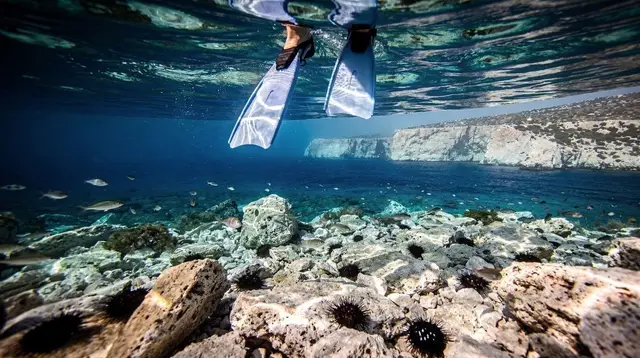
Crete’s underwater appeal is different and, in its own way, just as good: clear water over rock and seagrass, small fish around the base of Venetian fortifications, sea urchins in the shallows, and the occasional octopus tucked into a crevice. It is a coastline of coves and caves, not craters. If a volcanic seascape specifically is what you are after, a Santorini day trip from Crete is the honest way to get it, rather than expecting to find it here.
Where to snorkel: west to east
Chania and the west
The rocky coastline around Souda Bay and the Akrotiri peninsula holds some of the clearest water near Chania, and the coves cut into the peninsula’s eastern shore, Seitan Limania among them, are a short drive from Chania town itself — see Souda and Akrotiri. Further along the coast, the beach strip through Platanias and Agia Marina is easier and shallower, well suited to a first snorkel of the trip rather than a serious outing.
Out at the western tip, Balos lagoon and Imeri Gramvousa offer shallow, startlingly clear water, though the appeal there is the colour of the lagoon rather than anything to see below the surface — most visitors come by boat from Kissamos rather than the unpaved road; see Balos by boat or by road before deciding.
Falassarna is a genuinely good, less crowded beach for an easy swim-and-snorkel afternoon, and further south, Elafonissi has calm, shallow water around its islet, though its shell-sand shallows are better for wading than for serious snorkelling, and the site is protected — taking sand or shells is illegal here.
The south-west
This is meltemi-sheltered territory. Loutro, the boat-only village with no road in, sits on some of the clearest water on the island, and the coves either side of it reward a slow swim rather than a fast look. Frangokastello, further along the coast, pairs an easy sandy entry with a Venetian fortress on the shore behind it. This stretch of coast tends to stay calm precisely when the north is being churned up — worth remembering on a windy week.
Rethymno and the Libyan coast
South of the mountains, Plakias and Damnoni have some of the better rocky snorkelling on this side of the island, with small coves easy to reach on foot from the beach car parks. Agia Galini, further east along the same coast, is a smaller and quieter base for the same warm, sheltered water.
Heraklion and the centre
Matala, known for the carved caves above its beach, has clear water and a sheltered bay that makes for easy snorkelling right off the sand — see Matala’s caves and red beach for the full picture, including the smaller Red Beach next door. On the north coast near Heraklion, Agia Pelagia has calmer, more enclosed water than the open resort beaches further east, and a short boat hop reaches Dia island, whose rocky shoreline is one of the better day-trip snorkelling destinations near the capital.
Lasithi and the east
Around the gulf of Mirabello, the water off Elounda and Spinalonga is clear and generally calm, sheltered by the shape of the gulf itself, and a cruise through the bay that includes snorkel time is an easy way to combine the fortress island with time in the water — a boat trip around Mirabello Bay that includes snorkel gear and hotel transfer covers this stretch in a single outing.
Further south, Ierapetra and the islet of Chrissi offer some of the clearest water on the island on a calm day, though the crossing depends entirely on the wind: Chrissi’s boats run in season only and are cancelled outright when the meltemi is up, so build in flexibility if this is the trip’s centrepiece.
Gear, access and a note on remote coves
Most of the coves listed above need nothing more than a mask, snorkel and a pair of reef-safe fins bought or rented locally; few operators on the island push guided snorkelling as a standalone product outside a boat trip, so independent exploration by car is the norm. A handful of the best coves, Seitan Limania among them, sit at the end of a steep path or a rough final stretch of track, the kind of terrain a standard rental car handles poorly — a quad safari that reaches some of these harder-to-access coastal spots is one way around that without risking a rental agreement that, like most on the island, excludes unpaved roads.
Whatever the season, remember there is no lifeguard cover at most of these coves, currents can run stronger around headlands than the calm centre of a bay suggests, and a bright surface float or tow buoy is a cheap, sensible precaution when snorkelling away from a supervised beach.
Planning around the season, not against it
The honest advice for anyone building a Crete trip mainly around snorkelling is to lean toward late June through September rather than shoulder-season dates, and within that window to keep the south coast in reserve for the windiest days of July and August. A spring trip is still worthwhile for gorges, museums and empty roads, but it should not be sold to yourself as a warm-water snorkelling trip — see best time to visit Crete for how the sea fits against everything else the island offers, and mistakes to avoid in Crete for the other assumptions worth checking before you book.
Snorkelling in Crete, questions worth settling before you pack
What temperature is the sea in Crete for snorkelling?
Roughly 16-18°C in spring, 21-25°C in June, and 24-27°C from August into September. Late August and September are usually the warmest and most reliable weeks for snorkelling without a wetsuit.
Is the south coast of Crete warmer than the north?
Yes, generally. The south coast faces the Libyan Sea and tends to run a degree or two warmer through the season, and it stays calmer than the north coast when the meltemi wind blows in July and August.
Does the meltemi wind affect snorkelling in Crete?
It can. The meltemi is a strong, dry north wind concentrated in July and August that roughens the north coast and regularly cancels boat trips to Balos, Gramvousa and Chrissi, while leaving the south coast comparatively calm.
Are there volcanic snorkelling sites in Crete, like in Santorini?
No. Crete is limestone, not volcanic rock, so there are no underwater fumaroles, thermal springs or lava formations to snorkel over. Visitors expecting a Santorini-style volcanic seascape should adjust that expectation before booking.
Do I need a wetsuit to snorkel in Crete?
In April, May and early June, and again from mid-October, most people are more comfortable in at least a shorty wetsuit given sea temperatures around 16-21°C. From late June through September a rash guard is usually enough for most swimmers.
What is the best month for snorkelling in Crete?
September is the common favourite: the sea has had all summer to warm to 24-27°C, the meltemi has usually eased, and the beaches are quieter than in July and August.
Can I snorkel at Balos and Elafonissi?
Both have shallow, clear water suited to snorkelling close to shore, but neither has dramatic underwater scenery. Balos boat trips and the Elafonissi shoreline are also among the first outings cancelled when the meltemi picks up.
Diving & Snorkeling in Crete on GetYourGuide
Verified deep-linked GetYourGuide tours. Book through these links and we earn a small commission at no cost to you.
GetYourGuide does not provide a product photo for this activity — the image shows the meeting point, photographed by us.